Tag Page BlackHistory

#BlackHistory
LataraSpeaksTruth

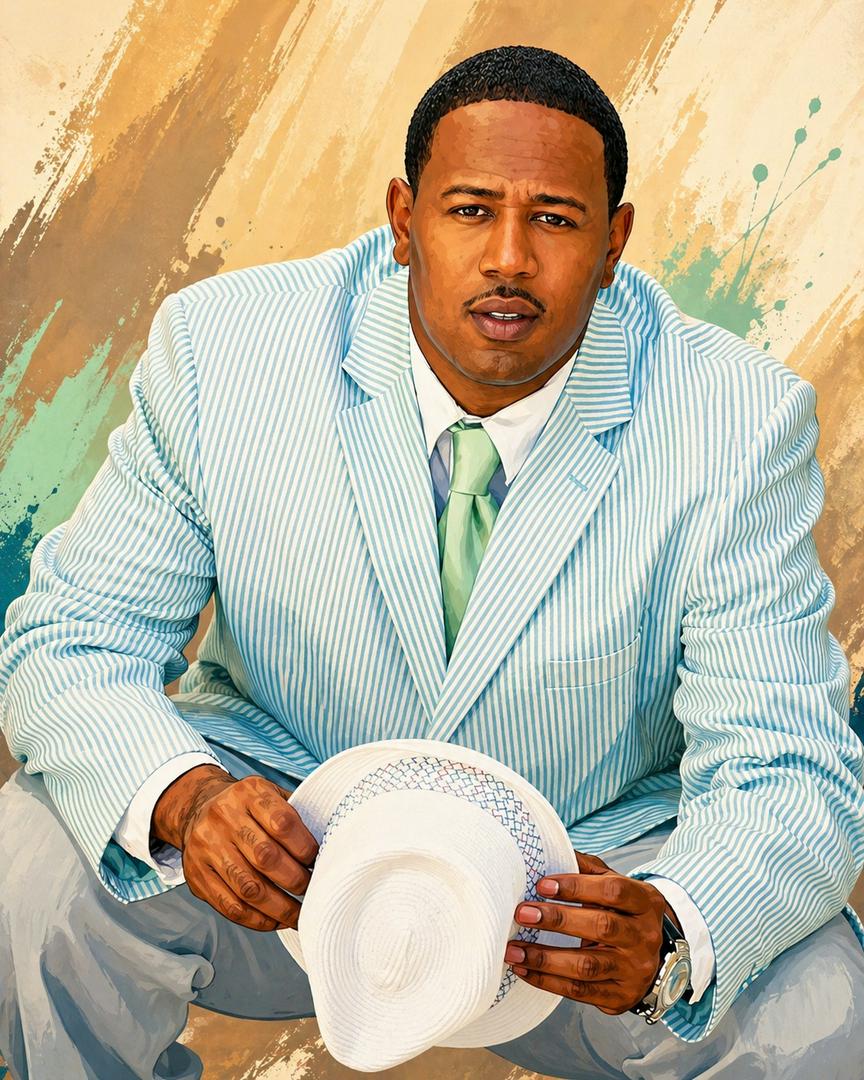
On April 29, 1970, Percy Robert Miller, better known as Master P, was born in New Orleans, Louisiana. Before he became one of hip-hop’s most recognizable business figures, Miller grew up in New Orleans and later built a career around music, ownership, and independence. His story became bigger than records alone. It became a lesson in how an artist could control more of the business behind the music. Master P founded No Limit Records, which started as a record store in Richmond, California, before growing into one of the most successful independent labels in hip-hop. At a time when many artists depended heavily on major labels, Master P built a different model. He pushed ownership, distribution, branding, and volume, releasing music at a pace that helped make No Limit a major force in the 1990s. His label became known for its bold album covers, large roster, Southern sound, and business-first approach. No Limit helped bring greater attention to New Orleans and Southern hip-hop during a period when much of the industry spotlight was still centered on the East Coast and West Coast. Master P’s success was not limited to music. He expanded into film, clothing, sports, real estate, and other business ventures. His public image became tied to entrepreneurship as much as entertainment. For many fans, Master P represented a new kind of hip-hop figure. He was not only a rapper. He was a label owner, executive, marketer, investor, and businessman who showed that independence could become power when paired with strategy. His birthday is a reminder of the role Southern artists played in reshaping hip-hop’s business landscape. Master P helped prove that artists could build their own tables instead of waiting for a seat at someone else’s. #BlackHistory #MasterP #HipHopHistory #BlackEntrepreneurship #OnThisDay
LataraSpeaksTruth

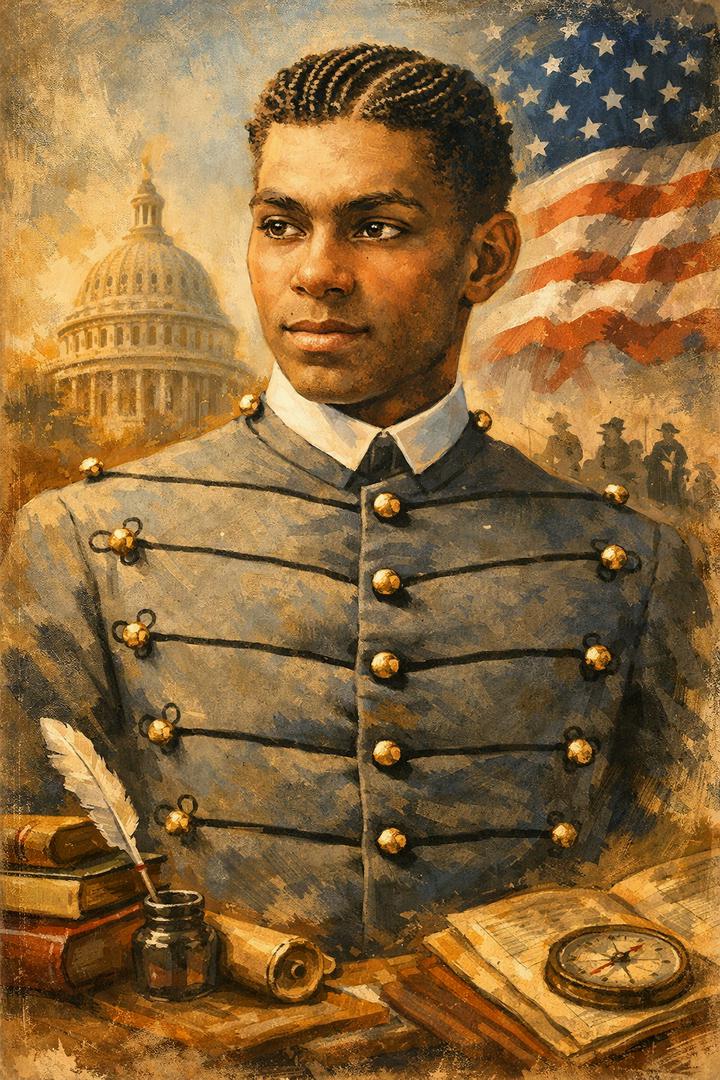
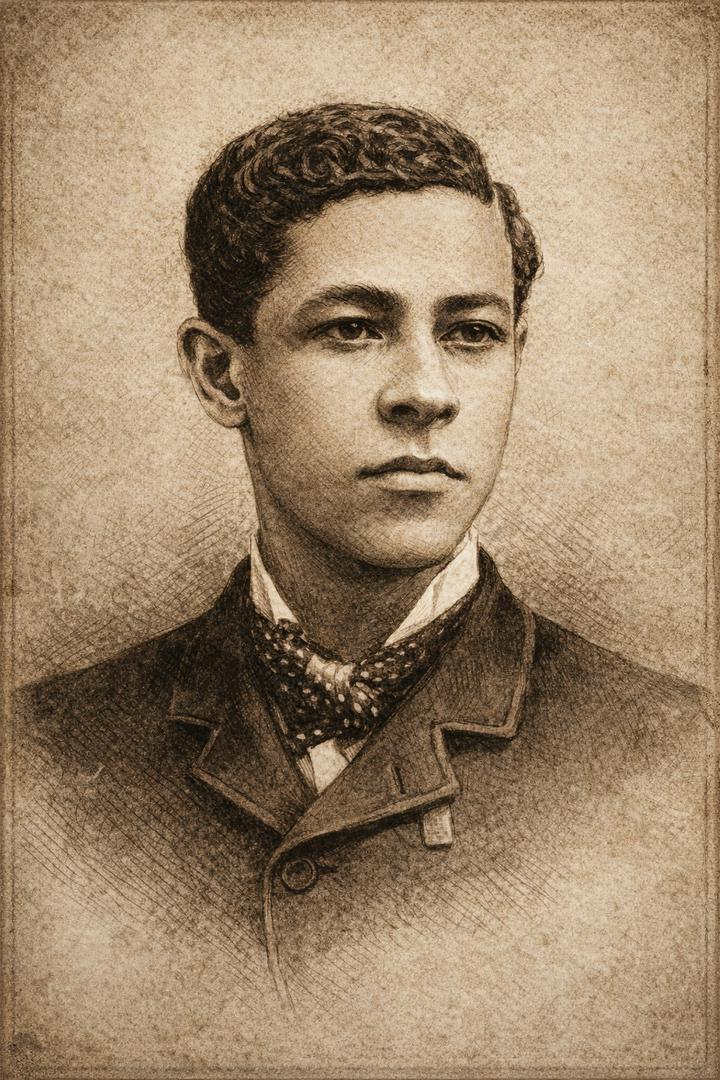
March 21, 1856 - Henry Ossian Flipper was born in Thomasville, Georgia, into slavery. His life began in a nation that had already decided how far Black people were supposed to go, and how firmly they were supposed to stay in their place. Flipper had other plans. He came of age during Reconstruction and, in 1873, was appointed to the U.S. Military Academy at West Point, one of the most elite institutions in the country. Getting in was one battle. Surviving it was another. He faced harassment, isolation, and open hostility, yet refused to be broken by any of it. In 1877, Henry Ossian Flipper became the first Black graduate of West Point and the first Black commissioned officer in the regular U.S. Army. That was no small ceremonial first. It was a direct blow against a system built to exclude Black Americans from military leadership, prestige, and power. His success proved what had always been true: the barrier was never ability, it was racism. After graduation, Flipper served with the 10th Cavalry, one of the famed Buffalo Soldier regiments. His career reflected discipline, endurance, and service, even as injustice continued to follow him. Still, history remembers what matters most: Henry Ossian Flipper crossed a line this country never intended for a Black man to cross… and he did it in uniform. His name deserves to be spoken with respect, not tucked away like a footnote. Sources: National Archives, U.S. Army #OnThisDay #BlackHistory #HenryOssianFlipper #WestPoint #BuffaloSoldiers #MilitaryHistory #BlackExcellence #HiddenHistory #AmericanHistory #BlackPioneers

LataraSpeaksTruth

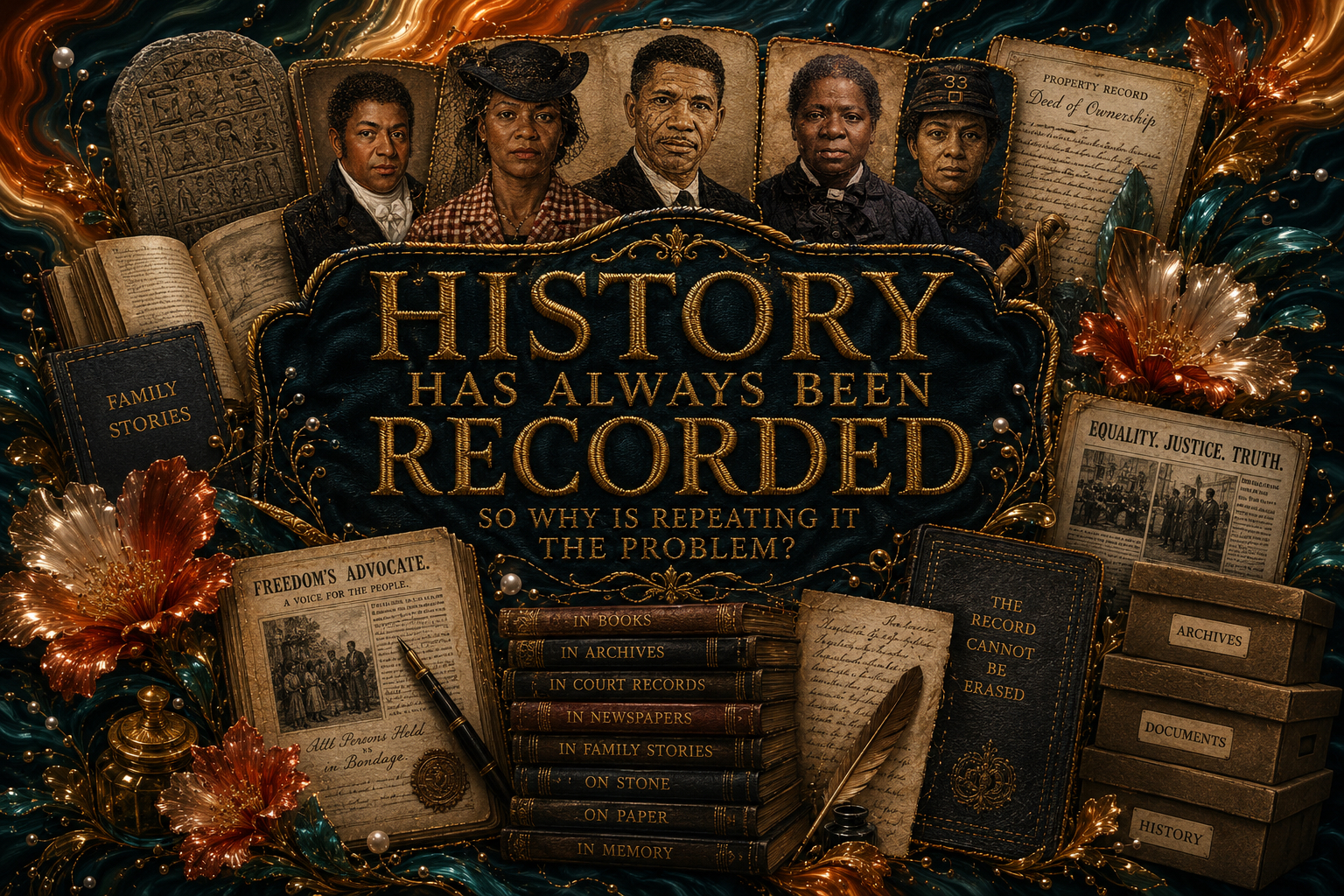
History Has Always Been Recorded History has been recorded for as long as human beings learned how to leave messages behind. On stone. On paper. In books. In court records. In newspapers. In archives. In family stories. And honestly…a lot of these stories were new to me too. That is part of why I started posting them. Not just to teach. To learn. I have learned about inventors, soldiers, towns, court cases, educators, artists, pioneers, tragedies, and moments in history I was never fully taught growing up. And judging by the messages and comments I receive every day, I am clearly not the only one. People constantly tell me: “I never heard of this before.” “They didn’t teach us this.” “Thank you for sharing this.” So when people try to act arrogant or sarcastic because somebody did not already know a piece of history, it completely misses the point. The point is not pretending we know everything. The point is being willing to learn. Because history was never meant to be locked away only for scholars, professors, or people trying to sound intellectually superior online. History belongs to everybody. And for centuries, people have recorded history, preserved it, studied it, and passed it down. Nobody complains when it sits quietly in a library. Nobody calls it divisive when it is printed in textbooks or stored in archives. But the moment somebody repeats that same history publicly, especially history connected to race, inequality, exclusion, or discrimination… Now suddenly people get uncomfortable. Now suddenly it is “making everything about race.” Now suddenly it is “living in the past.” No. It is called keeping record. And if history is important enough to preserve for hundreds of years, then people should be mature enough to discuss it without attacking everybody who talks about it. #HistoryMatters #PublicMemory #CulturalCommentary #BlackHistory #KeepRecord

LataraSpeaksTruth

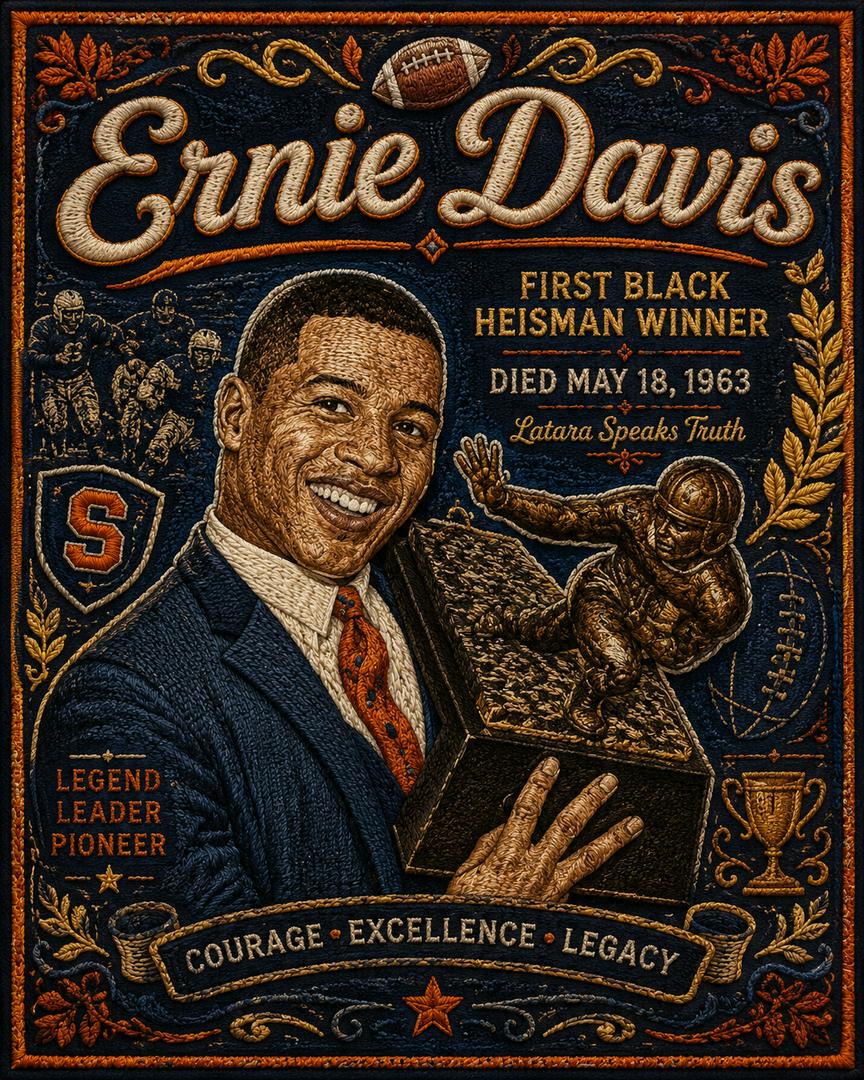
On May 18, 1963, Ernie Davis died at only 23 years old. He was not just a football player. He was history. Ernie Davis played for Syracuse University, where he became one of the most powerful college football players of his time. In 1961, he became the first Black player to win the Heisman Trophy. That alone made his name unforgettable. But his story carries a painful weight because his future was just beginning. In 1962, Davis was selected first overall in the NFL Draft by Washington, then traded to the Cleveland Browns. The idea of him playing alongside Jim Brown had football fans excited. It could have been one of the most powerful backfields the sport had ever seen. But Ernie Davis never got to play a regular-season NFL game. He was diagnosed with leukemia before his professional career could truly begin. He fought the illness, practiced with the Browns, and still hoped to return to the field. But on May 18, 1963, he passed away in Cleveland. Some calendars incorrectly list his death year as 1962, but the correct year is 1963. That matters because history deserves accuracy. Ernie Davis’ life was short, but his impact was not small. He broke a major barrier in college football. He carried himself with dignity during a time when Black athletes were still being forced to prove themselves twice. He showed the world what greatness looked like before the world even got to see all he could become. His nickname was “The Express.” And maybe that name fits in more ways than one. Because Ernie Davis moved through history quickly, powerfully, and unforgettable. Stopped too soon, but never erased. #LataraSpeaksTruth #ErnieDavis #SportsHistory #BlackHistory #HeismanTrophy

LataraSpeaksTruth

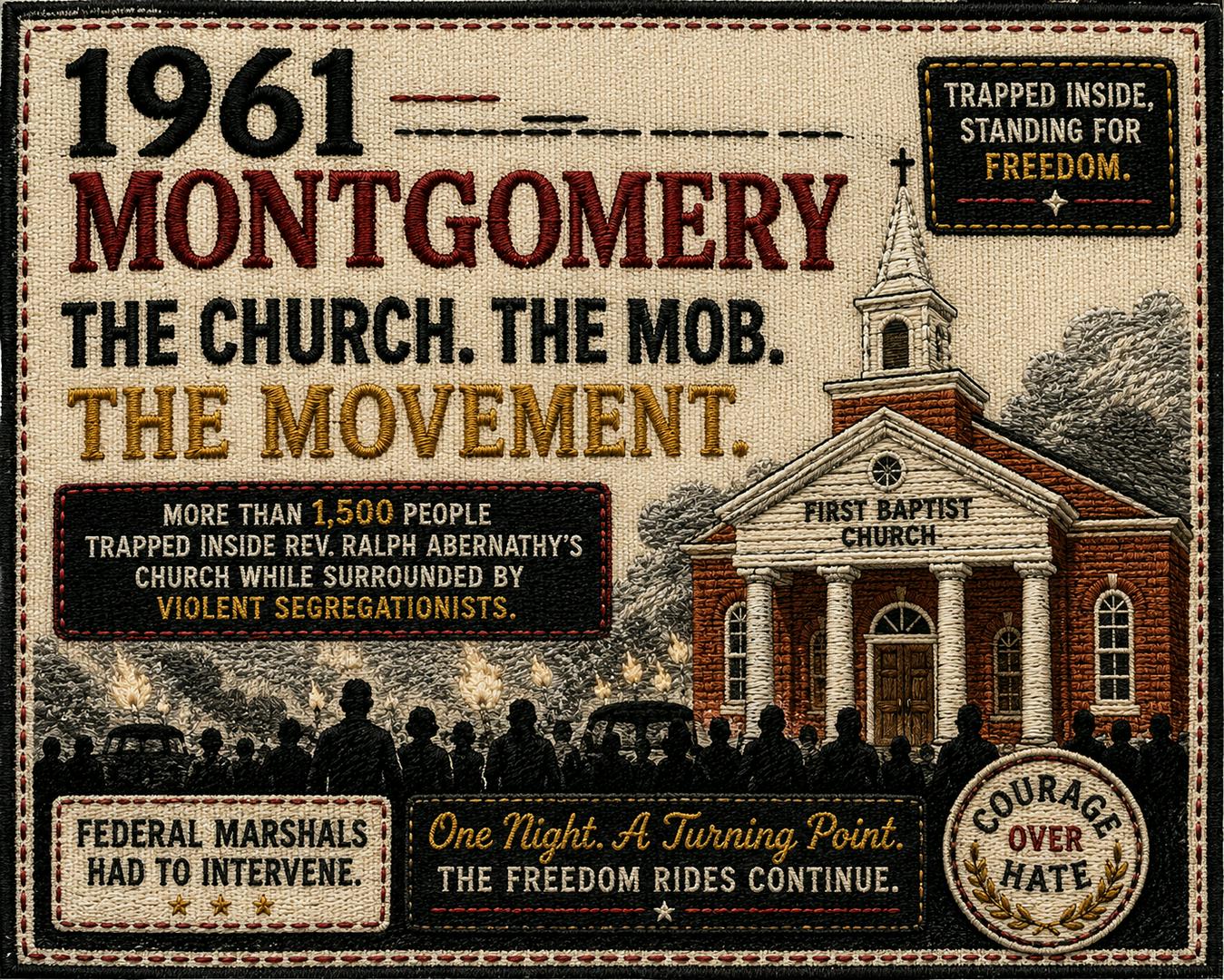
1961: The Night Montgomery Surrounded the Church On May 21, 1961, more than 1,500 people gathered inside First Baptist Church in Montgomery, Alabama, where Reverend Ralph Abernathy hosted a service supporting the Freedom Riders. Inside were Martin Luther King Jr., Fred Shuttlesworth, James Farmer, Diane Nash, and others standing with the riders after the previous day’s brutal attacks at the Montgomery bus station. Outside, a violent white mob surrounded the church. Cars were damaged. Threats were made. Bricks were thrown. The crowd inside was trapped for hours while fear pressed against the walls. This was not just a church service. It became a standoff over whether America would protect citizens demanding rights already promised by law. The Freedom Riders were challenging segregation in interstate travel after Supreme Court rulings said those practices were unconstitutional. But in the Deep South, the law on paper did not always mean safety in real life. From inside the church, King contacted Attorney General Robert F. Kennedy for help. Federal marshals were sent in, but the danger grew so serious that Alabama’s National Guard was eventually brought in to clear the mob and help protect the people inside. That night showed the world the cost of courage. The Freedom Riders were not asking for special treatment. They were testing whether America meant what it said. And Montgomery answered with violence. But the riders did not quit. The movement kept going, and their pressure helped force stronger federal enforcement against segregation in interstate travel. That church became more than a building that night. It became proof that freedom sometimes had to be defended from inside locked doors while hate shouted from outside. #FreedomRides #MartinLutherKingJr #RalphAbernathy #CivilRightsHistory #BlackHistory #MontgomeryAlabama

LataraSpeaksTruth

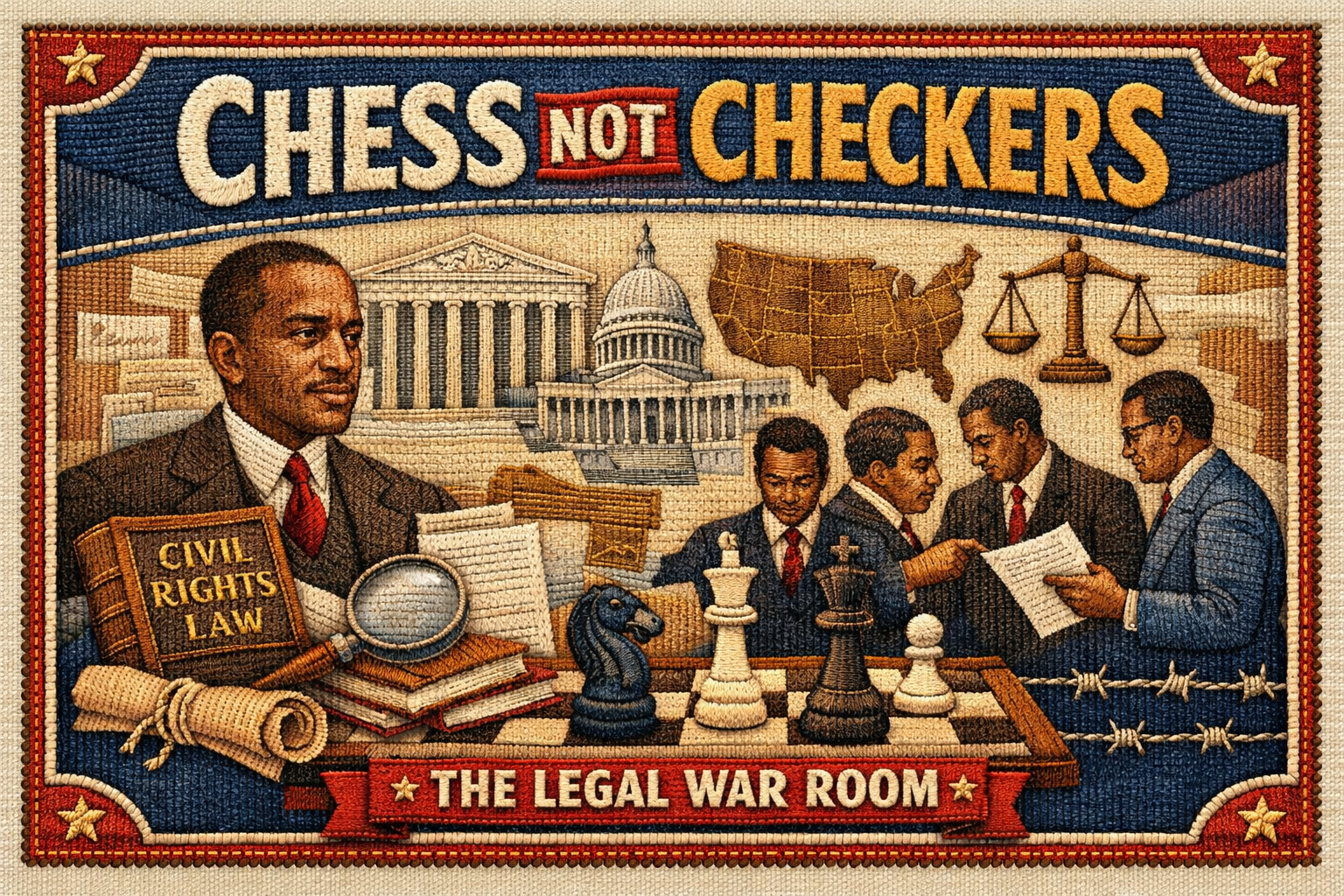
January 1, 1931 marks a quiet but serious turning point in American history. Charles Hamilton Houston becomes vice-dean of Howard University School of Law and almost immediately reshapes it into something more than a classroom. He builds a legal training ground with a single purpose: strategy. Houston understood that segregation would not fall simply because it was unjust. It would fall only if it could be proven unconstitutional. So he trained lawyers to work with discipline and precision, to identify weaknesses in the law, document inequality in detail, and build cases strong enough to force the courts to act. This was not protest law. It was methodical law. Students were sent into the South to gather evidence, photograph conditions, interview communities, and expose how “separate but equal” failed in practice. Houston demanded excellence because he knew the stakes. Courts move slowly and only when the record leaves them no alternative. That strategy later became the legal foundation for cases like Brown v. Board of Education. Lawyers such as Thurgood Marshall did not emerge by chance. They were shaped by years of deliberate training and long-term planning. January 1, 1931 reminds us that some of the most important changes in history do not arrive with noise. They begin quietly, in classrooms, with patience, discipline, and a clear understanding of how power actually works. #January1 #OnThisDay #AmericanHistory #LegalHistory #HowardUniversity #CivilRightsHistory #BlackHistory #LongGame #QuietPower

LataraSpeaksTruth

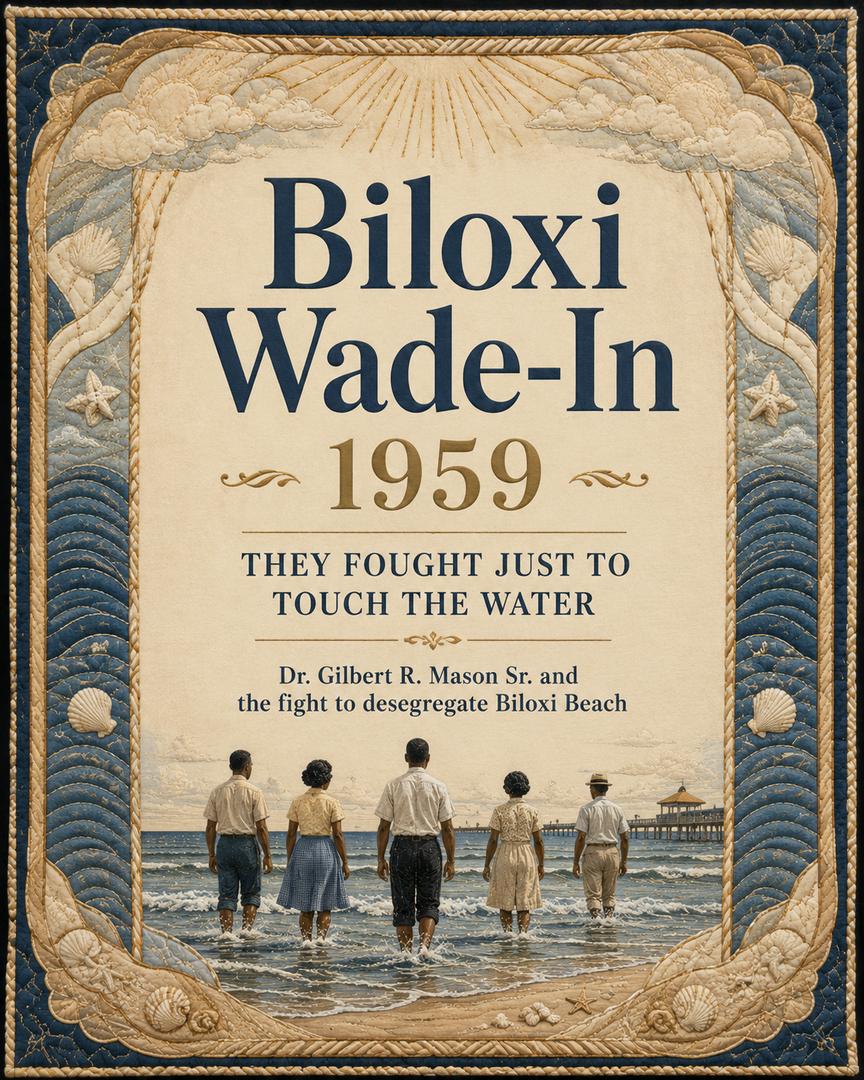
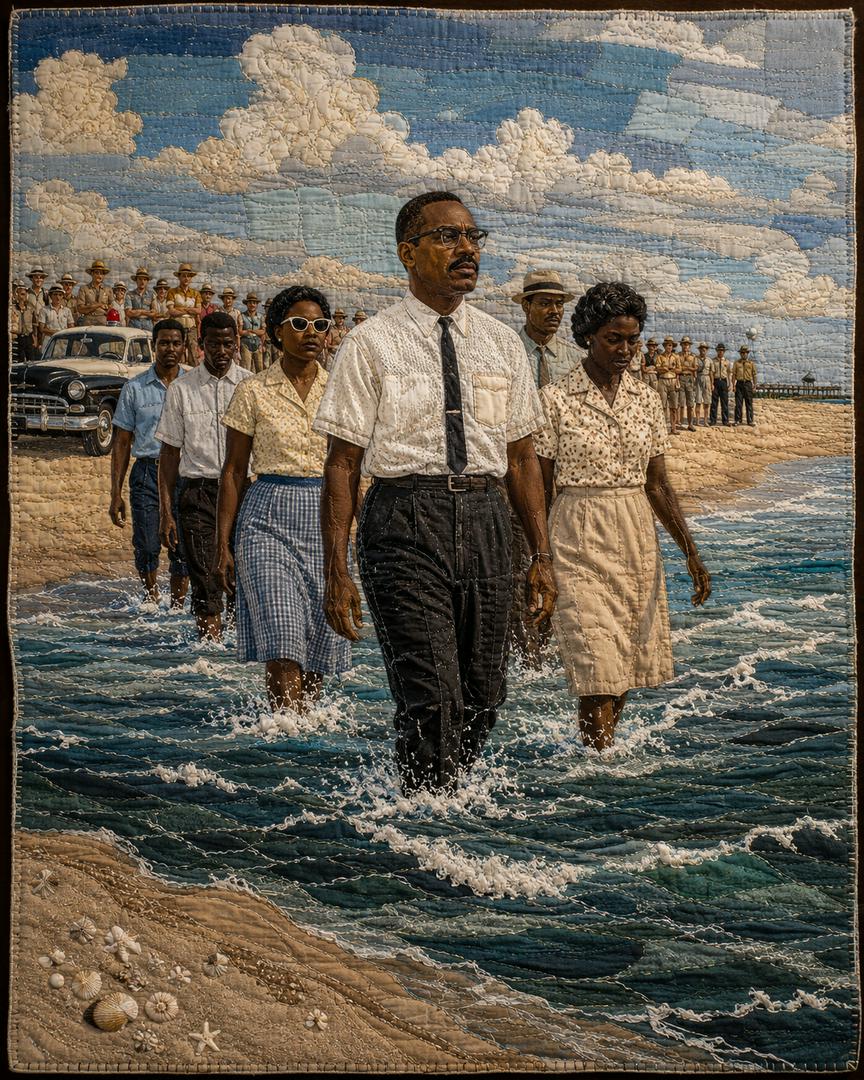
On May 14, 1959, Dr. Gilbert R. Mason Sr., a Black physician in Biloxi, Mississippi, walked onto Biloxi Beach with a small group that included Black residents and children. Then they stepped into the Gulf of Mexico. That simple act was treated like defiance. They were not carrying weapons. They were not destroying property. They were not asking for luxury. They were challenging a system that told Black people they could not enjoy a public beach, sit freely on the sand, or touch the same water as white residents. That is what segregation looked like in everyday life. It was not only about schools, restaurants, buses, or voting booths. It reached all the way to the shoreline. Dr. Mason knew Biloxi Beach was public. It had been supported by public money, yet Black residents were denied access. So the first Biloxi wade-in became a quiet but powerful act of resistance. The message was clear: public beaches should be public for everyone. But the fight did not end that day. The wade-ins continued, and resistance turned violent. On April 24, 1960, more than 100 Black residents came to the beach for another wade-in and were met by white mobs. People were attacked for standing on sand and stepping into water connected to a beach their own tax dollars helped maintain. That is the part that should never be softened. They had to fight just to touch the water. Dr. Mason and others kept pushing through protest, legal action, intimidation, and public pressure. Their courage helped expose how deeply segregation controlled ordinary life in Mississippi. It was not only about where Black people could sit, eat, vote, or learn. It was also about whether they could take their children to the beach and exist in peace. Today, the Biloxi wade-ins remain an overlooked civil rights story. They remind us that freedom was not only fought for in courtrooms, churches, buses, and lunch counters. #BlackHistory #BiloxiWadeIn #MississippiHistory #CivilRightsHistory #LataraSpeaksTruth

LataraSpeaksTruth

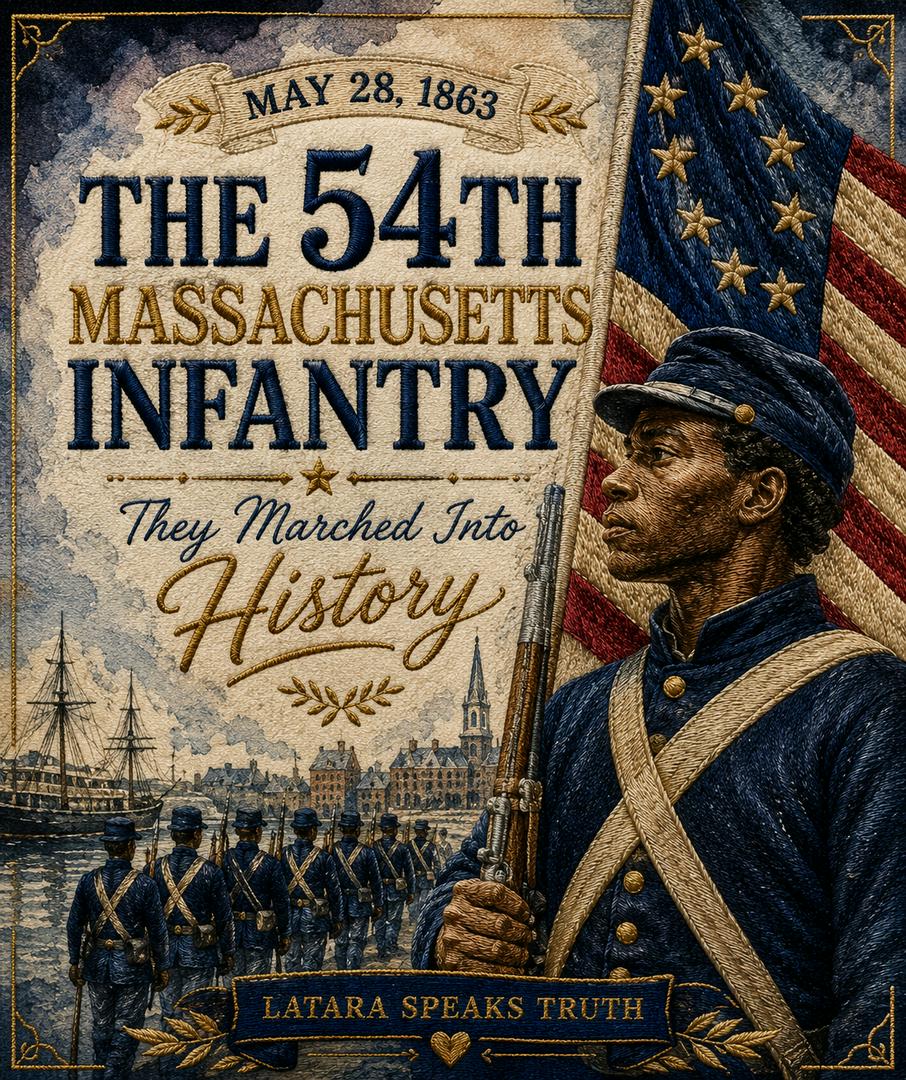
On May 28, 1863, the 54th Massachusetts Infantry left Boston to fight in the Civil War. The regiment became one of the most recognized Black military units in American history. Many of the men were free Black volunteers who chose to serve the Union at a time when racism followed them even in uniform. They did not march into equality. They marched into discrimination, unequal pay, and the threat of brutal treatment if captured by Confederate forces. Still, they stepped forward. Their service challenged the false belief that Black men lacked the courage, discipline, or loyalty to serve as soldiers. The 54th Massachusetts later became known for its assault on Fort Wagner in South Carolina, where its bravery gained national attention. Their story would later inspire the film Glory, but the real history carries even more weight. These men were not just fighting for the Union. They were fighting for dignity, freedom, and the right to be seen as men in a country that still tried to deny their humanity. The 54th Massachusetts marched out of Boston and into history. #BlackHistory #CivilWarHistory #LataraSpeaksTruth

LataraSpeaksTruth

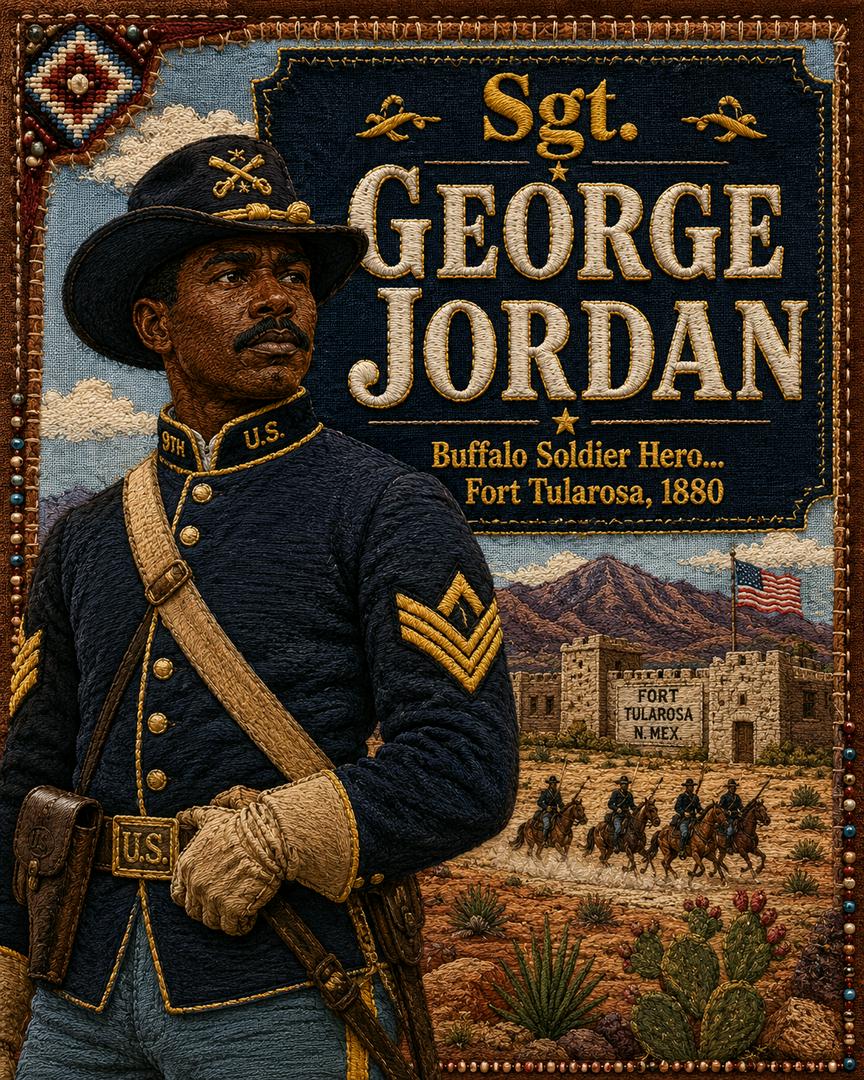
On May 14, 1880, Sgt. George Jordan of Company K, 9th U.S. Cavalry, stood at Fort Tularosa, New Mexico, facing the kind of moment history should never forget. Jordan was one of the Buffalo Soldiers, Black troops who served the United States after the Civil War while still living under the weight of racism, segregation, and unequal treatment. They wore the uniform, defended the country, and carried themselves with discipline, even when the country did not fully honor their humanity. At Fort Tularosa, Jordan led a small detachment of only 25 men. In the action later recognized as part of his Medal of Honor service, his unit repulsed a force of more than 100 Apaches. That was not a small stand. That was leadership under pressure. That was courage with no room for panic. Jordan’s story did not end there. His Medal of Honor also recognized his actions at Carrizo Canyon, New Mexico, on August 12, 1881. There, he held an exposed position under dangerous conditions and helped prevent his command from being surrounded. Nearly a decade later, on May 7, 1890, Sgt. George Jordan was awarded the Medal of Honor for his service. What makes this story powerful is not just the battle itself. It is the contradiction behind it. Men like George Jordan served with bravery in a nation that still questioned their worth. They defended forts, protected settlements, and followed orders, even while facing discrimination from the same country they served. The Buffalo Soldiers were not background figures in American military history. They were builders of legacy. They were disciplined fighters, frontier soldiers, and men whose service deserves to be remembered with the same seriousness given to any other decorated unit. Sgt. George Jordan’s stand at Fort Tularosa is a reminder that courage does not always come with fair treatment. Sometimes courage shows up anyway. #GeorgeJordan #BuffaloSoldiers #MilitaryHistory #BlackHistory #MedalOfHonor #OnThisDay

LataraSpeaksTruth

Jan Ernst Matzeliger was an inventor whose work transformed the shoe industry during the late nineteenth century. He was born on September 15, 1852, in Paramaribo, Suriname, which was then called Dutch Guiana. His father was a Dutch engineer, and his mother was a Black Surinamese woman. As a young man, Matzeliger developed mechanical skills while working around machinery and ships before later immigrating to the United States. In the 1870s, Matzeliger settled in Lynn, Massachusetts, a city known at the time as a major center of shoe manufacturing. During this period, one of the most difficult and expensive steps in making a shoe was the process called lasting. Lasting is the step where the upper part of a shoe is pulled and shaped around a form called a last and then attached to the sole. Before Matzeliger’s invention, this step had to be done by hand by skilled craftsmen known as lasters, making the process slow and costly. Matzeliger studied the problem carefully and began developing a machine that could perform this task automatically. After years of experimentation, he successfully created the shoe lasting machine, which could attach the upper part of a shoe to the sole far faster than hand labor. He received a patent for the lasting machine in 1883. His invention greatly increased production in shoe factories and helped make footwear more affordable for ordinary people. Matzeliger’s work became widely used in the shoe manufacturing industry and played a major role in the growth of mass shoe production in the United States. Although his invention had a major impact, he did not live long after his success. He died on August 24, 1889, at the age of 36. His contribution to industrial manufacturing remains an important part of American history, Black history, and the development of modern footwear production. #JanErnstMatzeliger #Inventors #AmericanHistory #IndustrialHistory #BlackHistory #Innovation #ShoeIndustry #HistoryMatters #LataraSpeaksTruth

Tag: BlackHistory - Page 2 | LocalAll