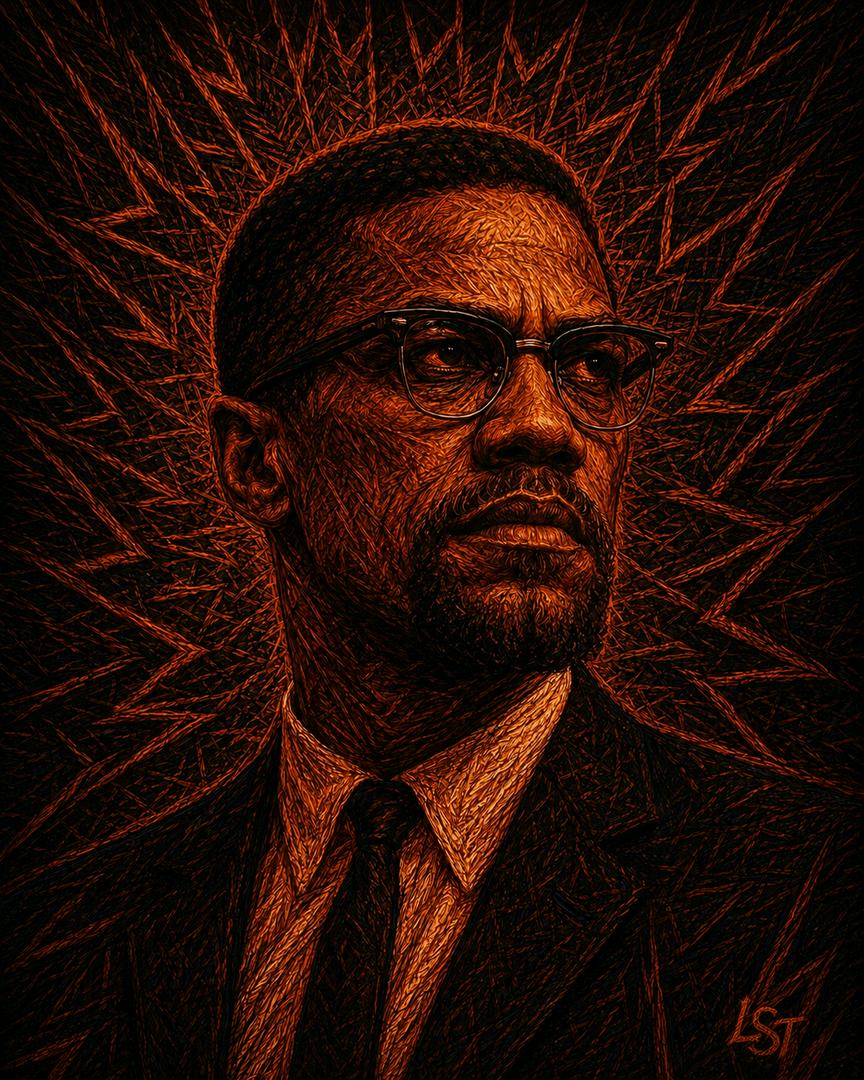
May 19, 1925, Malcolm X was born Malcolm Little in Omaha, Nebraska, and the world did not yet know a voice had arrived that would shake America awake.
He was born to Earl and Louise Little, parents connected to Marcus Garvey’s teachings and the belief that Black people deserved dignity, self-respect, and self-determination. Malcolm came from a family marked by race, resistance, and danger.
His childhood was not soft. His family faced threats, displacement, and tragedy. His father died when Malcolm was young, and his mother later struggled under grief, poverty, and institutional pressure. His early life showed how America could break a Black family apart and then blame the child for surviving the pieces.
But Malcolm survived.
He went through hardship, prison, transformation, faith, discipline, study, and rebirth. Malcolm Little became Malcolm X, rejecting a surname tied to slavery and claiming an identity that refused to bow. Later, after his pilgrimage to Mecca, he became El-Hajj Malik El-Shabazz, with a broader view of justice, faith, and humanity.
Malcolm X was powerful because he made people confront what they wanted to ignore. He spoke about racism, police brutality, poverty, Black pride, self-defense, global human rights, and the hypocrisy of a country preaching freedom while denying it to Black people.
Some called him too harsh. But sometimes truth only sounds harsh to people comfortable with the lie.
His life was cut short on February 21, 1965, when he was assassinated in New York. But his words did not die with him. They kept moving through generations, through classrooms, speeches, books, protests, music, and every person who learned that loving yourself in a world that taught you not to is an act of resistance.
Malcolm X was not just history.
He was a warning.
He was a mirror.
And he was a reminder that Black dignity was never something to beg for.
It was something to stand on.
#MalcolmX #BlackHistory #OnThisDay #HumanRights #BlackVoices