Tag Page USHIstory

#USHIstory
HydraHex

🇺🇸 The Day the Flag Rose — and America Told the World We Won’t Break

February 23, 1945. On the black sands of Iwo Jima, Marines had been fighting for five days straight. Every inch of ground was paid for in blood. At 10:20 a.m., a small group of Marines climbed Mount Suribachi. Under enemy fire, they planted the Stars and Stripes. The moment the flag caught the wind, cheers erupted from the beach to the ships offshore. It wasn’t just a flag going up. It was a signal to the entire world: America does not quit. That image — six Marines pushing the pole skyward — became the most iconic photograph of World War II. It wasn’t staged. It wasn’t polished. It was raw, gritty proof that our will is stronger than any fortress. For every American, especially those who’ve worn the uniform, that moment still matters. It’s the reminder that no matter how dark the fight, the flag can still rise. #Military #USHistory #Patriotism

🇺🇸 The Day the Flag Rose — and America Told the World We Won’t Break
1776 Patriot

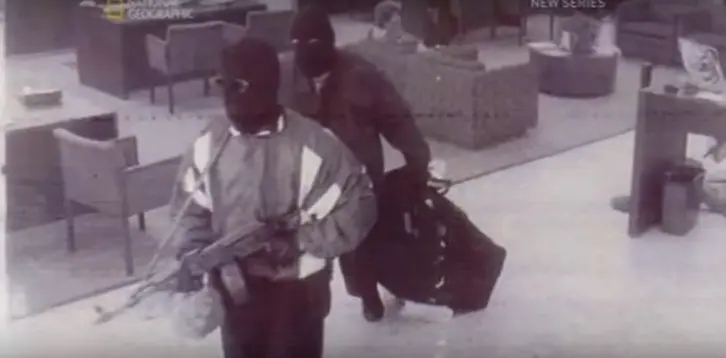
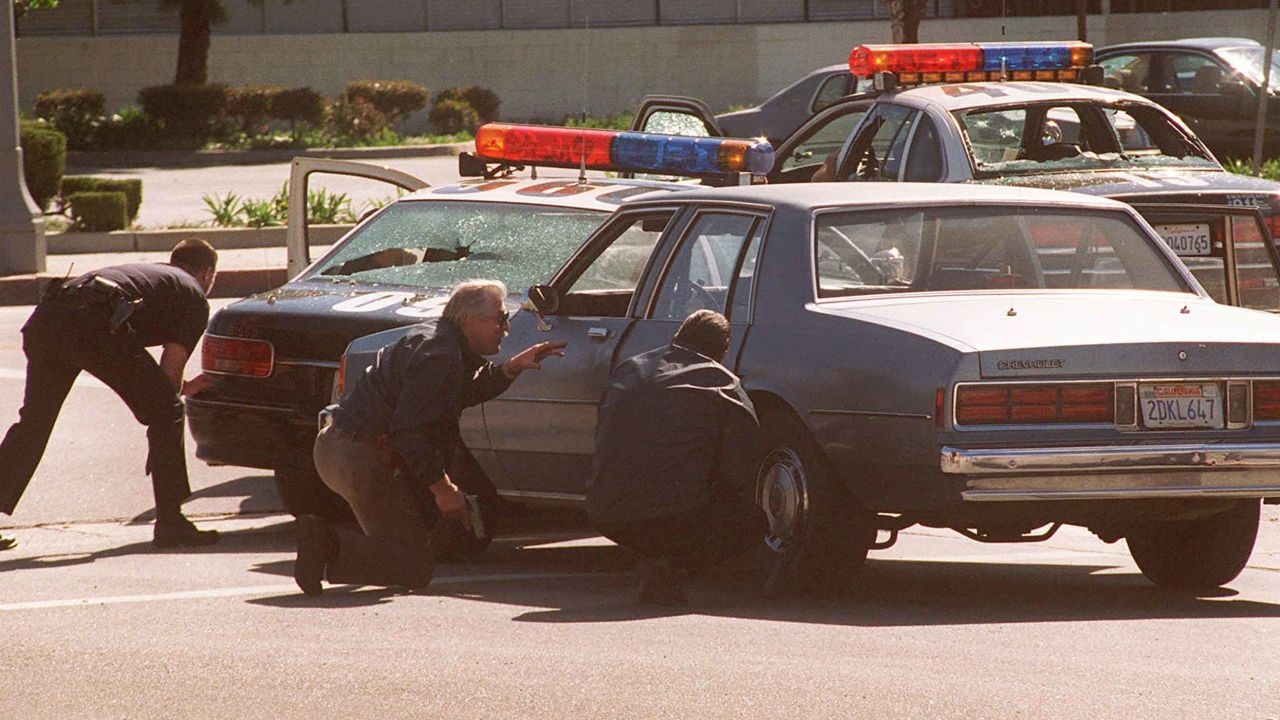
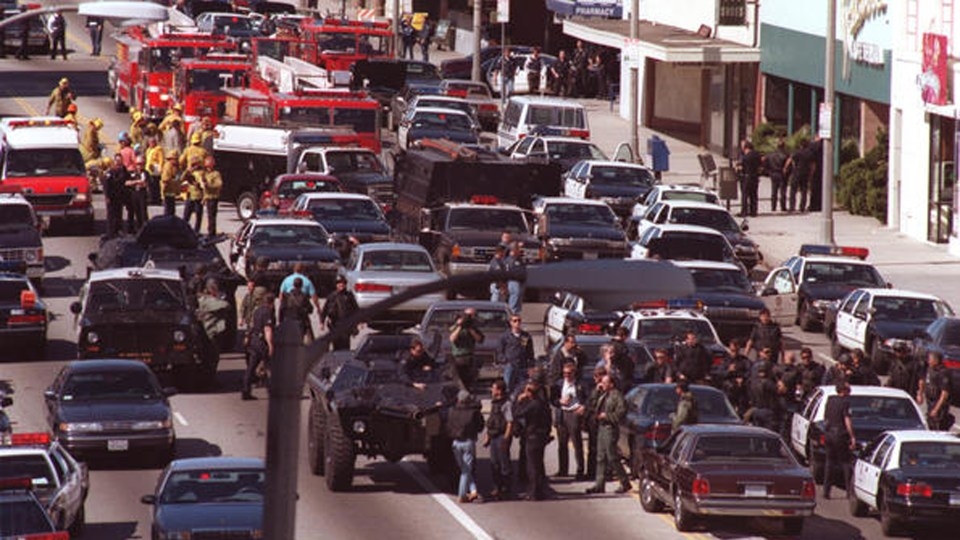
Inside the Largest SWAT Hostage Rescue Operation in U.S. History The Good Guys electronic store siege in Sacramento remains one of the most significant hostage rescue missions ever carried out by a SWAT team. The incident began when four armed assailants stormed the store and seized 41 hostages. They demanded 4 million dollars, bulletproof vests, transportation, and safe passage out of the country. The captors fired inside the store, forced hostages to the windows, and repeatedly threatened to kill if their demands were not met. Tragically, three hostages were killed early in the standoff when the assailants opened fire after negotiators delayed meeting their demands, increasing pressure and fear among both hostages and officers. Negotiators worked tirelessly while SWAT teams used fiber optic probes, remote cameras, and thermal imaging to map the store’s interior. Over half of the layout offered no clear lines of sight, forcing officers to rely heavily on sound and heat signatures. When two additional hostages attempted to escape later in the siege and were shot, one fatally, command staff recognized the high risk of further casualties and authorized an immediate assault. SWAT executed a coordinated multi point breach using distraction devices that produced more than 170 decibels to disorient the captors. Officers moved swiftly through a room packed with over 30 civilians, many within feet of armed assailants. Three hostage takers were killed during the operation after firing at officers and attempting to use hostages as shields. The fourth assailant surrendered when cornered and was later sentenced to 49 consecutive life terms without the possibility of parole. In total, 40 surviving hostages were rescued, and the operation remains a key case study for its scale, precision, and the extraordinary coordination required to save lives under extreme pressure. #TrueCrime #History #America #USA #SWAT #USHistory #RescueStory

1776 Patriot

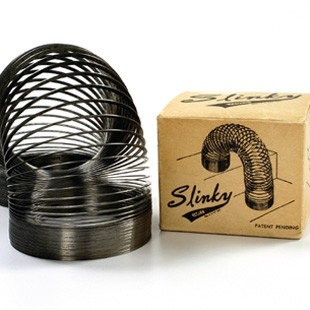
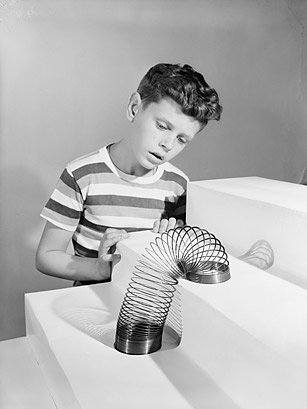
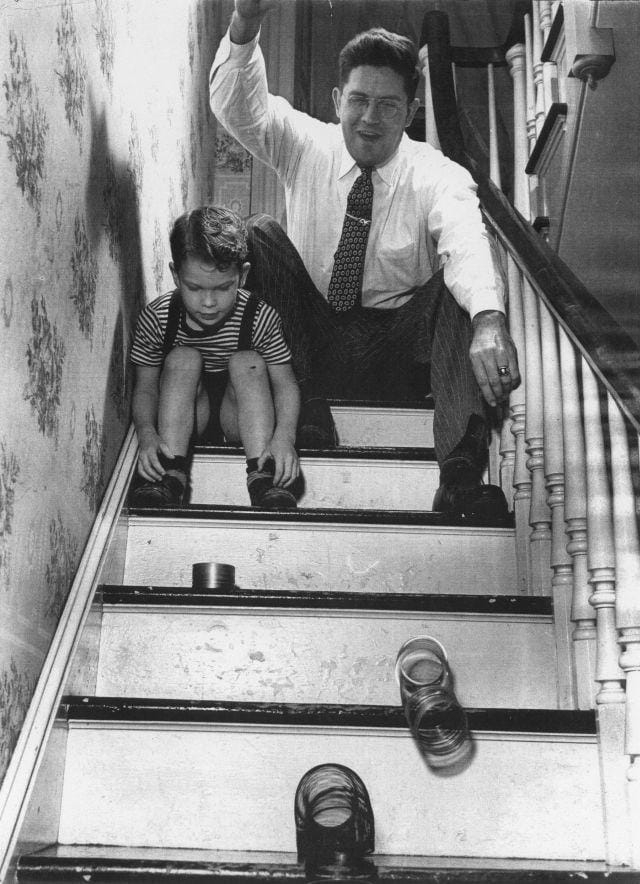
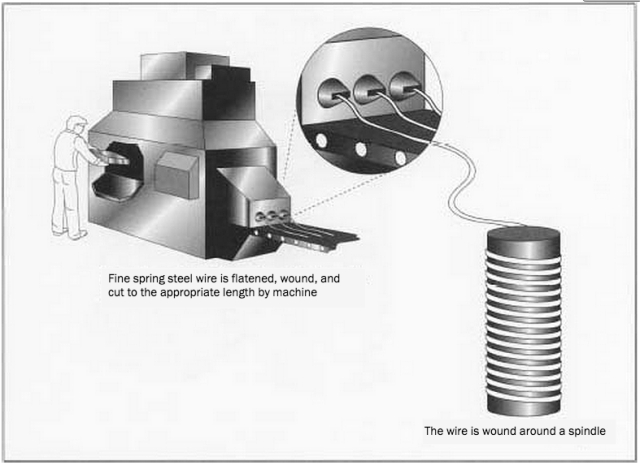
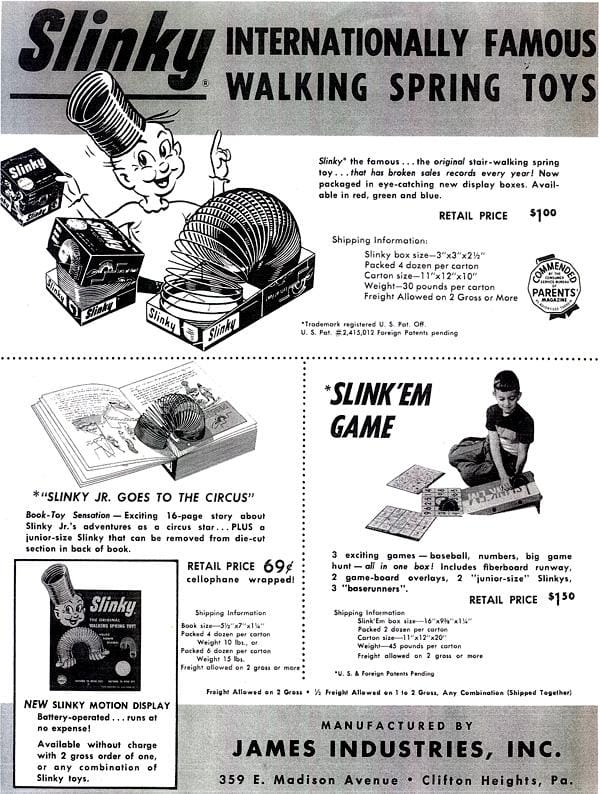
WWII Walking Wonder: The Untold Story of the Slinky In 1943, naval engineer Richard James was working in his Philadelphia workshop on tension springs meant to stabilize sensitive instruments aboard battleships during World War II. While adjusting a spring, it slipped from his hands and “walked” across the floor in a mesmerizing motion. James was astonished. He and his wife, Betty, immediately realized this accidental movement could be the basis for a playful invention. They experimented with dozens of prototypes, measuring how far springs could travel, how many flips they could make, and how quickly they could complete a descent. After testing hundreds of coils, they determined that a spring 2.5 inches in diameter made from high-grade Swedish steel produced the most consistent walking effect. Slight variations in coil thickness, tension, and length drastically changed the motion, and only about 2% of springs tested achieved the ideal “walk.” The war influenced materials and timing: steel was rationed, making their carefully sourced Swedish steel highly valuable, and small-scale production required meticulous hand-winding and testing. Post-war America’s shift to consumer goods in 1945 created the perfect market moment, allowing the Jameses to bring their invention to stores. Each original Slinky sold for $1, equivalent to roughly $17 today. Finally, they revealed the creation to the public: at Gimbels department store in Philadelphia, 400 units were displayed, and all sold within 90 minutes. By the early 1950s, Slinky was sold in over 30,000 stores nationwide, and more than 50 million units were purchased by 1960. Today, over 300 million Slinkys are sold annually worldwide, including metal, plastic, glow-in-the-dark, and themed editions like Disney and Star Wars. The toy also serves as an educational tool, demonstrating wave motion, gravity, and momentum in classrooms across the globe. #WWII #WWIIHistory #USHistory #History #America #USA #Military #Toys
1776 Patriot

Built to Last: The USS Constitution’s Secret Construction That Defied Cannonballs

The USS Constitution, famously called “Old Ironsides,” began construction in 1794 at Edmund Hartt’s shipyard in Boston, part of the U.S. effort under the Naval Act of 1794 to build a strong fleet to protect American trade. Designed by Joshua Humphreys, the Constitution was bigger, faster, and more heavily armed than most frigates of the time. Its hull was built from live oak, a very dense and strong wood, while white oak and pine were used for framing, decks, and internal supports. Shipwrights used hand tools like saws, chisels, mallets, and augers to shape each plank and beam, carefully fitting them together. Humphreys added diagonal braces, heavy angled supports, and double planking to make the hull strong and flexible enough to absorb cannon hits. Wooden pegs, iron bolts, and fasteners held everything together, while tar and rope fibers sealed the seams to keep the ship watertight. Deck beams were notched and bolted, and the masts were set into reinforced posts. Pulleys and ropes helped lift heavy timbers into place. Workers measured and adjusted everything with simple tools like plumb lines, squares, and marking gauges to ensure the hull was straight and strong. The bottom of the ship was covered with copper to prevent marine growth, keeping her fast and seaworthy. By the time she was launched on October 21, 1797, the Constitution was 204 feet long, with a 43-foot-wide beam, and carried 44 guns, making her one of the most powerful frigates of her era. Her combination of speed, firepower, and advanced construction allowed her to survive battles that would have destroyed lesser ships. The Constitution’s construction shows the skill, ingenuity, and hard work of early American shipbuilders. Today, she is a floating museum in Boston, a lasting symbol of U.S. naval strength and craftsmanship. #USA #USHistory #Shipbuilding #USMilitary #Military

Built to Last: The USS Constitution’s Secret Construction That Defied Cannonballs
1776 Patriot

Arkansas ICBM Silo Accident: When A Titan II Almost Went Nuclear

On September 18, 1980, a routine maintenance operation at Titan II Missile Complex 374-7 near Damascus, Arkansas, escalated into one of the most serious nuclear accidents in U.S. history. Airmen were performing detailed maintenance on the missile, which stood 103 feet tall, weighed 33 tons, and housed a W-53 thermonuclear warhead capable of 9 megatons, enough to destroy an entire city. During the operation, an airman accidentally dropped an 8-pound socket wrench. The tool fell roughly 80 feet, bounced off a steel thrust mount, and punctured the missile's first-stage fuel tank, releasing Aerozine 50, a highly flammable liquid propellant that reacts instantly with dinitrogen tetroxide. The silo, buried deep and designed to withstand conventional blasts, became a volatile trap. The Air Force evacuated personnel and began emergency containment. Crews attempted to pump water into the silo to dilute fuel vapors and vent pressure, but the chemical reaction persisted. Overnight, the situation worsened, and the combination of leaking fuel and oxidizer created a constant threat of fire or explosion. Around 3:00 a.m. on September 19, a massive explosion occurred, launching the 740-ton silo door hundreds of feet away. The missile and its W-53 warhead were ejected intact. Safety mechanisms prevented a nuclear detonation or radioactive release, but the blast destroyed the silo and nearby equipment. One airman was killed and 21 others injured, mostly emergency responders from Little Rock Air Force Base. Senior Airman David Livingston died, while others suffered burns, broken bones, and shock. The images of the blast became a stark symbol of the Titan II program's dangers. The Damascus accident revealed serious weaknesses in missile maintenance and emergency safety protocols. It showed how a minor error could almost trigger a nuclear catastrophe and prompted the Air Force to review safety measures across the missile program. #USHistory #History #USA #America #Missiles #Defense

Arkansas ICBM Silo Accident: When A Titan II Almost Went NuclearArkansas ICBM Silo Accident: When A Titan II Almost Went NuclearArkansas ICBM Silo Accident: When A Titan II Almost Went NuclearArkansas ICBM Silo Accident: When A Titan II Almost Went NuclearArkansas ICBM Silo Accident: When A Titan II Almost Went Nuclear
1776 Patriot

Chaos and Infection: The Assassination of President Garfield On July 2, 1881, shortly after 9:30 a.m., President James Garfield, the 20th president of the United States, was shot at Washington’s Baltimore and Potomac Railroad Station by Charles Julius Guiteau, a mentally unstable lawyer seeking political reward. Garfield, traveling with Secretary of State James Blaine, had no Secret Service protection. Like Lincoln in 1865, Garfield was vulnerable. Guiteau, who studied the station for days, carried a .442 caliber British Bulldog revolver and fired twice. The first bullet shattered Garfield’s right humerus. The second lodged in his back near the pancreas and kidneys, passing within millimeters of the aorta. Chaos erupted as travelers screamed, trunks toppled, and dozens froze. Blaine knelt beside Garfield. Guiteau shouted, “I did it! I just shot the president. I had to save the Republican Party!” Doctors led by D. Willard Bliss repeatedly probed Garfield’s wounds with unsterilized fingers and instruments during the first weeks. Bliss said, “I can find it with my finger if it is anywhere to be found,” spreading infection that caused abscesses and sepsis. Alexander Graham Bell tried to locate the bullet with a metal detector, but bed springs distorted results. Garfield endured 80 days of fever, abscesses, and severe weight loss, reportedly saying, “I never expected to live to see the end of this.” Newspapers reported daily, and tens of thousands followed updates nationwide. Garfield died September 19, 1881, 79 days after being shot. Vice President Chester Arthur assumed office. Guiteau was tried, convicted, and hanged June 30, 1882. The assassination exposed presidential security weaknesses and prompted the Pendleton Act of 1883, establishing merit-based federal employment. Repeated probing of Garfield’s wounds caused infection, contributing to the 30–40% mortality for major bullet injuries, turning a survivable wound fatal. #History #USHistory #America #USA
1776 Patriot

Finding an Assassin: The Manhunt for John Wilkes Booth

On the night of April 14, 1865, after assassinating President Abraham Lincoln at Ford’s Theatre, John Wilkes Booth vanished into the darkness of Washington. He crossed the Navy Yard Bridge into Maryland, his leg broke from the leap to the stage. Within hours, Secretary of War Edwin Stanton launched one of the largest manhunts in U.S. history. Telegraphs carried his description to surrounding states and mounted patrols sealed the capital. Rewards of $100,000 prompted tips, rumors, and informants. For days, Union forces pursued Booth and his accomplice David Herold across Maryland and Virginia. Cavalry swept roads, infantry scoured forests, and scouts tracked footprints through barns, and swamps. Detectives questioned locals, tavern keepers, and ferrymen, compiling leads that shifted squads across counties. At Surratt’s Tavern, Booth and Herold collected a carbine (gun), whiskey, and field glasses (portable telescopes for observing distant roads), left earlier, evidence later used against Mary Surratt. Farther south, they bartered for food and supplies, which locals soon reported. At Dr. Samuel Mudd’s home, Booth’s broken leg was set, as patrols pressed closer. The chase became a deadly game of anticipation. False sightings and misdirections tested Union coordination, but telegraph lines kept updates flowing. Cavalry patrolled roads, foot soldiers scoured farms, and units redeployed with every lead. Booth’s options dwindled as the net tightened, forcing him deeper into Virginia. The pursuit ended on April 26 at Richard Garrett’s farm near Port Royal. Lieutenant Edward Doherty’s cavalry surrounded the barn. Herold surrendered, but Booth refused, declaring he would never be taken alive. Soldiers torched the structure. Booth came to the door, raised his gun, and was struck in the neck by a bullet fired by Sergeant Corbett. He lingered for five hours before dying at dawn. The twelve-day manhunt was over. #USHistory #History #USA #America #Virginia #AmericanHistory
Finding an Assassin: The Manhunt for John Wilkes BoothFinding an Assassin: The Manhunt for John Wilkes BoothFinding an Assassin: The Manhunt for John Wilkes BoothFinding an Assassin: The Manhunt for John Wilkes Booth
LataraSpeaksTruth

Edward Brooke’s journey didn’t begin with a viral moment or a spotlight. It began at Howard University, where he earned his undergraduate degree in 1941 at a time when Black excellence was expected to survive quietly, not be celebrated. Howard wasn’t just a campus. It was a proving ground for minds forced to understand systems never designed for them. Brooke left with discipline and direction, then stepped into World War II, serving as a U.S. Army officer and returning home with a Bronze Star and a sharper understanding of the country he was expected to serve. After the war, Brooke earned his law degree from Boston University School of Law in 1948. No shortcuts. No favors. Just credentials, patience, and persistence layered over experience. That steady climb carried him somewhere the system never expected him to land. In 1966, Edward Brooke became the first Black U.S. senator elected by popular vote. Not appointed. Not inherited. Voted in. By the people. In Massachusetts. His rise mattered because it wasn’t loud. It was deliberate. He didn’t break the system with spectacle. He forced it to acknowledge him through preparation and endurance. In a country built to block the stairs, he climbed them anyway. Step by step. Howard wasn’t the finish line. It was the foundation. And the rest of the story proves that history doesn’t always announce itself. Sometimes it shows up early, does the work quietly, and waits decades for the room to change. #OnThisDay #December11 #EdwardBrooke #HowardUniversity #BostonUniversityLaw #USHistory #PoliticalHistory #CivilRightsEra #BlackExcellence

1776 Patriot

The Gallows Await: Lincoln’s Conspirators Meet Their Fate

After President Abraham Lincoln was shot on April 14, 1865, a military commission tried eight conspirators, including Mary Surratt, Lewis Powell, David Herold, and George Atzerodt. The trial began on May 9, 1865, in Washington, D.C., under strict guard. Witnesses described Booth’s movements in Ford’s Theatre and the coordination among the conspirators. Letters and receipts confirmed the plot. Mary Surratt’s boarding house had hosted secret meetings, and testimony revealed she delivered messages and supplied resources. Powell’s attack on Secretary Seward and Atzerodt’s failed attempt on Vice President Johnson were recounted in shocking detail. After weeks of testimony, the commission sentenced Surratt, Powell, Herold, and Atzerodt to death by hanging. The courtroom had been tense, every word measured. On July 7, 1865, the executions took place at the Washington Arsenal. Each prisoner was led individually to the gallows in the early morning. Soldiers kept strict silence while physicians inspected the ropes and knots. Mary Surratt, calm but solemn, stepped onto the platform first, becoming the first woman executed by the United States federal government. Powell followed, appearing tense but composed. Herold trembled and hesitated before stepping to the edge, while Atzerodt’s face was pale, lips tight. The wind stirred lightly, carrying an eerie quiet. Every step onto the platform seemed to stretch time. The hangings proceeded with precise military procedure, each drop ending in immediate death. Officers, physicians, and select journalists observed, noting the differing reactions of the condemned. Powell held himself stiffly until the last second, Herold shook visibly, and Surratt maintained a haunting dignity. Atzerodt’s fear was clear as he fell. The morning was silent except for the finality of the moments, leaving a lasting impression. The echoes of the trap lingered, a grim reminder of the cost of conspiracy. #USHistory #History #America #Lincoln #EarlyAmerica

The Gallows Await: Lincoln’s Conspirators Meet Their FateThe Gallows Await: Lincoln’s Conspirators Meet Their Fate
Tag: USHIstory - Page 4 | LocalAll