Tag Page americanhistory

#americanhistory
LataraSpeaksTruth

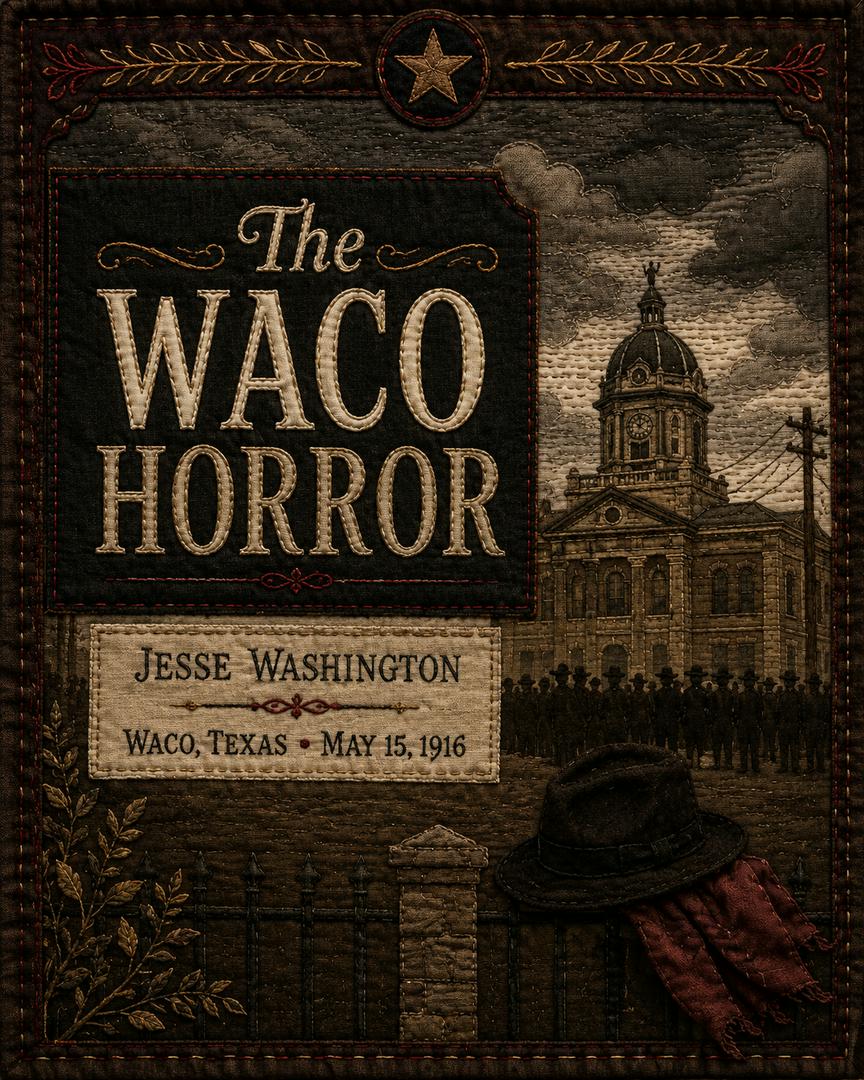
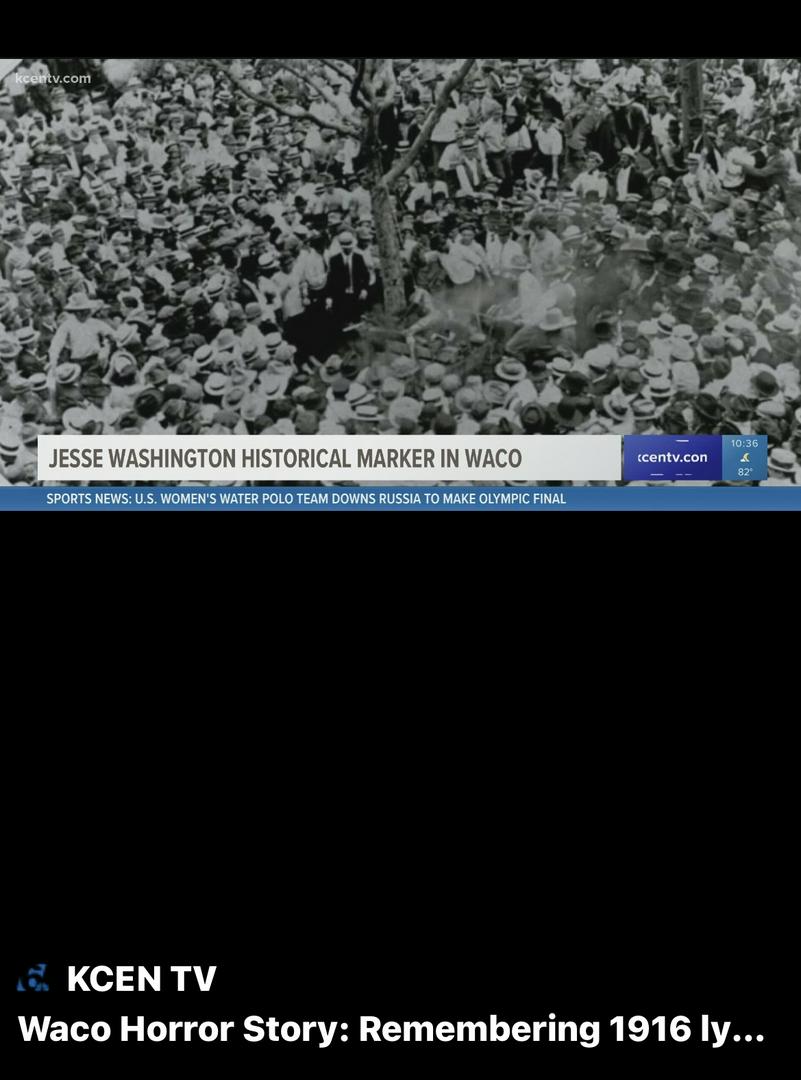
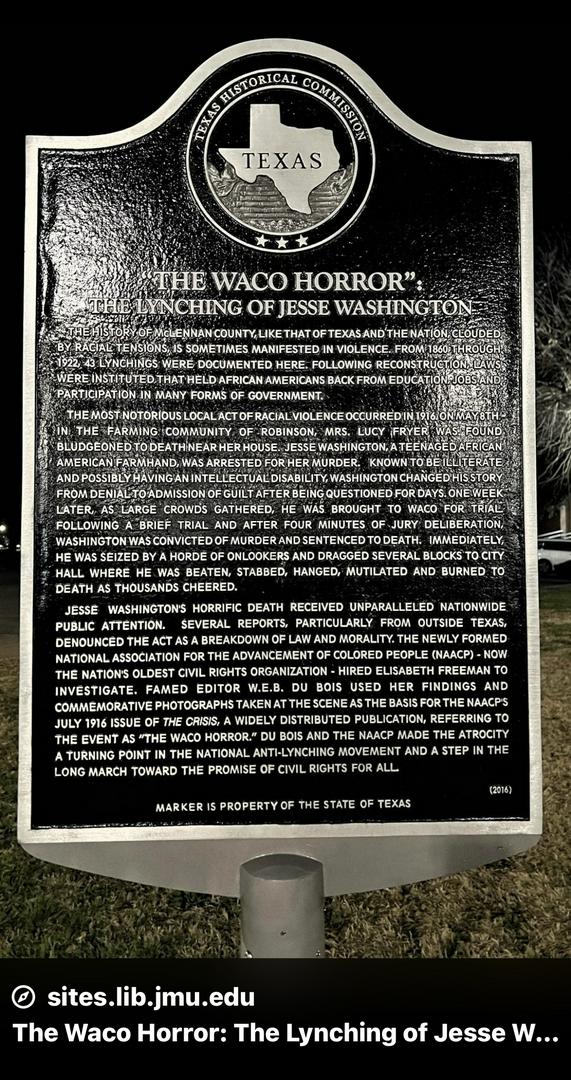
May 15, 1916, remains one of the darkest dates in Texas history. Jesse Washington was a 17-year-old Black farmhand in Waco, Texas, accused of killing Lucy Fryer, the wife of a white farmer in nearby Robinson. After a rushed trial on May 15, Washington was convicted and sentenced to death. But he never made it to a legal execution. A white mob pulled him from the McLennan County courthouse and dragged him through the streets. What followed became known as the “Waco Horror,” one of the most infamous documented lynchings in U.S. history. Thousands of people gathered near Waco City Hall as Washington was tortured and killed in public. Reports say city officials and law enforcement were present, yet no one stopped the mob. No one was punished for his death. The horror did not end there. Photographs were taken and sold as postcards, showing just how openly racial violence was displayed and normalized during that era. The NAACP later investigated the lynching, and W.E.B. Du Bois helped bring national attention to the case through The Crisis magazine. The images and reporting forced many Americans to confront the reality of lynching, not as rumor, but as public spectacle. Jesse Washington’s story is not easy to tell, but it should not be erased. It reminds us that history is not only what happened in courtrooms and government buildings. Sometimes history is what happened in the street while the whole town watched. And that is why his name still matters. #JesseWashington #WacoHistory #AmericanHistory #HiddenHistory #HistoryMatters

LataraSpeaksTruth

THE VICKSBURG MASSACRE… DECEMBER 7, 1874

On December 7, 1874, Vicksburg showed the country exactly how far some people were willing to go to stop Black political power. Peter Barrow Crosby had been legally elected sheriff of Warren County. He wasn’t appointed. He wasn’t forced in. He won the vote. But the moment he tried to do the job he was elected to do, white officials decided he had to go. Black residents did what any community would do. They marched to the courthouse to support their elected official. No weapons. No violence. Just a community standing behind the person they chose. But white paramilitary groups were waiting. They opened fire on unarmed marchers and turned that day into what we now call the Vicksburg Massacre. Federal reports say at least 29 Black people were killed that day. Later research shows the number was likely far higher… maybe 75, maybe over 200. People were shot in fields, on roads, and miles outside town. White newspapers bragged about “restoring order,” and local leaders tried to pretend the violence was justified. It took U.S. troops to step in and put Crosby back in office, but the damage was already done. The massacre became part of the larger effort to tear down Reconstruction and silence Black voters across the South. This is why some dates matter. This is why context matters. December 7 isn’t just history. It’s a reminder of how easily progress can be attacked the moment it threatens the people who benefited from the old system. When we talk about events like this, it’s not to create division. It’s to tell the truth the way it actually happened and to honor the people who risked everything for their right to participate in their own government #VicksburgMassacre #ReconstructionTruth #December71874 #BlackHistoryMatters #UntoldHistory #AmericanHistory #PeterCrosby #VoterSuppressionHistory #NeverForget

THE VICKSBURG MASSACRE… DECEMBER 7, 1874
LataraSpeaksTruth

Benjamin Boardley…not Bradley…was born enslaved in Anne Arundel County Maryland around 1830, and his story is one of those “how did we not learn this in school” moments. The “Bradley” spelling spread because of an old print mistake, and it stuck so hard that people still repeat it today…so yeah, saying his real name matters. As a teenager, Boardley showed serious mechanical genius. Accounts describe him building a working steam engine using scrap materials, including parts like a gun barrel, metal pieces, and whatever he could get his hands on. While still enslaved, he was connected to work around the U.S. Naval Academy in Annapolis, where his skill didn’t just impress people…it forced them to admit what they were looking at. Talent. Precision. Engineering mind. Here’s the part that hits the hardest. He couldn’t legally patent what he built because he was enslaved…yet he could still create something valuable enough to sell. He earned money from his work, received support from others who believed in what he could do, and used that combined funding to purchase his freedom. His manumission was recorded on September 30, 1859…a receipt of freedom bought with invention. Not luck…not charity…work. Igbo Landing shows refusal in the water. Benjamin Boardley shows refusal in iron and fire. Different kind of resistance…same message. You don’t get to decide what we are capable of. #BenjaminBoardley #BlackInventors #HiddenHistory #AmericanHistory #MarylandHistory #NavalAcademy #BlackExcellence #UntoldStories #HistoryMatters #STEMHistory

Brandon_Lee

The tragedy at Ebenezer Creek remains one of the most devastating and overlookeo moments of the Civil War. As Union troops advanced toward Savannah during Sherman's March to the Sea. hundreds of freedom seekers followed behind them believing the army represented safety and a chance at a future bevond bondage. They walked for davs beside the soldiers carrying children, bundles, and the weight of generations. When they reached the cold waters of Ebenezer Creek, Union General Jefferson C Davis ordered his men to cross first on a pontoon bridge. Once the troops were safely over, the bridge was pulled up without warning, leaving the refugees stranded as Confederate forces closed in. Panic spread as families realized thev were trapped with nowhere to run. People leapt into the water clinging to anything that might float, pieces of wood, clothing, each otherMany drowned trying to reach the other side. Others were captured. A moment that should have been a step toward freedom turned into a niaht of terror and loss. The massacre at Ebenezer Creek exposed a harsh truth of that era... even in a war fought over slavery, the safety of Black refugees was treated as negotiable. Their trust was betrayed, their lives dismissed, and their suffering pushed to the margins of history. And before anyone shows up with the tirec "move on, this is old news, get over the past" routine, let me help vou out... how about you move on? I'm from Georgia and in all my years in this state I never once heard about this. I'm learning it right alongside everyone else. This is exactly why these stories matter. History doesn't disappear just because it makes people uncomfortable. We deserve to know what happened on the soil we stand on #LataraSpeaks Truth #BlackHistory #AmericanHistory #HiddenHistory #Under2000Characters

LataraSpeaksTruth

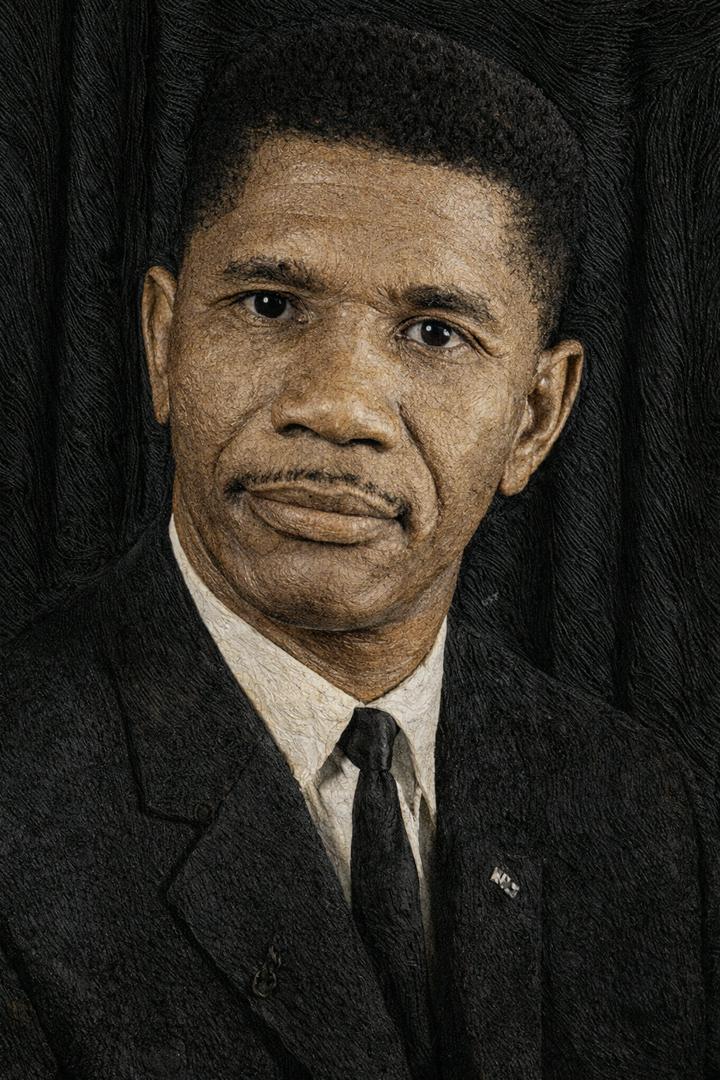
Born on July 2, 1925, in Decatur, Mississippi, Evers grew up in a state where segregation shaped nearly every part of daily life. After serving in the United States Army during World War II, he returned home determined to build a better future. He later attended Alcorn Agricultural and Mechanical College, where he studied business administration and became active in student leadership. In 1954, Evers became the NAACP’s first field secretary in Mississippi. In that role, he traveled across the state organizing local branches, encouraging voter registration, investigating racial violence, and helping challenge segregation in schools and public spaces. His work placed him on the front lines of one of the most dangerous battles in the South. Evers also helped investigate the 1955 murder of Emmett Till and worked to expose the brutal realities Black families faced in Mississippi. He pushed for equal access to education, fought discriminatory laws, and worked to expand basic rights that had long been denied. Because of his work, Evers lived under constant threat. His home was attacked, his family lived with fear, and he knew that speaking openly against injustice could cost him his life. Still, he refused to step away from the work. On June 12, 1963, Medgar Evers was assassinated outside his home in Jackson, Mississippi. His murder shocked the nation and became one of the defining tragedies of the civil rights era. Though his life was cut short, his courage left a lasting mark on American history. Medgar Evers is remembered not only as a leader, but as a man who kept showing up for the work even when the danger was clear. His legacy lives on in the continued fight for justice, dignity, and equal protection under the law. #OurHistory #MedgarEvers #AmericanHistory #CivilRightsHistory #LataraSpeaksTruth
LataraSpeaksTruth

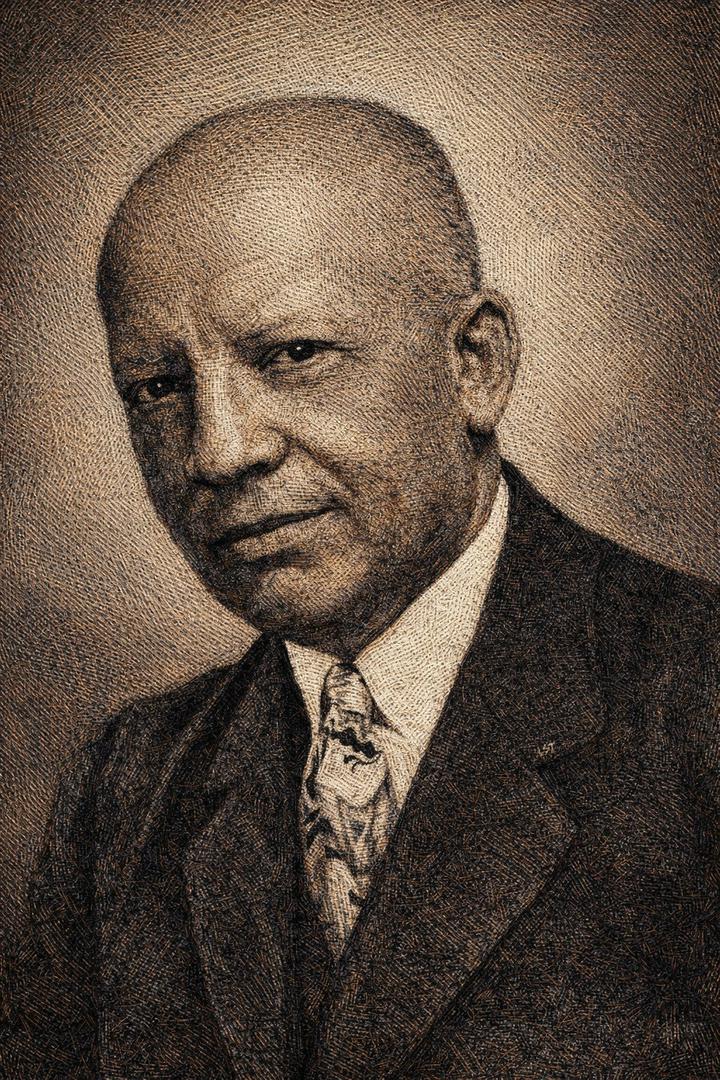
Carter Godwin Woodson was born on December 19, 1875, in New Canton, Virginia. Born to parents who had been enslaved, Woodson grew up in poverty and spent much of his early life working in coal mines to support himself and his family. Despite limited access to formal education during his childhood, he pursued learning relentlessly and completed high school in just two years once he was able to attend regularly. Woodson went on to earn degrees from Berea College and the University of Chicago before making history in 1912 as one of the first African Americans to receive a doctorate in history from Harvard University. At the time, he was also the only person whose parents had been enslaved to earn a PhD from the institution. His academic achievements, however, were only part of his lasting impact. As a historian, Woodson became increasingly concerned with how African American history was ignored, misrepresented, or entirely omitted from mainstream education. He believed that a society could not fully understand itself while excluding the experiences and contributions of an entire group of people. In response, he dedicated his career to research, writing, and institution building. In 1916, Woodson founded the Association for the Study of African American Life and History to promote scholarly research and public education. Ten years later, he established Negro History Week, choosing February to align with the birthdays of Frederick Douglass and Abraham Lincoln. This observance laid the groundwork for what later became Black History Month. Often referred to as the Father of Black History, Woodson spent his life challenging historical erasure and advocating for education rooted in truth. His work reshaped how history is studied and remembered in the United States, leaving a legacy that continues to influence classrooms, institutions, and public discourse today. #ThisDayInHistory #AmericanHistory #EducationHistory #HistoryMatters #Scholars #Legacy #December19

LataraSpeaksTruth

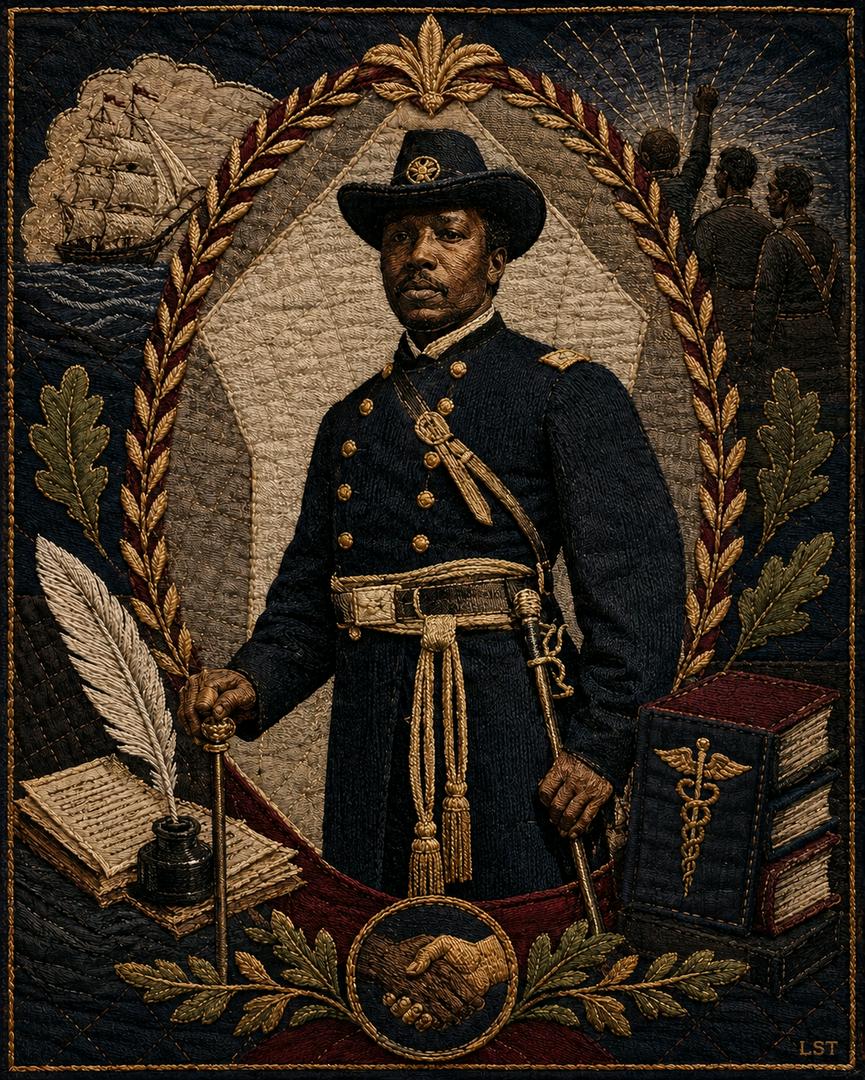
On May 6, 1812, Martin R. Delany was born in Charles Town, Virginia, now West Virginia. He would become one of the boldest Black thinkers of the 19th century: an abolitionist, physician, editor, writer, military officer, and political voice who refused to shrink himself to fit the limits America placed on him. Delany was not simply asking for permission to exist. He spoke the language of power, nationhood, self-determination, and global unity long before those ideas became common. He helped shape early Black nationalist thought and is often linked to the roots of Pan-African thinking because he looked beyond America and imagined a larger future for people of African descent. He edited newspapers, practiced medicine, wrote about the condition and future of Black people in the United States, and challenged the idea that freedom meant waiting quietly for acceptance. Delany believed Black people had the right to build, lead, organize, and determine their own destiny. During the Civil War, he made history in uniform as the first Black field officer in the United States Army, serving as a major. His life moved from resistance on the page to leadership in action. What makes Delany’s story so powerful is that he thought bigger than the world around him allowed. He understood that survival was not enough. Representation was not enough. A seat at someone else’s table was not enough. Martin R. Delany imagined freedom with structure, pride, ownership, and direction. He was not whispering for inclusion. He was calling for a future built with dignity and power. #BlackHistory #MartinRDelany #HiddenHistory #AmericanHistory #HistoryMatters

LataraSpeaksTruth

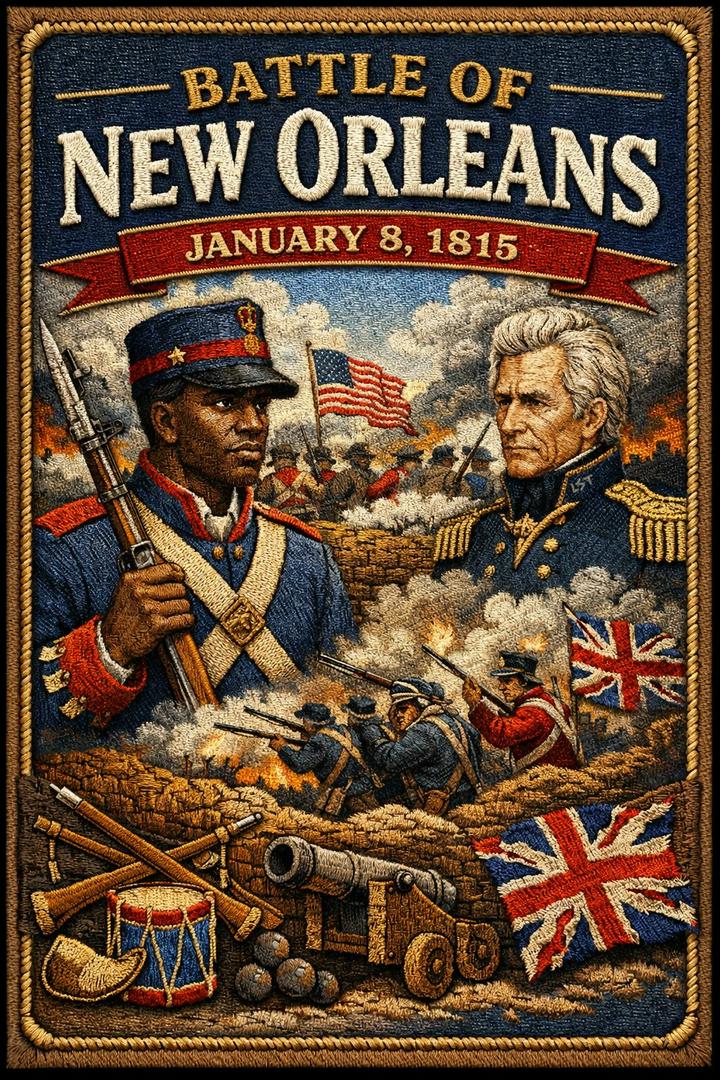
January 8, 1815. The Battle of New Orleans. The War of 1812 was technically over. The Treaty of Ghent had been signed, but word had not crossed the Atlantic yet. Slow communication changed everything. British forces attacked New Orleans anyway and were met by an American force led by Andrew Jackson. His army was not a traditional one. It included U.S. regulars, state militias, Native allies, free Black soldiers, local Creoles, and even pirates under Jean Lafitte. The result was one of the most lopsided victories in U.S. military history. Over 2,000 British casualties compared to roughly 70 American losses. The battle did not change the treaty, but it reshaped American identity. It boosted national confidence, made Jackson a national hero, and proved that the United States could stand up to the world’s most powerful empire. Free Black soldiers played a critical role in defending the city. Their bravery was undeniable. Their recognition afterward was not. This victory was not simple, clean, or fair. It was complex, coalition-driven, and built by people history often sidelines. #January8 #BattleOfNewOrleans #WarOf1812 #AmericanHistory #USHistory #MilitaryHistory #BlackHistory #HiddenHistory

LataraSpeaksTruth

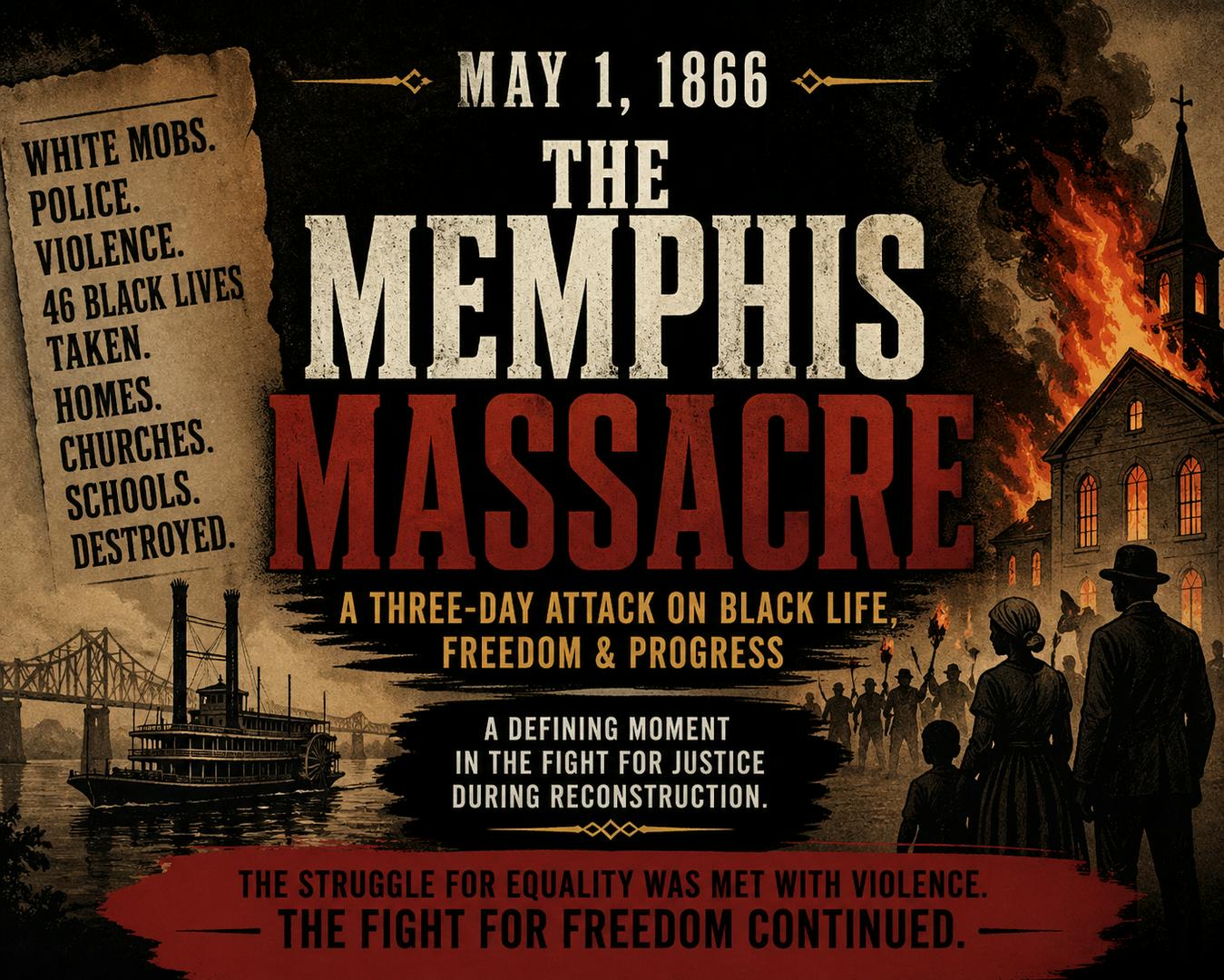
May 1, 1866, marked the beginning of the Memphis Massacre in Memphis, Tennessee. The Civil War had ended, but freedom was still under attack. Memphis had a growing Black population, including formerly enslaved people and Black Union veterans who had served during the war. Their presence, independence, and military service angered many white residents who wanted the old racial order restored. Tensions between white police officers and Black veterans escalated, but what followed was more than a street conflict. Over three days, white mobs, including police officers, attacked Black neighborhoods across Memphis. Black residents were beaten, robbed, and killed. Black Union veterans were targeted. Homes were burned. Black churches and schools were destroyed. Historical accounts report that about 46 Black people were killed, dozens were injured, and more than 90 homes were burned. The massacre shocked people outside the South and became part of the national debate over Reconstruction. Congressional investigators documented the violence, and the event helped strengthen calls for federal protection of formerly enslaved people and Black communities. The Memphis Massacre also helped shape support for stronger Reconstruction policies and the Fourteenth Amendment, which guaranteed citizenship and equal protection under the law. This was not just local violence. It was a warning about what freedom looked like when the law failed to protect the people it claimed were free. #BlackHistory #MemphisMassacre #Reconstruction #AmericanHistory #HistoryMatters

LataraSpeaksTruth

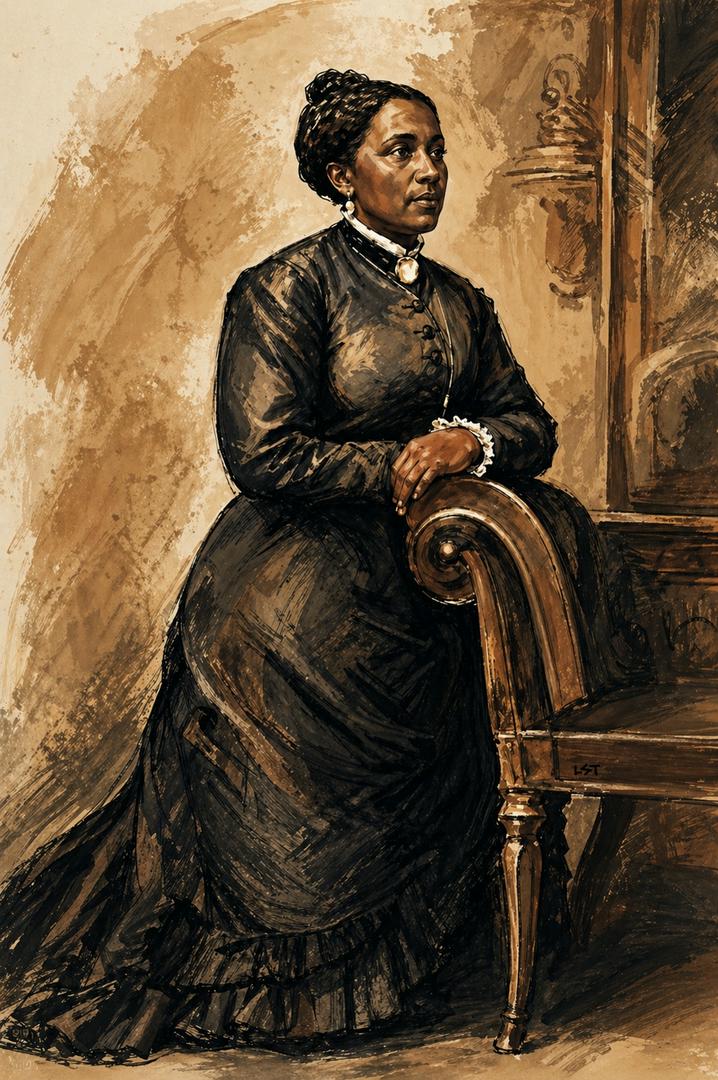
Elizabeth Jennings Graham did not wait for 1955 to challenge segregation on public transportation. She did it in New York City in 1854. Jennings was a young Black schoolteacher and church organist. On July 16, 1854, she was on her way to the First Colored Congregational Church with her friend Sarah Adams when she boarded a Third Avenue Railroad streetcar at Pearl Street and Chatham Street. The conductor ordered her to leave and wait for a car meant for Black passengers. Jennings refused. She was not breaking a public law. She had entered a streetcar as a paying passenger and expected to ride like anyone else. But the conductor tried to force her off, and a police officer later helped remove her from the car. The incident outraged New York’s Black community. Jennings’ case became bigger than one woman being thrown from a streetcar. It became a direct challenge to racial discrimination in public transportation. Jennings sued the driver, the conductor, and the Third Avenue Railroad Company. Her attorney was Chester A. Arthur, who would later become president of the United States. In 1855, the court ruled in her favor. Judge William Rockwell told the jury that Black passengers, if sober, well-behaved, and free from disease, had the same right to ride as other passengers. Jennings was awarded $250 in damages and $22.50 in costs. After the verdict, the Third Avenue Railroad Company desegregated its cars. The case did not end segregation on every New York streetcar line overnight, but it helped push the fight forward. By 1865, New York City’s public transit system was fully desegregated. Elizabeth Jennings Graham’s story matters because public transportation resistance did not begin with Rosa Parks. Parks’ stand in Montgomery was historic, but Jennings had fought a similar battle almost a century earlier. History did not start where school told us it started. Sometimes it started with a young Black teacher refusing to step off a streetcar. #AmericanHistory