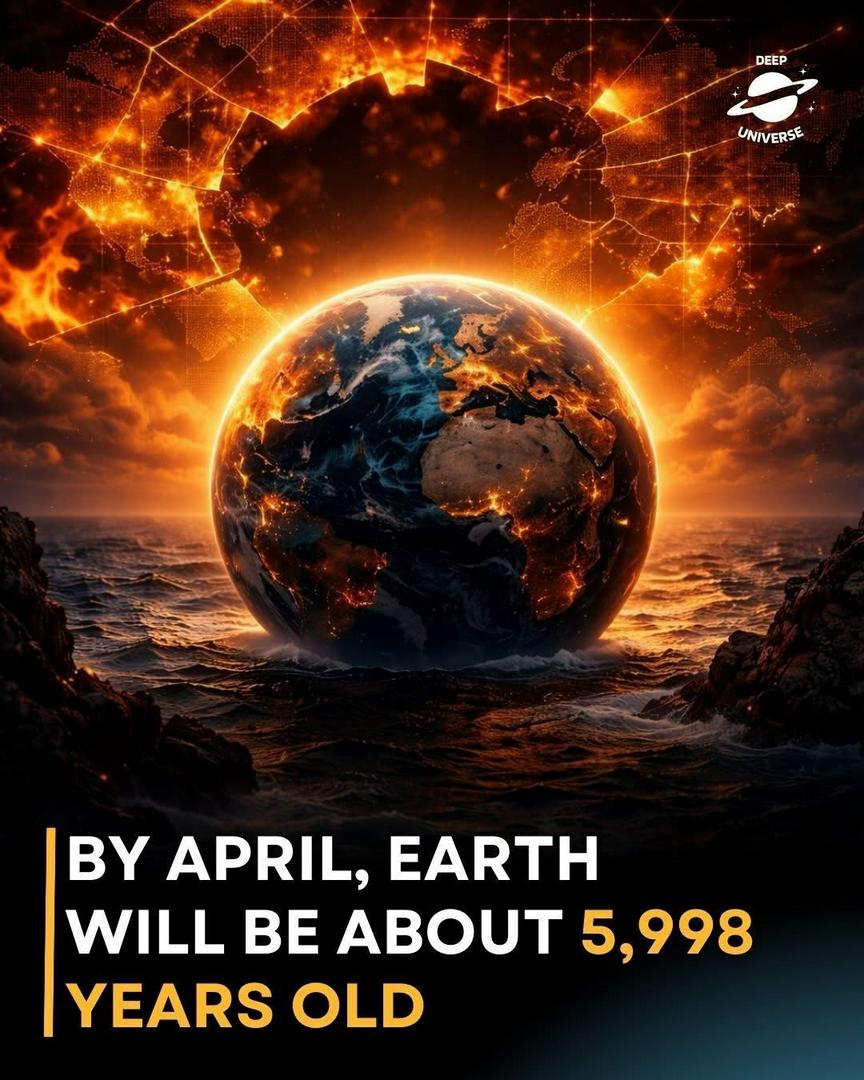
This April, Earth will be approximately 5,998 years old, a moment that humbles the imagination. The numbers themselves are only a hint of the vast, unfolding story written in stone, water, and sky. It is unsettling to realise that every river, mountain, and ocean carries a memory older than any of us, quietly shaping life while we barely notice.
Time on this scale invites reflection. Each era leaves subtle patterns in the planet’s crust and atmosphere, patterns that scientists study to understand cycles of change, survival, and renewal. Ice layers, sediment cores, and fossilised traces are whispers from a past that stretches beyond human history, revealing both fragility and endurance in the same breath.
The age of our world also speaks to our own fleeting presence. Humanity is new here, a brief spark against eons of planetary memory. Yet within that short span, curiosity and discovery have flourished, leaving marks on the soil and in the sky. It is a quiet meditation on how small actions connect to the vast, unseen rhythms of the Earth.
As we contemplate this almost six-thousand-year milestone, there is a solemn beauty in understanding how every moment we live fits into a much larger story. Our questions, our discoveries, and our wonder are threads woven into an ever-expanding tapestry of knowledge. Patterns of growth, extinction, and renewal remind us that the unknown is always just beyond the familiar.
Ultimately, Earth’s ancient timeline leaves a lingering thought: that while we witness only a fraction of its history, the planet’s quiet endurance and hidden mysteries continue to shape the world, and ourselves in ways we may never fully comprehend
#DeepUniverse #EarthAge #PlanetDiscovery #ScienceExploration #AncientEarth #MysteryOfNature #UnknownWorlds #CosmicWonder #fblifestyle #ScientificInsight