Tag Page military

#military
Cops911

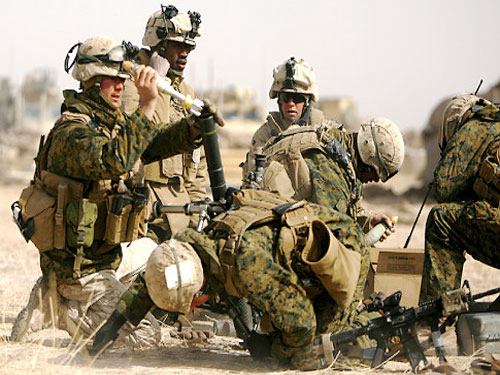
The United States Marine Corps – A Symbol of Strength and Loyalty

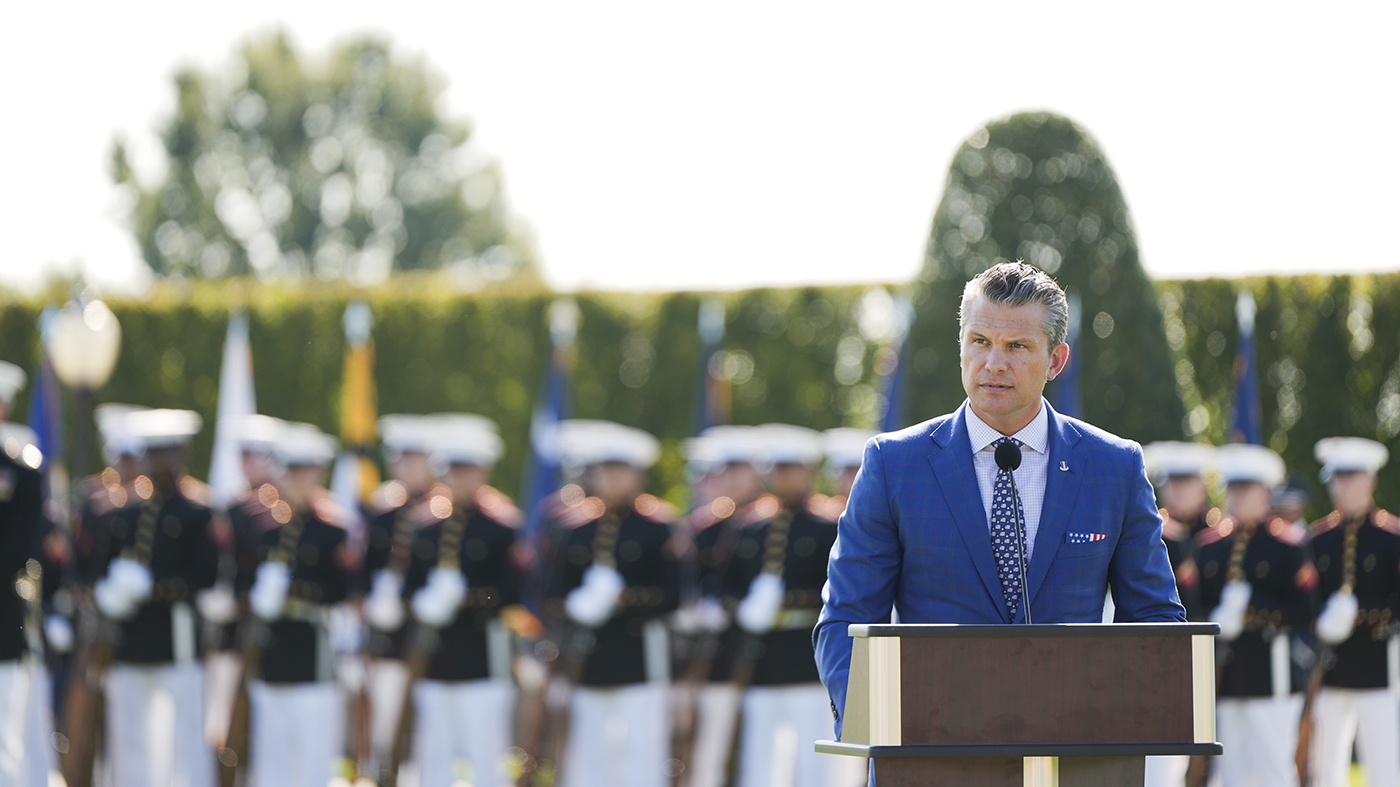
The United States Marine Corps (USMC) is one of America’s most elite military forces, founded on November 10, 1775, during the Revolutionary War. From its earliest amphibious operations, the Marines quickly became the spearhead in nearly every major U.S. conflict. With a combined structure of ground, air, and logistics units, the USMC can deploy worldwide within hours. They are equipped with advanced systems such as amphibious assault vehicles, F-35B fighter jets, AH-1Z attack helicopters, and M777 howitzers. Their 13-week basic training is considered one of the toughest tests of physical and mental endurance in the U.S. military. The motto “The Few, The Proud, The Marines” reflects their pride and unbreakable spirit. Today, the Marines serve as America’s global rapid-response force, often the first to arrive in times of crisis. Their creed, “Semper Fidelis” – Always Faithful, stands as a lifelong pledge of honor. For more than two centuries, the USMC has remained a symbol of America’s strength, discipline, and unwavering courage. #Military #USMilitary #MarineLife #MilitaryEnlistment #VeteranPride #MilitaryTribute #ArmyStrong #M1Abrams #MarineMagic #MarineMiracle

The United States Marine Corps – A Symbol of Strength and Loyalty
GlacialGlimpse

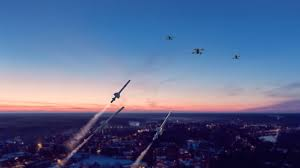
Drone Swarms: Power in Numbers or Control Nightmare?

Unmanned systems aren’t new, but the idea of drone swarms—hundreds or thousands of small, cheap drones acting together—is transformative. U.S. R&D labs are testing swarms that can overwhelm air defenses, conduct surveillance, or even do kinetic strikes. There are stories from testing where simple drones dodged anti-air guns by dispersion. But controlling a large swarm brings huge command, control, and communication (C3) problems. If one jammer or cyber-attack disrupts coordination, the whole swarm could fail or, worse, act unpredictably. Compare this to human pilots: expensive, scarce, but resilient and adaptable. Drone swarms offer volume and risk displacement of personnel, but also new vulnerabilities. The battlefield of the future may not be dominated by a few big platforms, but by many small ones. The question: can the U.S. build the doctrine, secure communications, and ethical frameworks to deploy swarms without chaos? #Military #UnmannedSystems

Drone Swarms: Power in Numbers or Control Nightmare?
WaveFable

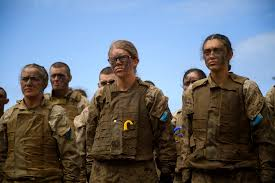
The Draft Debate — Will America Force Its Youth to Fight Again?

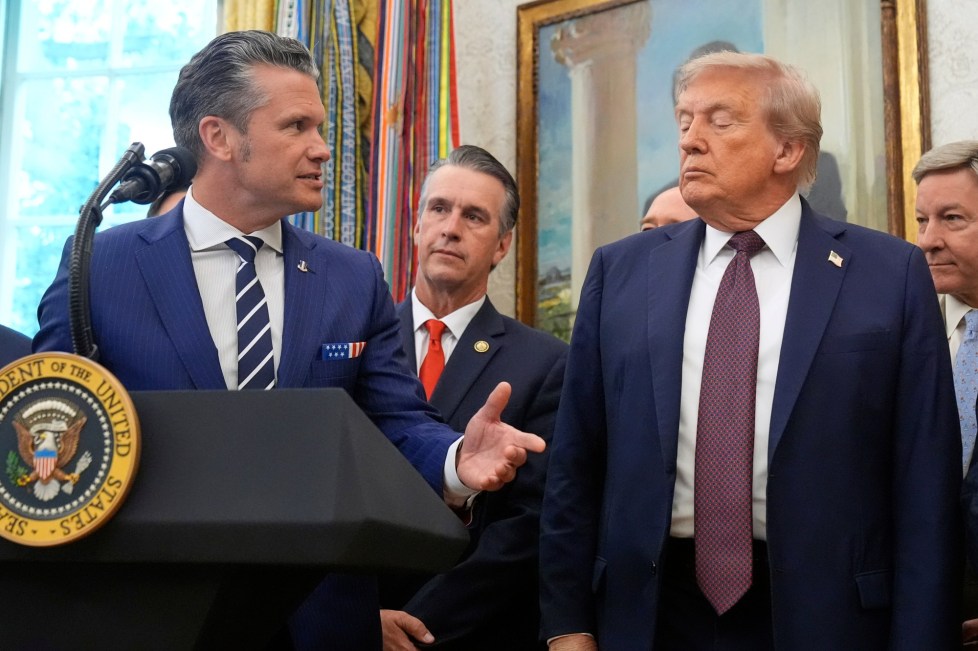
The whispers are getting louder: could America bring back the draft? With tensions rising in the Pacific and Europe, military recruitment is hitting historic lows. Gen Z isn’t signing up, and the Pentagon knows it. Behind closed doors, officials are discussing “selective service reform” — a softer term for what might eventually mean mandatory service. Supporters argue that national defense requires shared sacrifice. But critics say it’s a desperate move to fix decades of policy failure. Why should young Americans fight wars started by politicians who never sent their own kids to battle? The last time America drafted soldiers, it tore the country apart. Streets filled with protests, campuses erupted, and trust in government collapsed. Are we really ready to reopen that wound? If Washington insists on fighting wars abroad while ignoring the divisions at home, the real battle might not be overseas—it might start right here. #Military #Draft

The Draft Debate — Will America Force Its Youth to Fight Again?
WaveFable

America’s Quiet Footprint in Israel Could Redefine the Middle East

The deployment of 200 U.S. troops to Israel isn’t just about “monitoring” a ceasefire — it’s a calculated signal in a region where every move is read like a chess piece. Officially, these troops are part of a humanitarian coordination mission. In reality, their presence shifts the balance of power and blurs the line between diplomacy and military projection. From a strategic perspective, the U.S. isn’t only supporting an ally; it’s embedding itself in the post-war architecture of the Middle East. With Iran expanding its proxy network and Russia deepening its presence in Syria, Washington is quietly ensuring it still has a “seat at the table” — through boots on the ground, not just words. But there’s a risk baked into this strategy. Small deployments can create large vulnerabilities. History shows that once troops are stationed — even temporarily — missions expand, objectives shift, and withdrawals become politically costly. The same playbook unfolded in Iraq and Syria, both beginning as “limited engagements.” This isn’t just about 200 soldiers. It’s about how far the U.S. is willing to go to maintain influence in a region that no longer wants outside arbiters. #Military #MiddleEast

America’s Quiet Footprint in Israel Could Redefine the Middle East
WaveFable

Pentagon vs. The Press — National Security or Silencing Dissent? 📰

The Pentagon’s new media policy has ignited a storm. Reporters are now required to sign strict agreements before speaking to Defense Department officials — and access to military bases or personnel can be revoked without explanation. Officials say it’s to “protect national security.” Critics say it’s a blatant attempt to control the narrative. For decades, America has prided itself on being a nation where the press can question power, especially when it comes to war. From Vietnam to Iraq, journalists exposed lies that saved lives. Now, that very tradition is under siege — not by enemies abroad, but by our own institutions. Supporters of the policy argue the media too often sensationalizes sensitive information, endangering troops and operations. But when journalists are gagged, oversight dies. Whistleblowers stay silent. The public sees only what officials want them to see. In a democracy built on accountability, who decides where “national security” ends and “censorship” begins? If we trade transparency for control, we may win a battle for secrecy — and lose the war for truth. #Military #FreedomOfPress

Pentagon vs. The Press — National Security or Silencing Dissent? 📰
WaveFable

Trump’s Caribbean Strikes — Legal Action or Executive Overreach? 🇺🇸

The U.S. Navy has intercepted suspected Venezuelan drug vessels in the Caribbean, and the White House calls it an “armed conflict.” Yet Congress has not explicitly authorized such strikes, raising urgent questions about presidential power. Supporters argue swift action is essential to stop drug trafficking, protect American lives, and maintain regional security. Critics warn this sets a dangerous precedent: one president can launch military operations anywhere, anytime, under a broad definition of “threat.” It’s not just about drugs. It’s about the balance of power. When military action bypasses legislative oversight, it erodes the constitutional framework. Local authorities, neighboring nations, and the American public have limited say — but bear the consequences. History shows that unchecked executive action, even with good intentions, can spiral. From covert operations in Latin America to sudden strikes in the Middle East, the pattern repeats: legality is debated after the fact, while soldiers risk their lives and taxpayers foot the bill. The question Americans face today is stark: do we trust a single office to decide war, or does the Constitution still matter? #Military #ExecutivePower

Trump’s Caribbean Strikes — Legal Action or Executive Overreach? 🇺🇸
WaveFable

When Soldiers Patrol Our Streets — Who’s Really in Charge? 🇺🇸

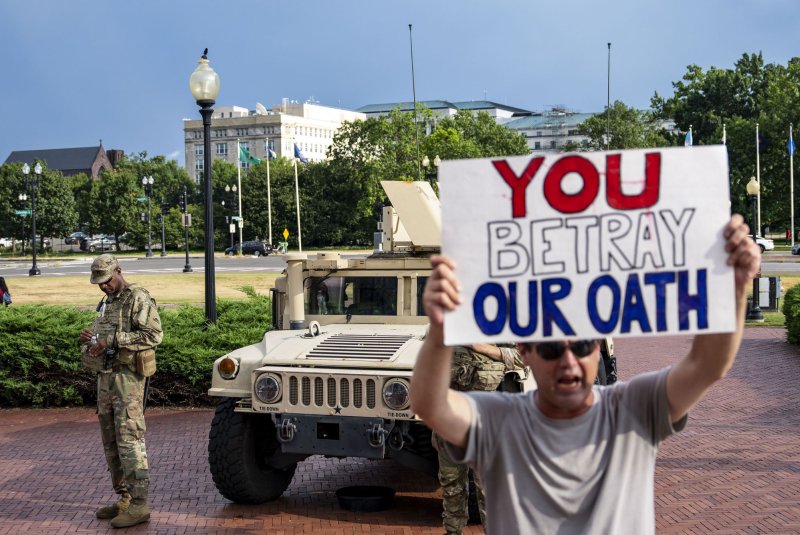
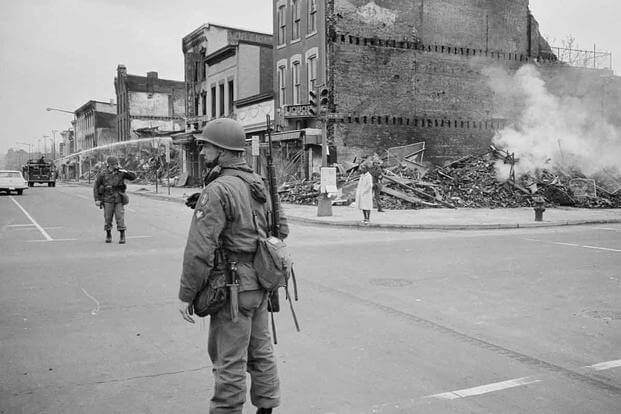
It’s happening again — armed National Guard units have been seen outside Chicago, and rumors say Memphis is next. All under the claim of “restoring order.” But here’s the question haunting many Americans tonight: When the President can deploy troops on U.S. soil, without a governor’s consent, what’s left of state rights? History shows this doesn’t end quietly. From the 1967 Detroit riots to the 2020 protests, every time the federal government used military force domestically, it left a scar — not just on the streets, but on trust itself. Some call it necessary strength. Others see it as the slow march of authoritarianism, disguised as law and order. So where’s the line? At what point does “protection” become control? And if the Insurrection Act is used again — will it be to protect democracy, or to suppress it? #Military #Politics

When Soldiers Patrol Our Streets — Who’s Really in Charge? 🇺🇸
WaveFable

When Federal Troops Patrol Our Streets, Who’s Really in Control?

In Chicago and Memphis, National Guard units are showing up again—this time not for hurricanes or riots, but for “restoring order.” Washington says it’s about safety. Locals say it’s about control. And that tension cuts deep into what America stands for. For years, Americans have drawn a clear line between external defense and domestic policing. Soldiers fight wars; police enforce the law. But under the Insurrection Act, presidents can blur that line, deploying troops without local consent. Trump’s latest threat to “restore calm by force” isn’t just political theater—it’s a constitutional stress test. When federal boots hit city pavement, state sovereignty starts to shrink. The same people who cheered “states’ rights” now defend federal muscle. It’s not just hypocrisy—it’s a warning sign. If Washington can send armed troops into any city it calls “unstable,” what stops the next leader from using that power for political ends? This isn’t about left or right—it’s about whether America still trusts its own democracy enough to keep soldiers out of our neighborhoods. #Military #FederalIntervention

When Federal Troops Patrol Our Streets, Who’s Really in Control?
1776 Patriot

Built to Last: The USS Constitution’s Secret Construction That Defied Cannonballs

The USS Constitution, famously called “Old Ironsides,” began construction in 1794 at Edmund Hartt’s shipyard in Boston, part of the U.S. effort under the Naval Act of 1794 to build a strong fleet to protect American trade. Designed by Joshua Humphreys, the Constitution was bigger, faster, and more heavily armed than most frigates of the time. Its hull was built from live oak, a very dense and strong wood, while white oak and pine were used for framing, decks, and internal supports. Shipwrights used hand tools like saws, chisels, mallets, and augers to shape each plank and beam, carefully fitting them together. Humphreys added diagonal braces, heavy angled supports, and double planking to make the hull strong and flexible enough to absorb cannon hits. Wooden pegs, iron bolts, and fasteners held everything together, while tar and rope fibers sealed the seams to keep the ship watertight. Deck beams were notched and bolted, and the masts were set into reinforced posts. Pulleys and ropes helped lift heavy timbers into place. Workers measured and adjusted everything with simple tools like plumb lines, squares, and marking gauges to ensure the hull was straight and strong. The bottom of the ship was covered with copper to prevent marine growth, keeping her fast and seaworthy. By the time she was launched on October 21, 1797, the Constitution was 204 feet long, with a 43-foot-wide beam, and carried 44 guns, making her one of the most powerful frigates of her era. Her combination of speed, firepower, and advanced construction allowed her to survive battles that would have destroyed lesser ships. The Constitution’s construction shows the skill, ingenuity, and hard work of early American shipbuilders. Today, she is a floating museum in Boston, a lasting symbol of U.S. naval strength and craftsmanship. #USA #USHistory #Shipbuilding #USMilitary #Military

Built to Last: The USS Constitution’s Secret Construction That Defied Cannonballs
vasqueztravis

america’s sons go to war, politicians’ sons go to college

Every time this country sends troops abroad, it’s not the sons of senators or congressmen boarding those planes. It’s the boys from Ohio steel towns, the kids from Texas farms, the young men who grew up fixing cars in their dad’s garage. They wear the uniform, they fight, and too often, they don’t come home. Meanwhile, the sons of Washington elites sit in classrooms at Yale or Harvard. They’ll graduate into think tanks, hedge funds, or government jobs their last names already secured. We call it “patriotism.” But let’s be real—patriotism has always been a bill handed to the working class, paid in blood, while the rich cash in the dividends of “freedom.” So here’s the question no one in power dares to ask out loud: if every senator’s son had to fight on the frontlines, how many wars would america actually fight? #Politics #MiddleClass #Military

america’s sons go to war, politicians’ sons go to college
Tag: military - Page 3 | LocalAll