Tag Page spacefacts

#spacefacts
justme

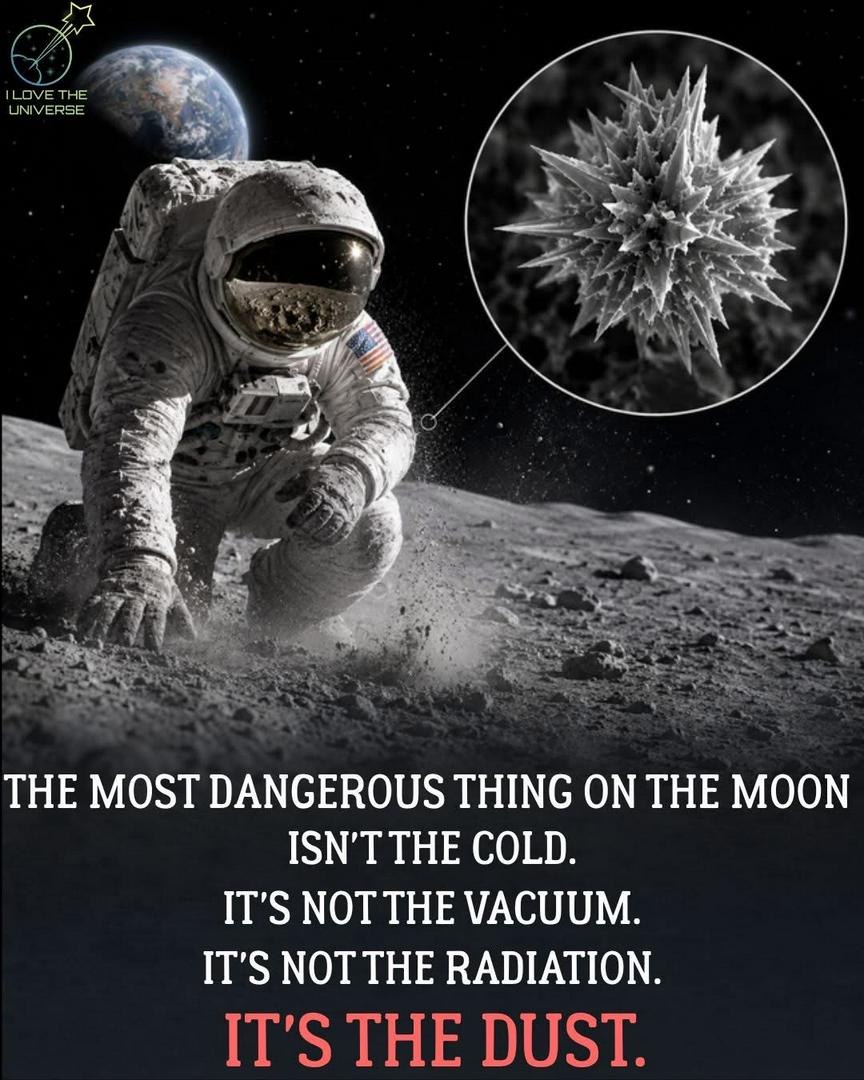
🌕 Imagine dust finer than powder, sharper than broken glass, and capable of sticking to absolutely everything. That's lunar dust. When Apollo astronauts returned to their lunar modules after walking on the Moon, they carried large amounts of this dust back inside with them. It clung to their suits, coated equipment, and quickly filled the cabin. But then something unexpected happened. The astronauts started sneezing. Their eyes became irritated. Their throats felt scratchy. The symptoms were so similar to an allergic reaction that some even nicknamed it "Moon Hay Fever." The reason is fascinating. Unlike dust on Earth, which is gradually smoothed by wind and water, lunar dust remains razor-sharp. For billions of years, tiny meteorite impacts have shattered lunar rocks into microscopic fragments with jagged, glass-like edges. And it gets even stranger. Lunar dust can become electrically charged by solar radiation, allowing it to cling stubbornly to spacesuits, machinery, and almost any surface it touches. Scientists even believe some particles can briefly levitate above the lunar surface. As humanity prepares to return to the Moon and build permanent bases there, lunar dust may become one of the greatest challenges future astronauts face. Not the cold. Not the vacuum. Not even the darkness. Dust. Sometimes the biggest obstacles in space come in the smallest packages. 🚀 Here's a mind-blowing thought: During the Apollo missions, lunar dust was so abrasive that it damaged spacesuits, scratched visors, and wore down seals after only a few days of use. Future Moon explorers may need entirely new technologies just to keep dust out. 💬 What do you think will be harder for humanity: reaching other worlds... or learning how to live on them? #Moon #Apollo #NASA #Artemis #SpaceExploration #Astronomy #MoonDust #SpaceFacts #Science #ILoveTheUniverse

justme

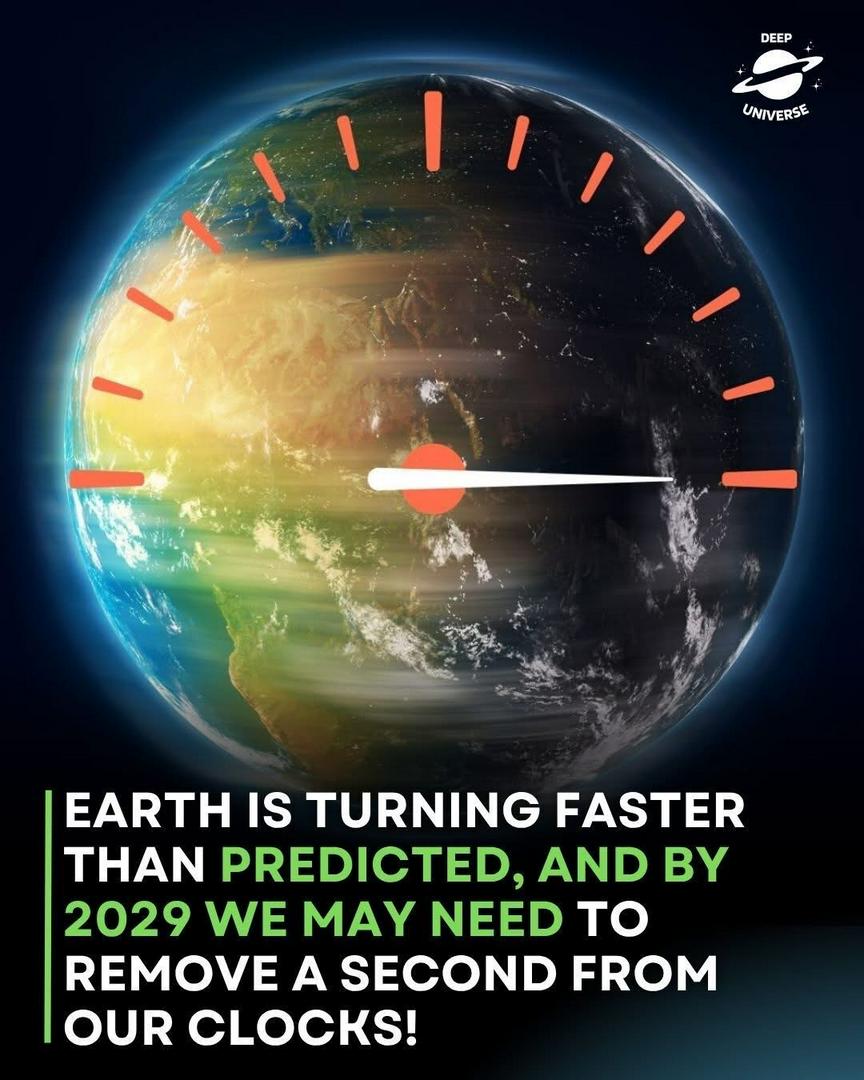
Scientists have discovered that Earth has recently been spinning slightly faster than expected, raising the possibility that the world may eventually need to remove a second from official time for the first time in recorded history. For decades, Earth's rotation has generally been slowing due to gravitational interactions with the Moon. That gradual slowdown is why leap seconds were introduced in 1972 to keep atomic clocks aligned with Earth's actual rotation. However, since 2020, researchers have recorded several unusually short days. On some occasions, Earth completed a rotation milliseconds faster than the standard 86,400 second day, attracting attention from timekeeping organizations around the world. The difference is tiny and impossible for people to notice in daily life, but modern technology depends on extraordinary precision. Global positioning systems, financial networks, telecommunications, and scientific instruments rely on atomic clocks that measure time with incredible accuracy. Scientists believe changes within Earth's core, shifts in the atmosphere, ocean circulation, and long term climate processes may all contribute to these subtle variations in planetary rotation. One surprising insight is that a change of just a few milliseconds can become important when accumulated over years. Researchers monitoring Earth's rotation have suggested that if current trends continue, a negative leap second, meaning one second removed rather than added, could be required sometime around 2029. No negative leap second has ever been implemented before, making it a unique challenge for global timekeeping systems. #deepuniverse #earth #science #timekeeping #universe #cosmos #spacefacts #fblifestyle

justme

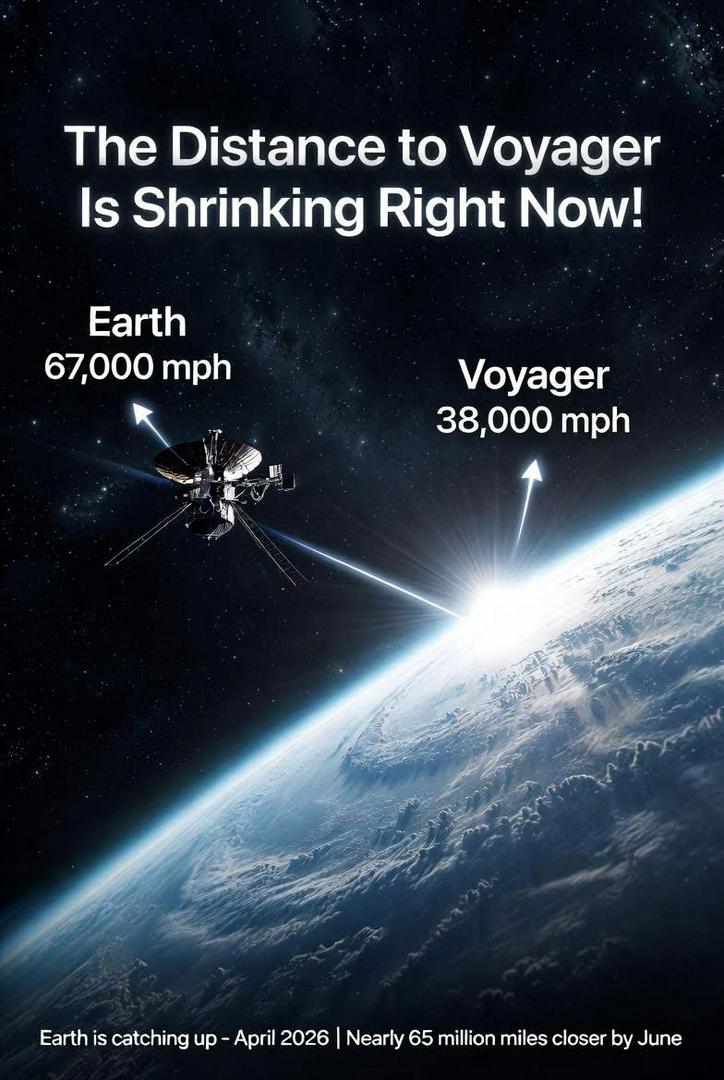
🌍 Mind-Blowing Fact: The Distance Between Voyager and Earth Is Currently Shrinking! 🚀 For nearly 50 years, Voyager 1 and Voyager 2 have been speeding away from the Sun at up to 38,000 mph, now deep in interstellar space. Yet right now (and every year from late February to early June), the distance to Earth is actually decreasing — by millions of miles! Why? Earth orbits the Sun at a blistering 67,000 mph — much faster than the Voyagers. As our planet swings around to the same side of the Sun as the probes, we’re catching up to them. For example, Voyager 2 is shrinking its distance by about 0.69 AU (nearly 65 million miles) between February and June 2026. By early June, it will be closer than it was in February! Once Earth passes and heads the other way, the distance will start growing again — forever. Our tiny blue planet is still playing cosmic catch-up with its distant robotic ambassadors. What do you find more amazing — that the Voyagers are still communicating after 50 years, or that Earth can “catch up” to them every year? Drop your thoughts below 👇 and tag a space lover who needs to see this! #Voyager #Voyager1 #Voyager2 #InterstellarSpace #NASA #Astronomy #SpaceFacts #Science

justme

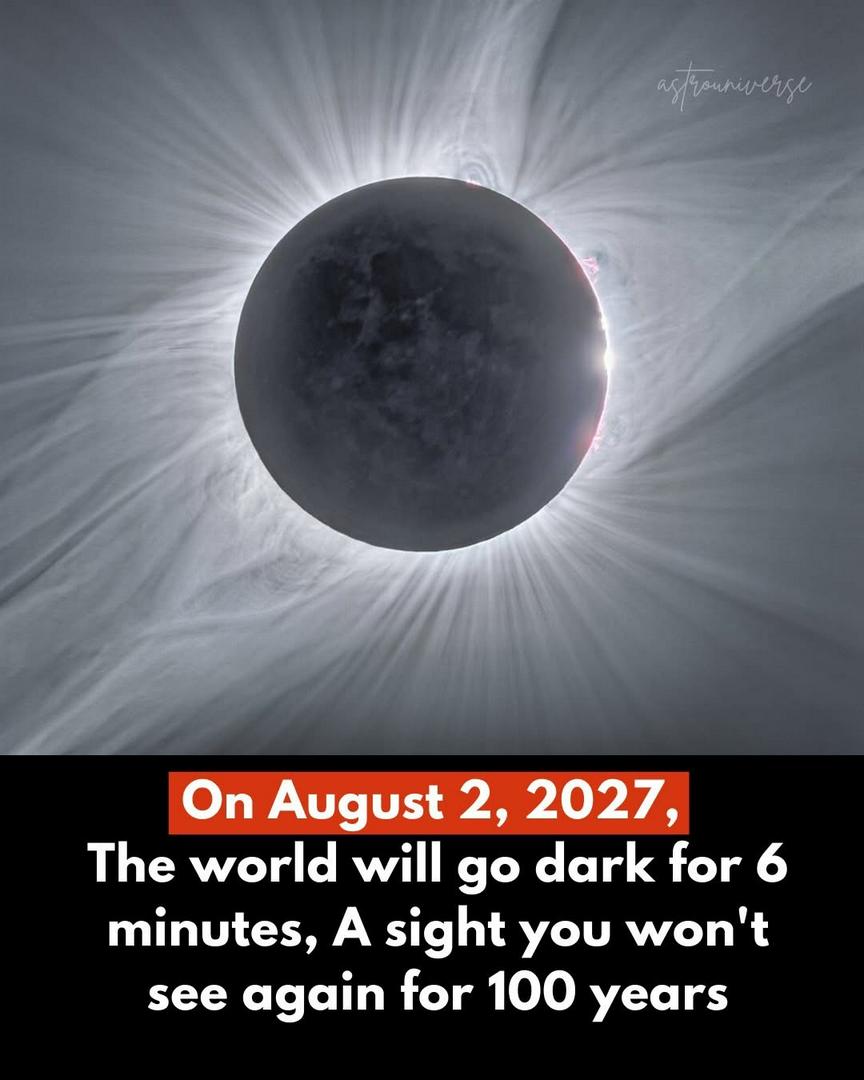
On August 2, 2027, the world will witness the longest total solar eclipse of the 21st century. 🌑☀️ At maximum duration, totality will last an extraordinary 6 minutes and 23 seconds, far longer than the typical 2 to 3 minutes seen during most total eclipses. The longest views will occur near Luxor, Egypt, as the Moon’s shadow crosses parts of Europe, North Africa, and the Middle East. The unusually long eclipse is caused by orbital geometry. The Moon will be near perigee, appearing slightly larger in the sky and allowing its shadow to cover the Sun for an extended period. During totality, daylight will briefly fade into twilight, temperatures may drop, stars can appear overhead, and the Sun’s glowing corona will become visible around the darkened Moon. Even with modern science explaining every detail, a total solar eclipse remains one of the most extraordinary sights on Earth. #SolarEclipse #Eclipse2027 #NASA #Space #Astronomy #Science #Sun #Moon #Cosmos #SpaceFacts

justme

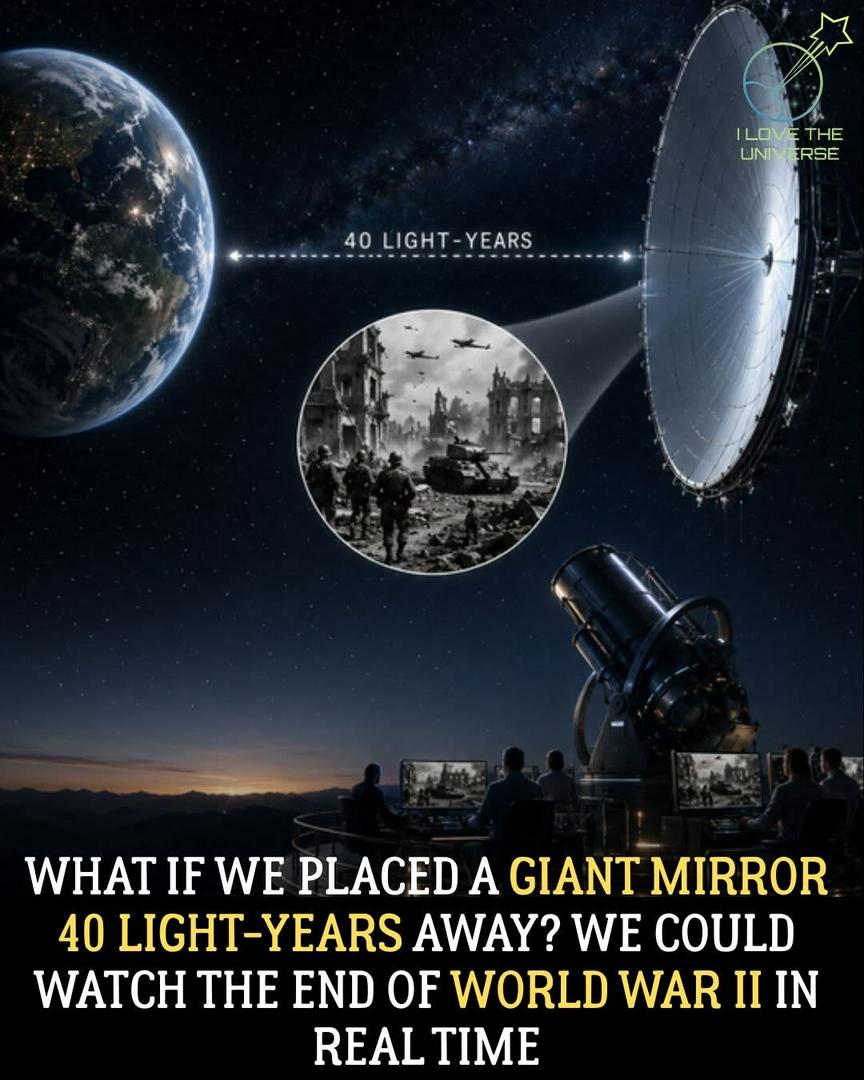
🪞 What if we could watch history unfold with our own eyes? Imagine placing a gigantic mirror 40 light-years away from Earth. The light leaving our planet today would take 40 years to reach the mirror and another 40 years to return. If we had a telescope powerful enough to see the reflection, we wouldn't be looking at Earth as it is now... We would be seeing Earth 80 years in the past. Right now, we could watch the final months of World War II unfolding in real time. And here's where the idea becomes even more fascinating. If that enormous mirror could somehow be moved closer or farther away, we could choose how far back in time we wanted to look. A mirror 20 light-years away would show Earth 40 years ago. A mirror 100 light-years away would reveal our planet 200 years in the past. Of course, building a mirror of that size and observing details from such distances is far beyond anything humanity can do today. But this thought experiment reveals one of the most beautiful truths about the Universe: Light takes time to travel. Every beam of light carries a piece of history. So whenever we look deeper into space, we're not just looking farther away... We're looking further back in time. If you could place that mirror anywhere in space, which moment from Earth's past would you choose to watch? #SpaceFacts #Astronomy #Cosmos #Science #Universe #TimeTravel

You've reached the end!