Tag Page truecrime

#truecrime
1776 Patriot

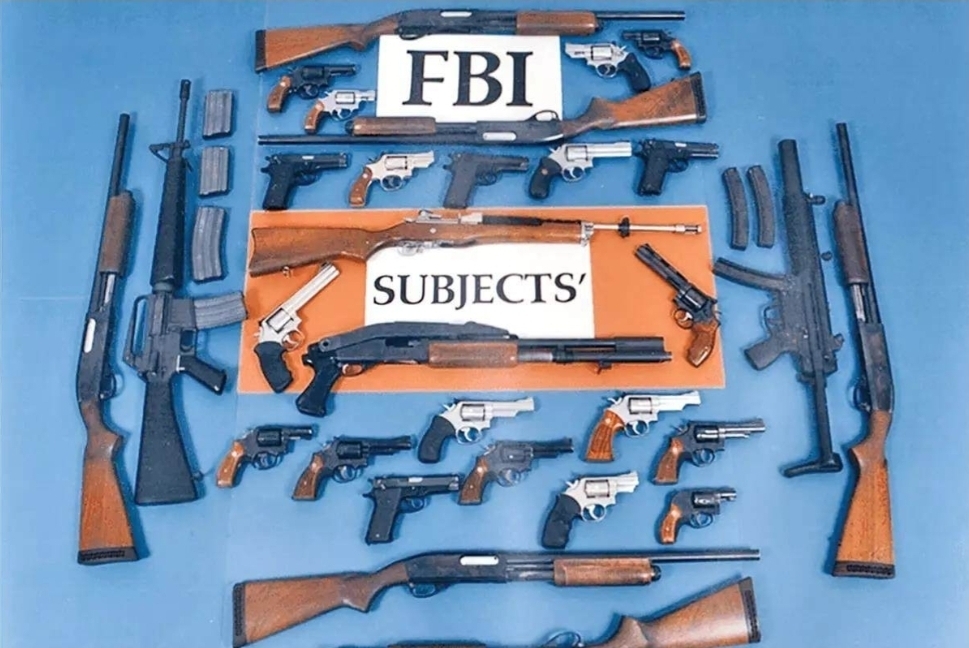
America’s Most Elusive Bank Robber: Carl Gugasian Carl Gugasian, known as the Friday Night Bank Robber, is considered the most prolific solo bank robber in American history. Over a criminal career spanning roughly three decades from the early 1970s until his arrest in 2002, Gugasian carried out more than fifty confirmed bank robberies across multiple states on the East Coast. His operations were highly methodical and precise. He targeted small town banks often located near wooded areas or highway on ramps to make escape easier and reduce the chance of police interception. He typically struck on Friday nights shortly before closing time to minimize customers while maximizing cash on hand. Gugasian carefully disguised himself with masks and loose clothing to conceal his identity and appearance. He conducted detailed surveillance of each target, sometimes visiting a bank multiple times over weeks to note employee routines, security camera placements, and the timing of cash deliveries. His robberies were executed quickly, often lasting less than two minutes. He would vault over counters, grab cash from the tills, and disappear into nearby woods or back roads. Many times he used a dirt bike to escape into forested terrain and then transitioned to a waiting vehicle. He kept detailed notes, maps, and surveillance of potential targets in his home along with a large cache of weapons and disguises. Despite decades of robberies, he evaded capture until 2002, when law enforcement tracked him through his patterns, surveillance notes, and escape routes. He admitted to more than 50 robberies totaling around $2.3 million. He was sentenced to over 100 years in federal prison, reduced to 17 years due to cooperation, and served approximately 15 years before being released in 2017 at age 69. Gugasian stands out not for a single spectacular heist but for the number and consistency of his crimes carried out with precision over decades. #TrueCrime #USHistory #America #USA #History

Dashcamgram

This is one of the most disturbing cases we’ve heard in a long time… A Pennsylvania man is under arrest after investigators say they uncovered more than 100 human skeletal remains inside his home — many linked to repeated break-ins at a historic cemetery. Authorities say Jonathan Gerlach, 34, allegedly targeted mausoleums and gravesites at Mt. Moriah Cemetery multiple times since Halloween. According to ABC 7, Gerlach was arrested on January 6 at the cemetery while carrying a bag containing human remains — including children’s bones and skulls. Investigators later recovered additional remains from his vehicle, then made a chilling discovery at his home: over 100 skeletal remains. The Delaware County District Attorney’s Office described the scene as deeply unsettling. Prosecutor Tanner Rouse noted that some remains were over 200 years old, while others appeared far more recent — including one body with a pacemaker still attached. Let that sink in. People are asking the same questions: How did this go unnoticed? How long was this happening? And what was the motive? This isn’t just a crime — it’s a violation of the dead and their families. Hashtags: #TrueCrime #PennsylvaniaNews #DisturbingCase #CemeteryBreakIn #CrimeStory #HumanRemains #JusticeForTheDead #Unsettling #CrimeTok #BreakingNews
CultureWorld

🚨 High-Profile Murder Case Update Luigi Mangione returned to federal court this week in the ongoing case tied to the killing of UnitedHealthcare CEO Brian Thompson, and the hearing quickly turned into a major moment in the proceedings. The courtroom was packed, security was tight, and public interest continues to grow as the case moves deeper into federal territory. During the hearing, the judge ruled that police lawfully seized Mangione’s backpack, rejecting defense claims that the search violated his rights. That decision means any evidence recovered from the bag remains on the table, giving prosecutors a significant boost as they build their case. More notably, federal prosecutors confirmed they may pursue the death penalty, signaling just how seriously the government is treating the charges. The combination of a powerful corporate figure, a fatal crime, and the possibility of capital punishment has turned this case into more than a routine court proceeding. Crowds gathered outside the courthouse, reflecting a mix of shock, anger, and curiosity over how such a killing could happen and what it says about security, power, and accountability at the highest levels. As the case moves forward, every ruling now carries major consequences. With key evidence deemed admissible and the death penalty in play, the legal battle ahead is expected to be intense — and closely watched nationwide. #BreakingNews #FederalCourt #HighProfileCase #TrueCrime #LegalUpdate #JusticeSystem #DeathPenalty #CorporateAmerica #CourtroomNews #CrimeWatch

Dashcamgram

This is one of those cases that’s hard to even process. What reportedly started as an HOA dispute over chickens escalated into a pattern of harassment, intimidation, and ultimately deadly violence. Authorities say 36-year-old Jo Junio from Las Vegas retaliated against neighbors who reported her to the HOA by throwing dog poop into their yard, throwing rocks at their children, making throat-slashing gestures, flooding their home through a shared wall, and repeatedly showing up to intimidate them. According to reports, the situation reached a horrifying breaking point when Jo parked in front of the family’s home, stared them down, then exited her vehicle and opened fire. The father of the family — a local pastor — was killed. Now, a dispute that should have never gone beyond mediation has ended a life and traumatized an entire family. Jo was arrested and is expected to face charges including murder, attempted murder, and child abuse. Online, people are questioning how warning signs escalated for so long, what role neighbor disputes and mental health may have played, and whether more could have been done before it turned fatal. This case is a brutal reminder of how quickly unresolved conflict can spiral — and how devastating the consequences can be. #TrueCrime #HOADispute #NeighborhoodConflict #JusticeForVictim #CrimeNews #LasVegas #PublicSafety #ViralDiscussion

Dashcamgram

This case has left a lot of people stunned. A 36-year-old woman from Minnesota, Ryshaun, allegedly used the online alias “Lois Griffin” across Facebook, Snapchat, and Cash App while communicating with a drug dealer. Prosecutors say the two agreed to sell his cocaine, but things took a deadly turn when she showed up to his home in a large SUV with her brother hiding in the back seat. According to authorities, an argument broke out, and when the dealer tried to run back inside his home, Ryshaun’s brother allegedly shot him in the back. Now both siblings are facing extremely serious charges and could each receive up to 40 years in prison if convicted. They’re currently being held on $1 million bail each. The case has sparked conversations about online identities, premeditation, and how quickly situations involving drugs and guns can turn fatal. Many are also questioning how social media and payment apps are increasingly tied into real-world crimes. What are your thoughts on this case? #TrueCrime #MinnesotaNews #CrimeStory #ViralCase #CourtWatch #OnlineAliases #JusticeSystem #SocialMediaCrime
1776 Patriot

How the Zodiac Killer’s Infamous 340 Cipher Was Decoded by Private Citizens After 51 Years For decades, the Zodiac Killer’s 340-character cipher, mailed to the San Francisco Chronicle in 1969, remained unsolved. By that time, the killer had terrorized Northern California and was responsible for at least 5 confirmed murders, while claiming more in letters to police and newspapers. The cipher mixed symbols, circles, and crosshairs, and some letters were left unencrypted while others were substituted with symbols. This uneven structure confused investigators and stalled efforts. The Zodiac also contacted police after attacks, using the cipher to taunt authorities and the public. In December 2020, after about 4 months of focused work, an international team of amateur codebreakers solved the cipher. The team included David Oranchak, a software engineer from the United States; Sam Blake, a mathematician from Australia; and Jarl Van Eycke, a data analyst from Belgium. Using computer programs and pattern analysis, they tested how symbols aligned with letters, spacing, and line breaks. They broke the cipher into sections, tracked repeated symbols, and compared them to the Zodiac’s earlier 408-character cipher and his previous letters sent to the San Francisco Chronicle and San Francisco Examiner. By studying how words, spelling errors, and phrasing appeared in those earlier messages, they identified familiar patterns. The team examined symbol frequency, diagonal and vertical reading paths, ruled out incorrect solutions, and confirmed the final decoding produced consistent, readable sentences. Lines included: “I HOPE YOU ARE HAVING LOTS OF FUN IN TRYING TO CATCH ME” and “I AM NOT AFRAID OF THE GAS CHAMBER.” The solution revealed no new suspects or victim details. The FBI confirmed the cipher was solved by private citizens. The Zodiac Killer case remains officially open. See comments for the full 340 cipher solution. #TrueCrime #USHistory #ZodiacKiller #Cryptography #USA