Tag Page usa

#usa
1776 Patriot

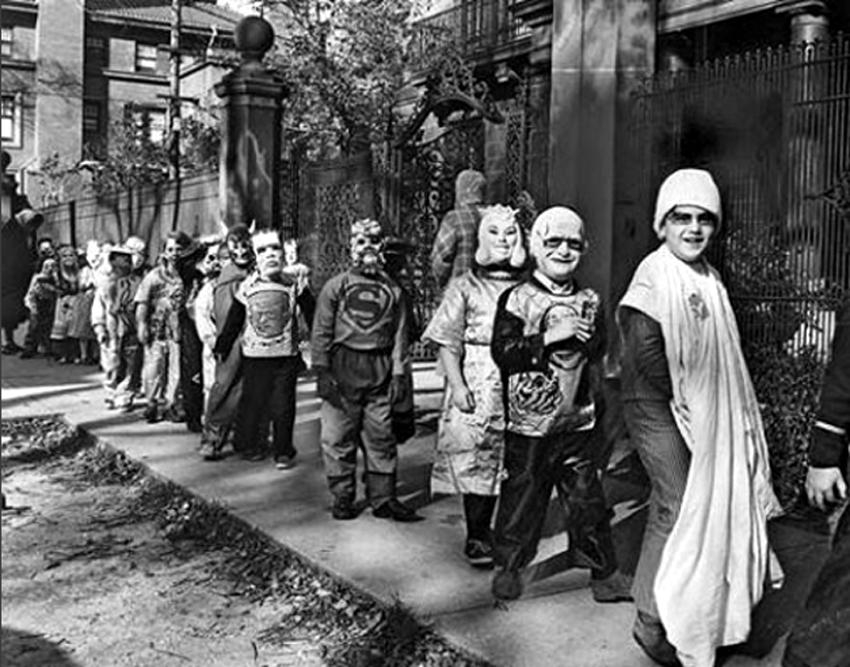
Red, White, and Boo! Halloween’s American History, Pictures, Interesting Facts

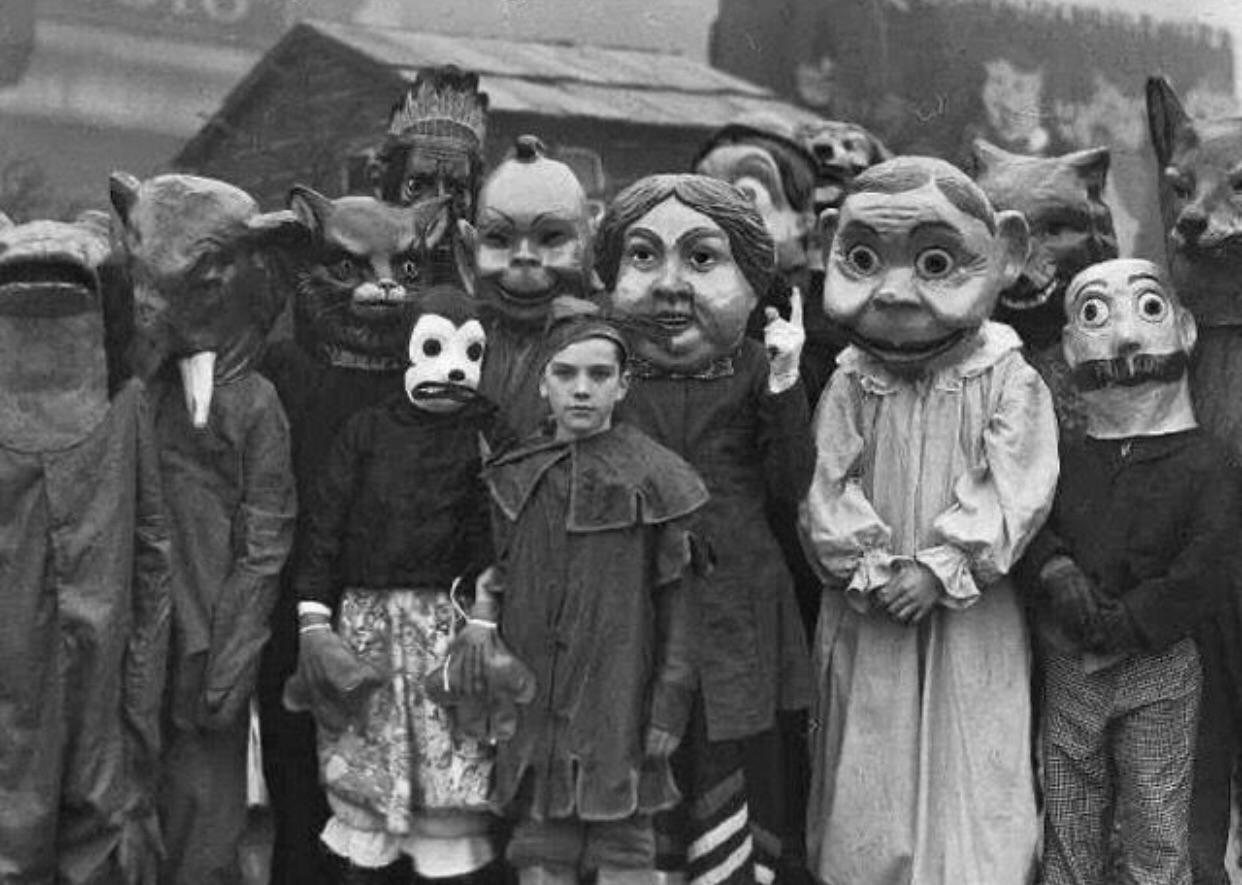
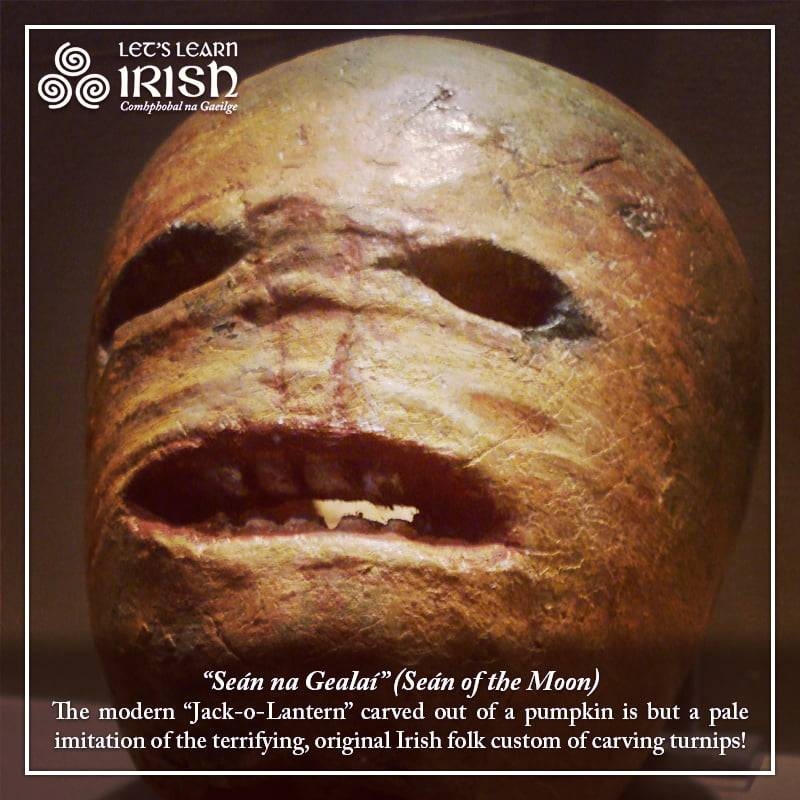
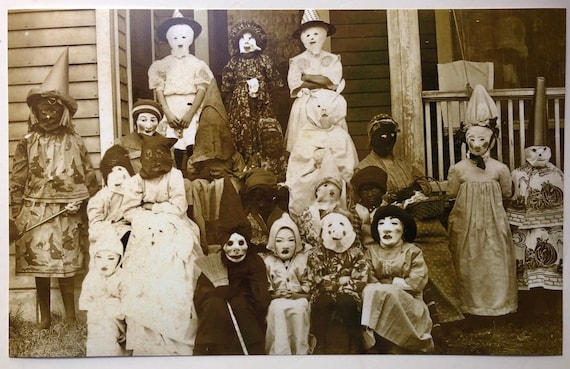
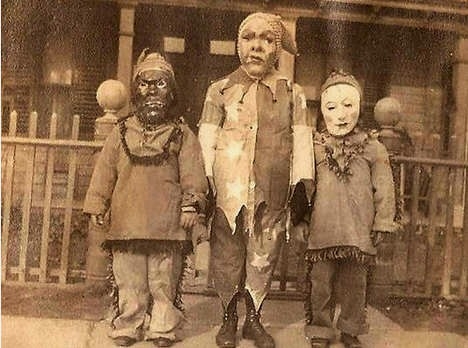
Halloween in America has evolved over centuries. It began over 2,000 years ago in Ireland with Samhain, a festival marking the end of the harvest. People believed the dead could visit the living, so they lit bonfires and wore costumes to ward off spirits. Masks and disguises hid them from wandering souls, and communities celebrated the season. In the 1800s, Irish and Scottish settlers brought these traditions to America. In the 1840s, Irish immigrants fleeing the Great Famine, a mass starvation caused by potato failures, preserved Halloween to maintain culture and community. They added pranks and public festivities to lift spirits. Carved turnips were placed outside to scare evil spirits, and in America pumpkins became easier to carve, creating the first jack-o-lanterns. By the 1870s, Halloween grew into a community event. Newspapers suggested parties, and neighbors played games like bobbing for apples, from Roman harvest festivals. Costume parties grew popular, with homemade disguises often scary or funny. Trick or treating began as children dressing up and performing songs, jokes, or skits for coins or treats. The first recorded trick or treating in the U.S. was in the 1920s. After World War Two, suburban neighborhoods expanded trick or treating. Candy companies sold Halloween candy, including candy corn, first made in the 1880s. Shaped like corn kernels to celebrate the harvest, it was easy to mass produce. Glow-in-the-dark costumes, plastic pumpkins, and decorations appeared in the 1950s, turning Halloween into a family-centered holiday. Today, Halloween blends Celtic traditions with American flair. Haunted houses, pumpkin patches, costume contests, and candy sales are everywhere. Over 600 million pounds of candy are sold annually, and Americans spend nearly 10 billion dollars, making Halloween one of the most celebrated and beloved traditions in the country. #Halloween #TrickOrTreat #USHistory #America #USA #History

Red, White, and Boo! Halloween’s American History, Pictures, Interesting FactsRed, White, and Boo! Halloween’s American History, Pictures, Interesting FactsRed, White, and Boo! Halloween’s American History, Pictures, Interesting FactsRed, White, and Boo! Halloween’s American History, Pictures, Interesting FactsRed, White, and Boo! Halloween’s American History, Pictures, Interesting FactsRed, White, and Boo! Halloween’s American History, Pictures, Interesting FactsRed, White, and Boo! Halloween’s American History, Pictures, Interesting Facts
1776 Patriot

Are Aliens Interdemensional Visitors? The Science Behind the Theory

The idea that aliens might be interdimensional rather than travelers from distant planets has gained serious attention among scientists and UFO researchers. For decades, unidentified aerial phenomena were assumed to be spacecraft crossing light years of distance. Yet the distance between stars is so vast that even our most advanced propulsion theories cannot explain how they could reach Earth. Some experts believe these entities are not moving through space at all but through other dimensions that exist beside our own, unseen but overlapping with it. Science suggests this is possible. Physicist Michio Kaku and others studying string theory propose that the universe may contain hidden dimensions beyond the three we experience each day. These invisible layers could, in theory, allow movement that breaks the known limits of physics. Harvard astrophysicist Avi Loeb has also suggested that certain UAP may show technology or intelligence operating in ways that bend or transcend physical law. Modern incidents seem to support the idea. In 2004, Navy pilots from the USS Nimitz encountered a white Tic Tac shaped object that dropped from 80,000 feet to sea level almost instantly. It had no wings or exhaust and performed impossible maneuvers. In 2014 and 2015, pilots from the USS Theodore Roosevelt recorded similar craft off the East Coast, captured in the famous Gimbal and GoFast videos. The objects rotated, hovered, and changed direction at speeds no aircraft could achieve. Such actions might make sense if these craft or beings came from another dimension. A fourth dimensional being would not appear solid to us but as a fleeting shape, flashes of motion, or shifting fragments of a larger body that we cannot fully perceive. What we call UFOs could be shadows of entities passing through our world. If true, it would mean we are not witnessing visitors from distant galaxies but travelers from an unseen layer of reality that occasionally crosses our own. #UFO #Aliens #USA
Are Aliens Interdemensional Visitors?  The Science Behind the Theory
1776 Patriot

CIA’s Deadliest Leak: Aldrich Ames

During the Cold War, few betrayals shook the United States intelligence community like that of Aldrich Ames, a CIA counterintelligence officer who sold secrets to the Soviet Union and later Russia. Ames’s espionage compromised countless agents, led to the execution of American assets, and dealt one of the harshest blows to U.S. intelligence in history. Ames joined the Central Intelligence Agency in 1962 and rose through the ranks, specializing in Soviet counterintelligence. By the mid 1980s, frustrated by low pay, debt, and personal ambition, he began secretly contacting the KGB. He offered highly classified information in exchange for money, receiving more than two and a half million dollars over nine years, making him one of the highest paid foreign agents in Soviet history. He used the funds to buy a luxury home, expensive cars, and designer clothes, all while working at the heart of the CIA’s Soviet division. The consequences were devastating. Ten CIA sources inside the Soviet Union were arrested and executed. Entire networks were dismantled, and several long running operations collapsed almost overnight. Ames revealed the names of key double agents, the structure of U.S. intelligence in Moscow, and even details of surveillance technology, giving the KGB a deep advantage during a critical period of the Cold War. Despite his sudden wealth and declining work performance, internal oversight failed to flag him. His senior position, access to sensitive files, and the CIA’s culture of trust allowed him to operate freely for nearly a decade. In 1994, after a defector’s warning and a joint FBI and CIA investigation, Ames was arrested outside his home in Arlington, Virginia. He pled guilty and received a life sentence without parole. His wife, Rosario Ames, who had assisted him, was sentenced to five years. Ames’s case remains a symbol of how one man’s greed and arrogance can unravel an entire intelligence system. #History #USHistory #DomesticEspionage #USA
CIA’s Deadliest Leak: Aldrich AmesCIA’s Deadliest Leak: Aldrich Ames
1776 Patriot

America's Worst School Tragedy: The Event that Stunned A Nation

On May 18, 1927, Bath Township, Michigan, became the site of one of the worst school massacres in history. The man responsible was Andrew Kehoe, a fifty-five-year-old farmer, electrician, and school board treasurer. Known for his mechanical skill and stern temperament, Kehoe was respected publicly but feared privately for his temper and control. Years of financial struggle and anger over rising taxes used to fund the new Bath Consolidated School pushed him over the edge. When foreclosure loomed over his farm, his bitterness turned into a detailed plan for revenge against his own community. Over several months, Kehoe began purchasing explosives under the pretense of clearing land. He bought dynamite from local hardware stores and pyrotol, a World War I surplus explosive, from a government outlet that sold it cheaply to farmers. Using his school access, he planted hundreds of pounds of dynamite and pyrotol beneath floors and in the basement, wiring them to clocks, batteries, and detonators to explode during classes. At home, Kehoe set another trap. He wired his barn and house with explosives, killed his wife, and set the property on fire. As neighbors ran to help, the first blast tore through the Bath Consolidated School at 8:45 a.m. The north wing disintegrated in a roar heard for miles. Parents raced toward the school, shouting their children’s names through smoke and debris. While rescuers searched for survivors, Kehoe drove up in a truck loaded with dynamite, gasoline, and scrap metal. He called the superintendent over, then detonated it, killing himself, the superintendent, and several others. In the ruins, investigators found another three hundred pounds of unexploded dynamite wired beneath the school’s south wing. In total, thirty-eight children and six adults died, and more than fifty were injured. The Bath School disaster remains one of the deadliest school attacks in American history. #History #USHistory #America #USA #HistoryNerd #Michigan
America's Worst School Tragedy: The Event that Stunned A NationAmerica's Worst School Tragedy: The Event that Stunned A NationAmerica's Worst School Tragedy: The Event that Stunned A NationAmerica's Worst School Tragedy: The Event that Stunned A NationAmerica's Worst School Tragedy: The Event that Stunned A Nation
1776 Patriot

Finding an Assassin: The Manhunt for John Wilkes Booth

On the night of April 14, 1865, after assassinating President Abraham Lincoln at Ford’s Theatre, John Wilkes Booth vanished into the darkness of Washington. He crossed the Navy Yard Bridge into Maryland, his leg broke from the leap to the stage. Within hours, Secretary of War Edwin Stanton launched one of the largest manhunts in U.S. history. Telegraphs carried his description to surrounding states and mounted patrols sealed the capital. Rewards of $100,000 prompted tips, rumors, and informants. For days, Union forces pursued Booth and his accomplice David Herold across Maryland and Virginia. Cavalry swept roads, infantry scoured forests, and scouts tracked footprints through barns, and swamps. Detectives questioned locals, tavern keepers, and ferrymen, compiling leads that shifted squads across counties. At Surratt’s Tavern, Booth and Herold collected a carbine (gun), whiskey, and field glasses (portable telescopes for observing distant roads), left earlier, evidence later used against Mary Surratt. Farther south, they bartered for food and supplies, which locals soon reported. At Dr. Samuel Mudd’s home, Booth’s broken leg was set, as patrols pressed closer. The chase became a deadly game of anticipation. False sightings and misdirections tested Union coordination, but telegraph lines kept updates flowing. Cavalry patrolled roads, foot soldiers scoured farms, and units redeployed with every lead. Booth’s options dwindled as the net tightened, forcing him deeper into Virginia. The pursuit ended on April 26 at Richard Garrett’s farm near Port Royal. Lieutenant Edward Doherty’s cavalry surrounded the barn. Herold surrendered, but Booth refused, declaring he would never be taken alive. Soldiers torched the structure. Booth came to the door, raised his gun, and was struck in the neck by a bullet fired by Sergeant Corbett. He lingered for five hours before dying at dawn. The twelve-day manhunt was over. #USHistory #History #USA #America #Virginia #AmericanHistory
Finding an Assassin: The Manhunt for John Wilkes BoothFinding an Assassin: The Manhunt for John Wilkes BoothFinding an Assassin: The Manhunt for John Wilkes BoothFinding an Assassin: The Manhunt for John Wilkes Booth
1776 Patriot

America’s First Serial Killers: The Harpe Brothers

In the chaotic years after the American Revolution, the frontier was lawless, and danger lurked behind every tree. Among its deadliest threats were the Harpe brothers, Micajah “Big Harpe” and Wiley “Little Harpe.” From the early 1790s until 1799, they terrorized Kentucky, Tennessee, and the Ohio Valley, becoming America’s first documented serial killers. Unlike ordinary thieves, they killed for pleasure. Travelers, farmers, and children alike vanished or were found mutilated. Witnesses recalled attacks carried out with rifles, knives, brute force, and bodies dumped in rivers or shallow graves. Families who showed them hospitality often paid with their lives. Investigators faced enormous challenges. Sheriffs patrolled vast territories with few deputies, relying on terrified settlers’ fragmented reports. Survivors recounted horrifying scenes: Big Harpe grinning as he stabbed a merchant in 1797, Little Harpe forcing a child to kneel before shooting him in 1798. Authorities tracked patterns in victim locations, repeated sightings along trails, and the brothers’ distinctive clothing, noting they often traveled with women and children. Wanted notices circulated and newspapers printed descriptions, sparking one of the earliest wide-scale manhunts in American history. The brothers’ unpredictability was chilling. They could appear courteous one moment, erupting into sudden, brutal violence the next. Patterns emerged: families slaughtered in cabins, lone riders gunned down on trails, infants killed for sport. Theft was rare, suggesting the murders were driven purely by sadistic thrill. Their reign ended in June 1799 when Big Harpe murdered the wife and infant of settler Moses Stegall. Stegall formed a posse, tracked Harpe through the Kentucky wilderness, and killed him himself. To send a warning, he decapitated Harpe and mounted the head on a stake by the road, leaving it there for weeks. Little Harpe initially escaped but was later captured and executed. #History #USA
America’s First Serial Killers: The Harpe BrothersAmerica’s First Serial Killers: The Harpe BrothersAmerica’s First Serial Killers: The Harpe BrothersAmerica’s First Serial Killers: The Harpe Brothers
1776 Patriot

The 1924 Rondout Train Robbery: Largest Train Heist in American History The 1924 Rondout train robbery is the largest and most lucrative train heist in United States history. On June 12, 1924, a mail train operated by the Chicago Milwaukee St Paul and Pacific Railroad, called the Fast Mail, was stopped near Rondout Illinois, 30 miles north of Chicago. Six criminals carried out the robbery using inside knowledge from corrupt United States Postal Inspector William J Fahy, later convicted. Fahy knew train schedules, mail car layouts, and security procedures, enabling the robbery. The gang was led by brothers Willis, Jess, and Doc Newton of the Newton Gang. Willis and Doc boarded the northbound train leaving Chicago, forcing the engineer and fireman at gunpoint to stop near Rondout where four accomplices waited in automobiles. The robbers confronted crew and mail clerks using weapons and 12 tear gas smoke bombs to force compliance. They removed 45 mail sacks containing $2,137,000 in cash, money orders, securities, and valuables, equivalent to roughly $38,000,000 today. Each sack contained thousands of items including registered letters, small gold shipments, business payrolls, and government bonds. The gang had maps of train routes and schedules, allowing them to know exactly where to stop the train for the ambush. A critical error occurred when the engineer stopped 400 feet past the planned ambush point, causing confusion. During the chaos, Doc Newton was shot 5 times by a fellow conspirator and critically wounded. Doc fled to a Chicago residence, drawing suspicion. Authorities quickly identified three gang members and Fahy, revealing the inside job. Fahy received a 25-year federal prison sentence, the only Postal Inspector convicted of mail theft. Authorities recovered most stolen funds, but some items, including rare securities and cash, were never found. A simple bronze marker now marks the exact spot of America’s greatest train heist. #USHistory #History #USA
1776 Patriot

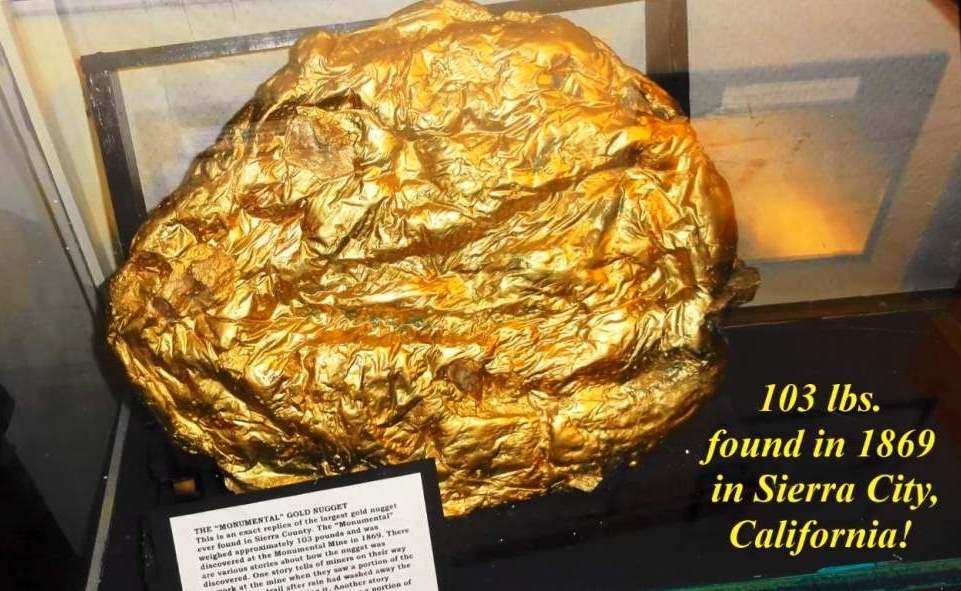
The Monumental Nugget: America’s Largest Gold Nugget In the high reaches of the Sierra Nevada, where rivers carve steep valleys and the land still carries the memory of the Gold Rush, one discovery outshone all others. This was the Monumental Nugget, nicknamed “The Sierra Buttes Treasure,” unearthed in 1869 near Sierra City, California. The nugget weighed an astounding 103 pounds in raw form and contained about 82 pounds of pure gold. To visualize it, the nugget was heavier than an average eight-year-old child and larger than most bowling balls. The crew that discovered it had been working a claim with only modest returns. While clearing old gravel, one miner struck something unusually heavy. As they uncovered it, they realized the nugget was so large they needed several men to lift it. News spread rapidly, and miners from surrounding camps trekked miles to see the historic find. Local towns celebrated for days, and merchants saw a sudden rush of curious visitors eager to glimpse the treasure. Large gold nuggets are exceedingly rare because gold generally forms in thin veins. Natural erosion, pressure, and chemical changes break larger masses into smaller flakes over time. Experts estimate that fewer than one in many millions of nuggets exceeds twenty pounds. By comparison, the Dogtown Nugget at 54 pounds and the Carson Nugget at 45 pounds were enormous but still far smaller than the Monumental Nugget. Most modern prospectors recover only small pieces weighing ounces, making finds like this almost legendary. The Monumental Nugget was eventually melted down for its gold value, a fate common to historic nuggets. Even without the original piece, its story endures as a testament to the extraordinary surprises that once lay hidden in the American frontier and the enduring allure of striking it rich. #GoldRush #FoundTreasure #America #USA #History #USHistory #Science

1776 Patriot

Built to Last: The USS Constitution’s Secret Construction That Defied Cannonballs

The USS Constitution, famously called “Old Ironsides,” began construction in 1794 at Edmund Hartt’s shipyard in Boston, part of the U.S. effort under the Naval Act of 1794 to build a strong fleet to protect American trade. Designed by Joshua Humphreys, the Constitution was bigger, faster, and more heavily armed than most frigates of the time. Its hull was built from live oak, a very dense and strong wood, while white oak and pine were used for framing, decks, and internal supports. Shipwrights used hand tools like saws, chisels, mallets, and augers to shape each plank and beam, carefully fitting them together. Humphreys added diagonal braces, heavy angled supports, and double planking to make the hull strong and flexible enough to absorb cannon hits. Wooden pegs, iron bolts, and fasteners held everything together, while tar and rope fibers sealed the seams to keep the ship watertight. Deck beams were notched and bolted, and the masts were set into reinforced posts. Pulleys and ropes helped lift heavy timbers into place. Workers measured and adjusted everything with simple tools like plumb lines, squares, and marking gauges to ensure the hull was straight and strong. The bottom of the ship was covered with copper to prevent marine growth, keeping her fast and seaworthy. By the time she was launched on October 21, 1797, the Constitution was 204 feet long, with a 43-foot-wide beam, and carried 44 guns, making her one of the most powerful frigates of her era. Her combination of speed, firepower, and advanced construction allowed her to survive battles that would have destroyed lesser ships. The Constitution’s construction shows the skill, ingenuity, and hard work of early American shipbuilders. Today, she is a floating museum in Boston, a lasting symbol of U.S. naval strength and craftsmanship. #USA #USHistory #Shipbuilding #USMilitary #Military

Built to Last: The USS Constitution’s Secret Construction That Defied Cannonballs
Tag: usa - Page 7 | LocalAll