Tag Page blackhistory

#blackhistory
LataraSpeaksTruth

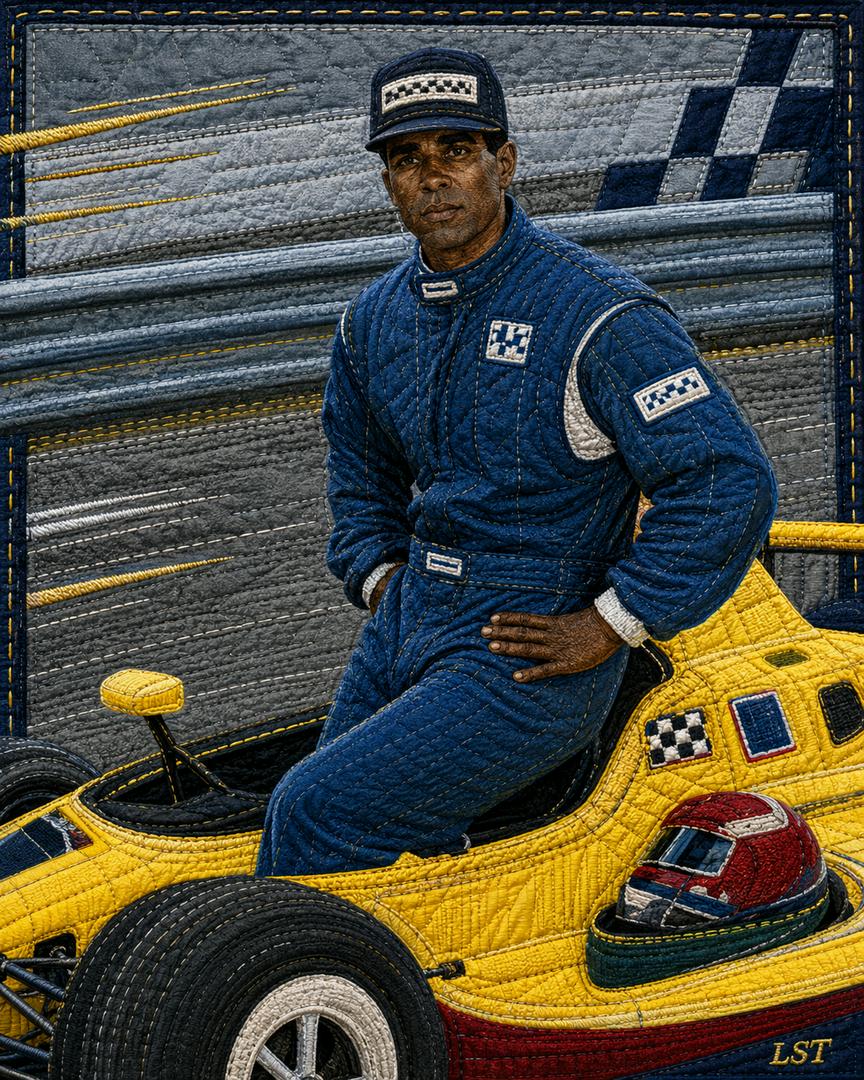
May 19, 1991, Willy T. Ribbs made history at the Indianapolis Motor Speedway. He became the first African American driver to qualify for the Indianapolis 500, one of the most famous races in America. His four-lap average speed was 217.358 mph, fast enough to put him in the field and break through a barrier that had stood far too long. And let’s be clear, this was not just about driving fast. This was about entering a space where Black drivers had been nearly invisible. Racing has always sold itself as speed, courage, engines, tradition, and glory. But tradition can also become a locked gate when certain people are kept on the outside looking in. Willy T. Ribbs did not walk into that moment with an easy road behind him. He had already dealt with doubt, rejection, controversy, and the kind of pressure that comes when you are not just competing for yourself, but carrying the weight of being “the first.” That is a heavy helmet to wear. When he qualified for the 1991 Indy 500, he did more than earn a starting position. He proved that talent had been there. Skill had been there. Courage had been there. The opportunity had not. That is the part history has to sit with. Ribbs started 29th in the race. His day ended early because of engine trouble, but nobody can erase what happened before that green flag ever dropped. He had already made history. Some people break barriers with speeches. Some do it with court cases. Some do it with music, books, protest signs, or laws. Willy T. Ribbs did it at over 217 miles per hour. And that deserves to be remembered. #WillyTRibbs #BlackHistory #OnThisDay #MotorsportsHistory #Indianapolis500 #Indy500 #BlackExcellence

LataraSpeaksTruth

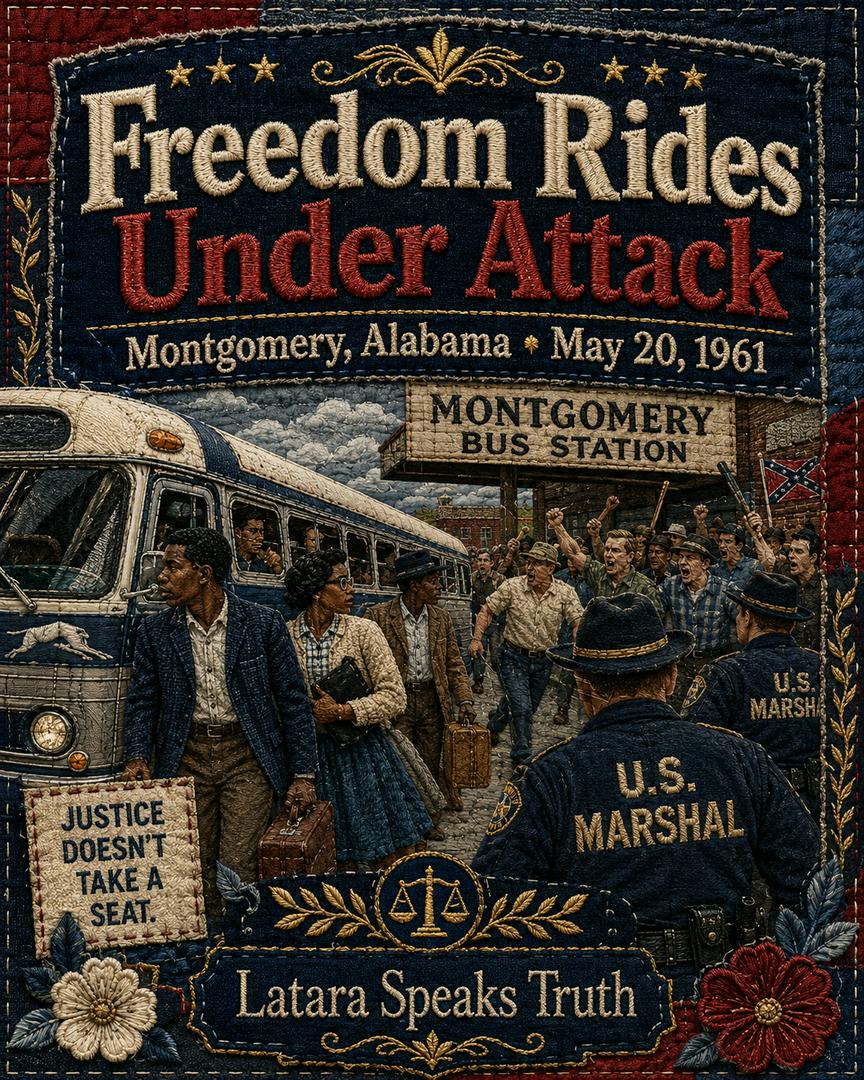
On May 20, 1961, the Freedom Rides reached one of their most dangerous moments in Montgomery, Alabama. The riders were challenging segregation in interstate bus travel and terminals. They were not carrying weapons or looking for a fight. They were testing whether federal law actually meant anything in the Deep South. When the Freedom Riders arrived at the Greyhound station, a white mob was waiting. The attack was brutal. Riders were beaten. Reporters and bystanders were targeted too. John Lewis and Jim Zwerg were among those assaulted. The violence was meant to send a message. Stop riding. Stop challenging segregation. Stop forcing the country to look at itself. But the Freedom Riders did not stop. The goal was fear. The answer was courage. The attack pushed the federal government deeper into the crisis. President John F. Kennedy issued a May 20 statement condemning interference with the Freedom Riders. Attorney General Robert F. Kennedy later sent federal marshals to Montgomery as violence continued, including the next night when a mob surrounded First Baptist Church while Dr. King and supporters were inside. This history is often softened into speeches and statues. But this was not soft. This was blood on pavement. These were young people risking their bodies to expose the gap between American law and American reality. The Freedom Riders were not asking for special treatment. They were demanding enforcement of existing federal rulings. Interstate travel had already been legally desegregated, but segregationists still resisted with intimidation, violence, and local cooperation. May 20, 1961 showed what that resistance looked like. It also showed what courage looked like. Peaceful protest was not passive. It took discipline, sacrifice, and people willing to walk into danger so the truth could no longer be hidden. Sources: EJI, Stanford King Institute, U.S. Marshals Service, JFK records. #FreedomRiders #AmericanHistory #BlackHistory #Montgomery

LataraSpeaksTruth

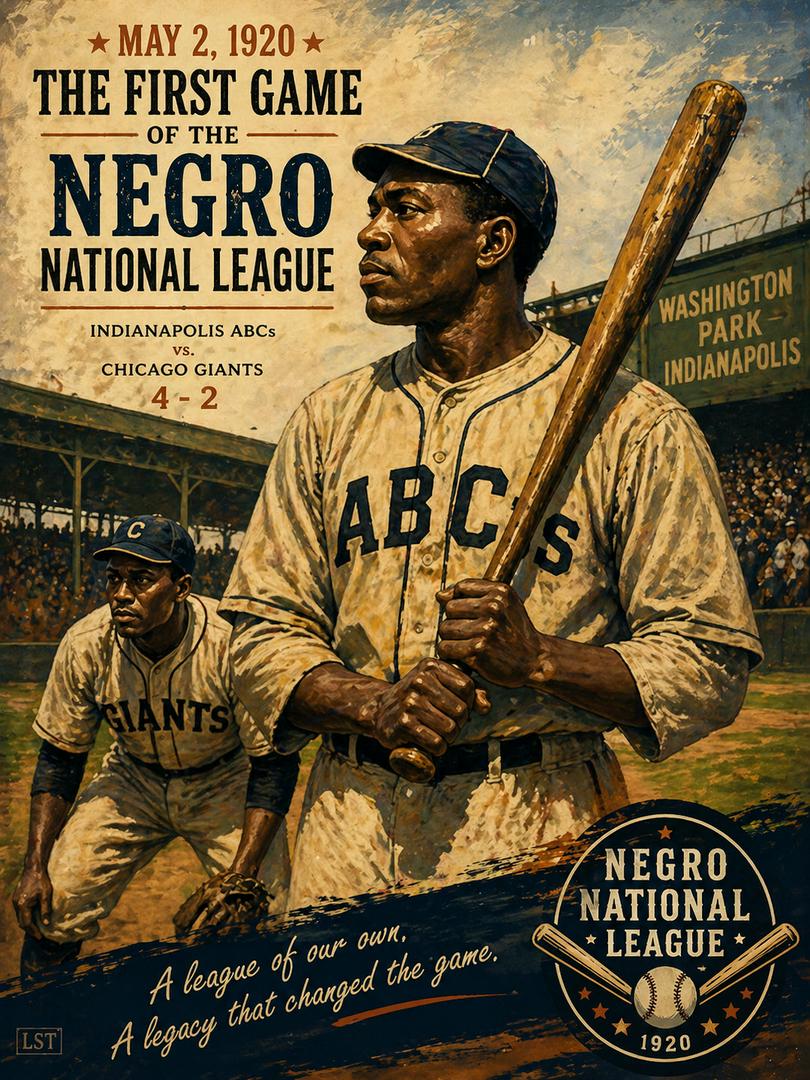
May 2, 1920: The first recognized Negro National League game was played in Indianapolis, Indiana. On that day, the Indianapolis ABCs defeated the Chicago Giants 4 to 2 at Washington Park. It was more than a baseball game. It marked the beginning of a professional league built for Black players during an era when Major League Baseball remained segregated. The Negro National League was founded in 1920 under the leadership of Andrew “Rube” Foster, one of the most important figures in baseball history. Foster understood that Black players needed more than talent. They needed structure, ownership, organization, and a stage large enough for the world to see what they could do. That first game helped launch a league that became home to some of the greatest players the sport has ever known. The Negro Leagues gave Black athletes a professional platform at a time when the door to Major League Baseball was still closed to them. These players traveled, competed, built fan bases, filled ballparks, and proved excellence long before integration. Their talent was never the issue. Access was. The May 2, 1920 game stands as a reminder that Black baseball history is not a side note to American baseball. It is American baseball. The Negro National League created opportunity where exclusion had built a wall. On this day, we remember the first game of the Negro National League and the players, owners, managers, and fans who helped build a legacy that still deserves to be spoken with respect. #NegroLeagues #BlackBaseball #BlackHistory #BaseballHistory #OnThisDay

LataraSpeaksTruth

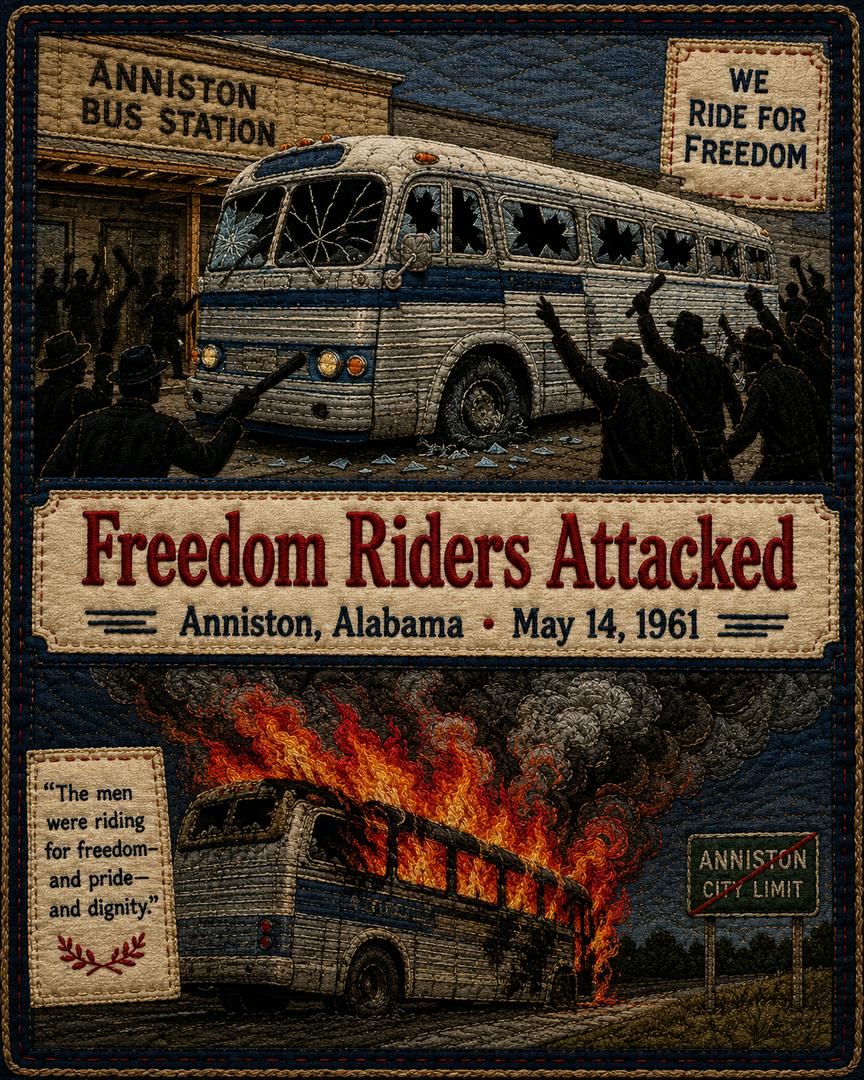
On Mother’s Day, May 14, 1961, a Greyhound bus carrying Freedom Riders rolled into Anniston, Alabama, and met the face of violent resistance. The riders were part of an interracial group challenging segregation in interstate bus travel and bus terminal facilities. They were testing whether the country would honor federal rulings that said segregation in interstate transportation was unconstitutional. What they found in Anniston was not law and order. It was a mob waiting. According to the Equal Justice Initiative, the bus arrived at the Anniston station shortly after 1 p.m. The station was locked. Outside, a white mob surrounded the bus. Some carried pipes, chains, and bats. They smashed windows, dented the bus, slashed its tires, and attacked the riders inside. Police had been warned hours earlier that a mob was gathering, but they did not arrive until after the assault had already started. Even then, real protection did not come soon enough. The bus was eventually escorted out of town, but once it reached the city limits, it was left vulnerable. With its damaged tires, the bus could not get far. Outside Anniston, the mob caught up again. The Greyhound bus was firebombed, filling with smoke as riders struggled to escape. When they made it out, some were beaten again. What happened in Anniston was not just an attack on a bus. It was an attack on the idea that Black and white citizens could travel together with equal dignity. It was meant to terrify people into silence. But the Freedom Riders did not disappear from history. Their courage helped force the nation to confront the violence behind segregation. The flames from that bus became one of the most haunting images of the civil rights era, but the riders’ survival became the stronger message. On a day meant to honor mothers, America was reminded that justice often has to be carried by somebody’s sons and daughters willing to risk everything. #FreedomRiders #CivilRightsHistory #BlackHistory #America

LataraSpeaksTruth

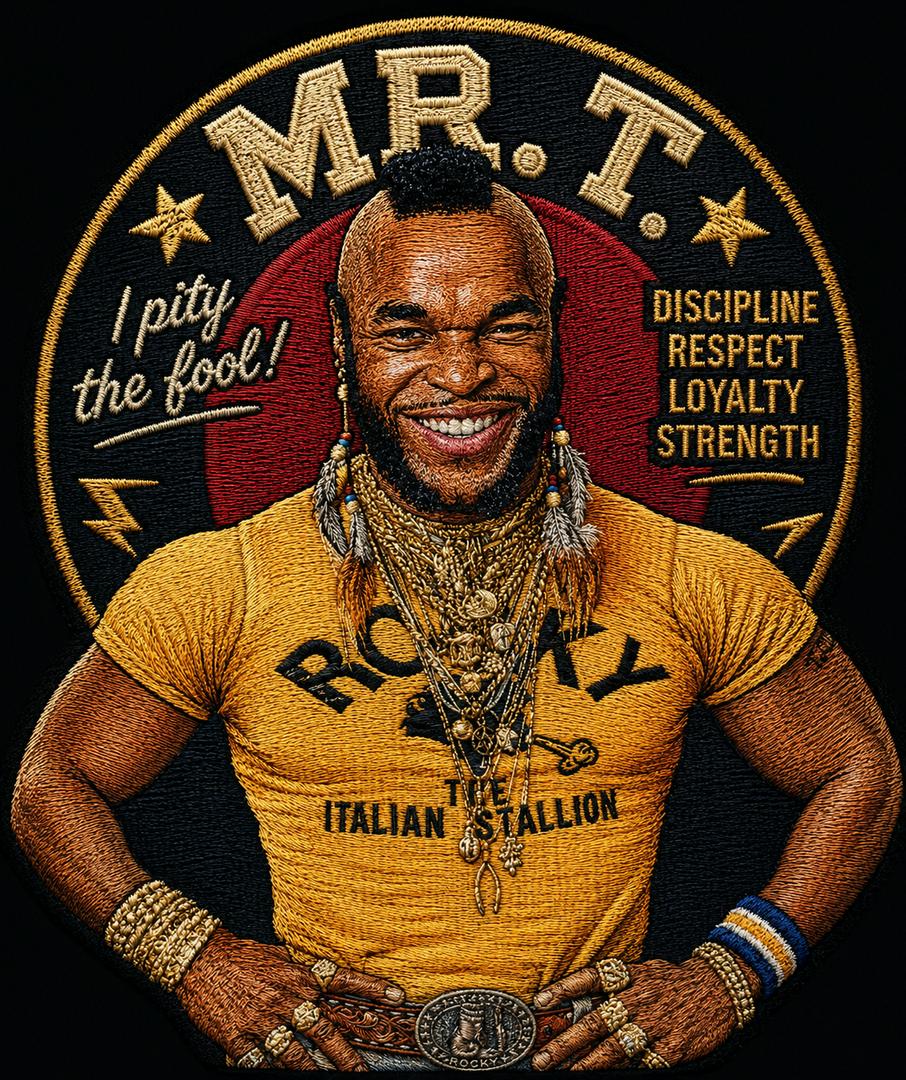
Born May 21, 1952, Mr. T became more than a catchphrase. Before the gold chains, the mohawk, and “I pity the fool,” he was Laurence Tureaud from Chicago’s South Side. Born into a family of 12 children, he grew up in the Robert Taylor Homes and became known early for discipline, toughness, and athletic ability. He attended Dunbar Vocational High School, where he played football, wrestled, and studied martial arts. That foundation helped shape the larger-than-life figure America would later recognize. Before Hollywood, he served in the U.S. Army, worked as a bouncer, and became a bodyguard for major names including Muhammad Ali and Michael Jackson. His bold image was not random. The gold chains became part of his look during his bouncer years, while his hairstyle was inspired by Mandinka warriors. His name, his image, and his presence were tied to respect, identity, and being seen as a man in a world that often denied Black men that basic dignity. His breakout moment came when Sylvester Stallone cast him as Clubber Lang in Rocky III. From there, Mr. T became a household name. His role as B.A. Baracus on The A-Team turned him into one of the most recognizable stars of the 1980s. But behind the tough-guy image was also someone who became a role model for children, using television, music, and public appearances to promote discipline, confidence, and staying away from trouble. Mr. T’s story is not just about fame. It is about a man who built an identity so strong that the world had no choice but to remember it. From Laurence Tureaud to Mr. T, he turned survival, style, and self-respect into a cultural legacy. #MrT #BlackHistory #OnThisDay #EntertainmentHistory #ChicagoHistory #TheATeam #RockyIII #BlackExcellence #PopCultureHistory
LataraSpeaksTruth

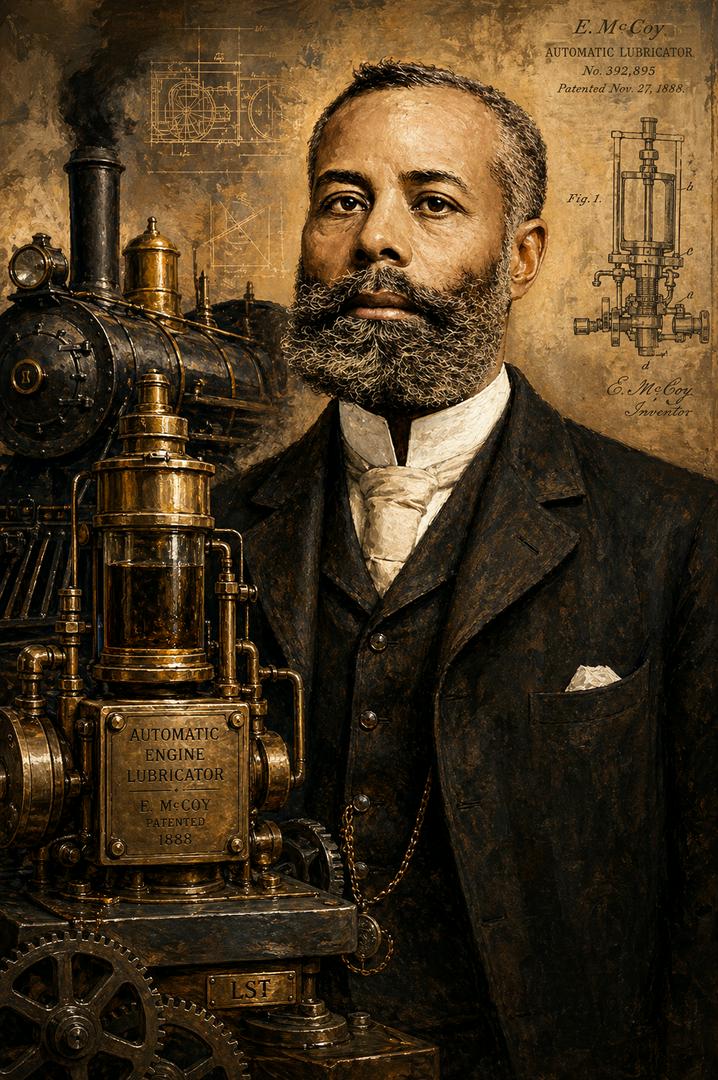
May 2, 1844: Elijah McCoy was born in Colchester, Ontario, Canada, and became one of the most important inventors in railroad and industrial history. McCoy was born to George and Mildred McCoy, parents who had escaped slavery in Kentucky and settled in Canada. From a young age, he showed a strong interest in machines and how things worked. His parents supported his gift, and as a teenager, he studied mechanical engineering in Scotland before returning to North America. Even with his training, McCoy faced the limits placed on Black engineers during that era. Instead of being hired in the engineering roles he was qualified for, he found work with the Michigan Central Railroad as a fireman and oiler. That job gave him a close look at one of the biggest problems in steam-powered machinery. At the time, trains and heavy machines often had to stop so workers could apply oil to moving parts. Those stops cost time, labor, and money. McCoy studied the problem and created an automatic lubricating device that delivered oil to the engine while it was still running. In 1872, he received U.S. Patent No. 129,843 for an improvement in lubricators for steam engines. His invention helped trains and machinery run more efficiently by reducing repeated stops. He later earned dozens of patents connected to engines, machinery, and industrial work. His work became so respected that some historians connect his name to the phrase “the real McCoy,” though the exact origin is still debated. What is not debated is the impact of his invention. Elijah McCoy died on October 10, 1929. In 2001, he was inducted into the National Inventors Hall of Fame, honoring a man whose ideas helped move trains, factories, and industry forward. His story is bigger than one invention. Elijah McCoy saw a problem, built a solution, and left the world with work that was, in every sense, the real thing. #BlackHistory #ElijahMcCoy #OnThisDay #InventorHistory #AmericanHistory

LataraSpeaksTruth

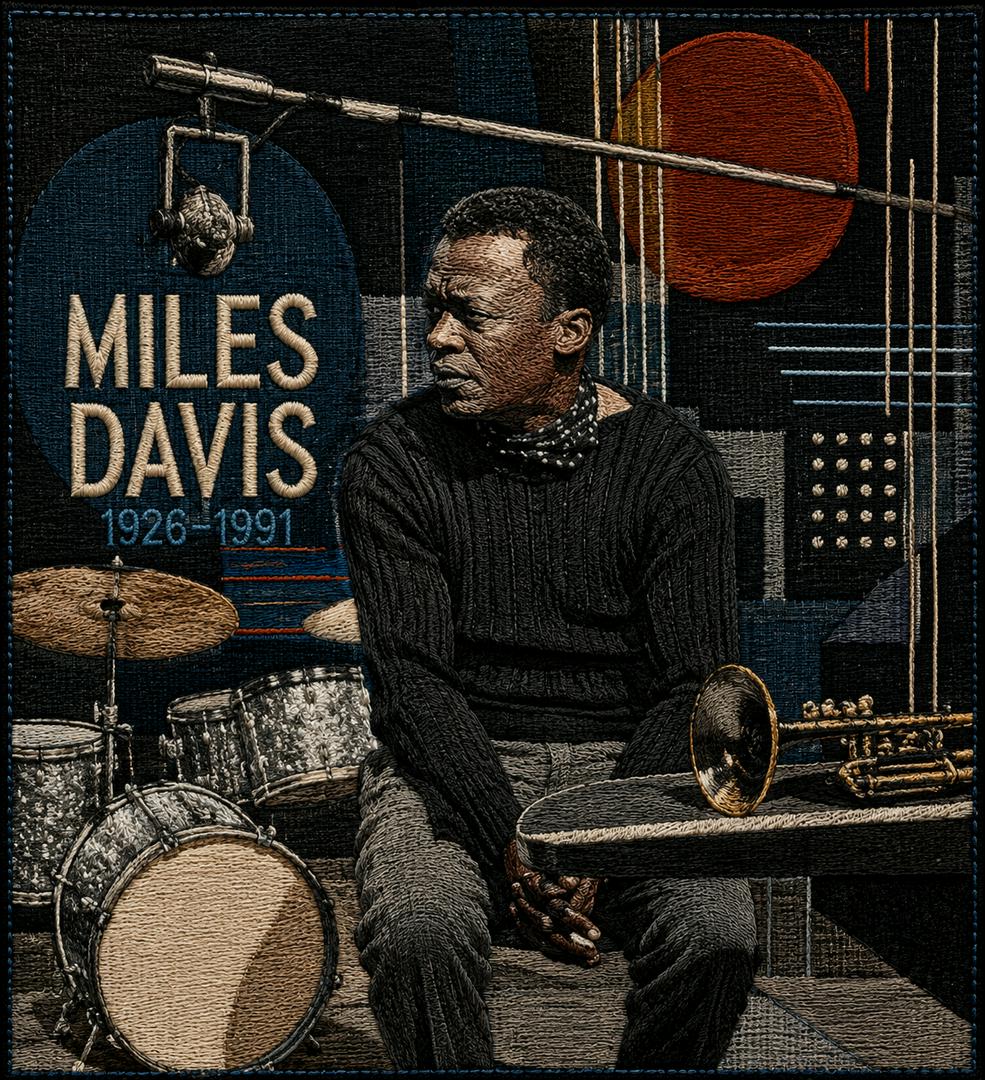
On May 26, 1926, Miles Davis was born in Alton, Illinois. He became one of the most influential musicians in jazz history, not by staying in one lane, but by changing the road completely. Miles first rose during the bebop era alongside artists like Charlie Parker and Dizzy Gillespie. But he did not stop there. He helped shape cool jazz with Birth of the Cool, then helped redefine modern jazz again with Kind of Blue, one of the most celebrated jazz albums ever recorded. By the late 1960s and 1970s, Miles pushed jazz into bold new territory, blending it with rock, funk, electric instruments, and experimental sounds. That shift helped build what became known as jazz fusion. What made Miles Davis powerful was not just the trumpet. It was vision. His sound could be quiet, sharp, moody, distant, emotional, and unforgettable all at once. He knew how to make silence speak. He also had an eye for talent, with many musicians from his bands later becoming legends themselves. Miles Davis did not simply play jazz. He challenged it. He stretched it. He made it evolve. Nearly a century after his birth, his influence can still be heard across jazz, hip-hop, R&B, film scores, and modern music production. Some artists belong to an era. Miles Davis helped create several. #MilesDavis #JazzHistory #BlackHistory #MusicHistory #OnThisDay

Brandon_Lee

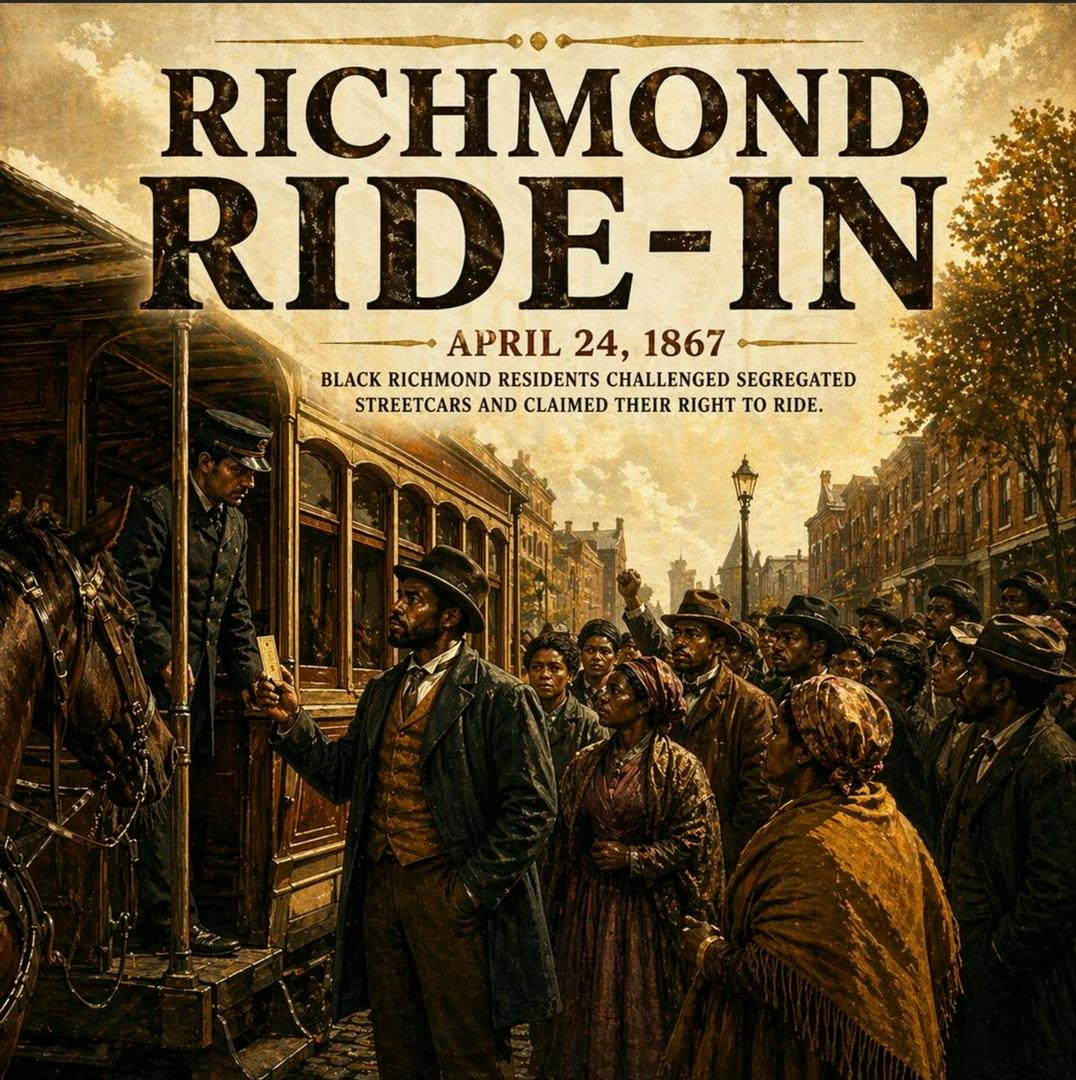
On April 24, 1867, Black residents in Richmond, Virginia made it clear that the fight for equal treatment did not begin in the 1950s. t was Reconstruction. Slavery had officially ended through the 13th Amendment barely more than a vear earlier, but freedom or paper did not mean equal rights in everyday ife. In Richmond, Black passengers were being denied access to privately operated horse-drawn streetcars, even when they had paid for a ticket One of the people connected to this protest was Christopher Jones. According to historical records, Jones bought a ticket for a Richmond streetcar and attempted to ride When he was refused, a crowd gathered in support of his right to board. He was later arrested for disturbing the peace But the people did not back downBlack Richmond residents organized protests against the streetcar company's racial restrictions. This was not iust about transportation. It was about citizenship public space, dignity, and whether freedom would mean anything beyond words written into law. That is what makes this historv so important. Long before the Montgomery Bus Boycott long before Rosa Parks became a nationa symbol, Black communities were already challenging segregation in public transportation. They were using protest oublic pressure, and collective action to demand what should have already been theirs. The Richmond Streetcar Protest reminds us that civil rights history did not suddenly appear in the 20th century. It had deep roots in Reconstruction, when newly freed people were fighting to define what freedom would actually look like in public life April 24, 1867 deserves to be remembered because it shows us something powerful. The pushback started early The courage was already there. And the demand was simple: if we paid to ride, we had the riaht to ride. #BlackHistory #ReconstructionHistory #RichmondVA #CivilRightsHistory #HiddenHistory

LataraSpeaksTruth

Born December 8, 1868, Henry Hugh Proctor entered the world just as Reconstruction was slipping away. The promises were fading, the tension was thick, and yet he grew into a leader who insisted that hope could be rebuilt if people were willing to do the work. Proctor did not simply become a minister. He became a community strategist, the kind of pastor who believed that faith without structure and support was just noise. When he stepped into leadership at Atlanta’s First Congregational Church, he treated the space like fertile ground. He preached, yes, but he also organized libraries, a gym, job assistance programs, cultural clubs, safe housing for young Black women, and music programs that strengthened spirits in a city determined to limit Black opportunity. He built a full-life resource center long before that phrase existed, proving that the church could be both sanctuary and engine. Proctor helped co-found the National Convention of Congregational Workers Among Colored People, creating a network for Black ministers who were pushing for progress in their own communities. After the violence of the 1906 Atlanta massacre, he worked on interracial committees that aimed to cool the hostility poisoning the South. He did this quietly, intentionally , and with the kind of steady courage that often goes unnoticed by history books. He was not chasing spotlight. He was shaping lives. His influence stretched far beyond his pulpit, carried in the people who found safety, dignity, and opportunity through the institutions he helped build. December 8, 1868 marks the birth of Henry Hugh Proctor, pioneering minister and committed community reformer. #HenryHughProctor #BlackHistory #OnThisDay #CommunityBuilder #AtlantaHistory #ReconstructionEra #FaithAndJustice #UnsungHeroes #AmericanHistory

LataraSpeaksTruth

January 13, 1777 did not arrive with celebration or ceremony, but it carried one of the clearest moral confrontations of the Revolutionary era. On this day, Prince Hall and seven other Black men formally petitioned the Massachusetts legislature for freedom on behalf of those held in bondage. Their argument was not emotional pleading. It was political, logical, and devastatingly precise. If the colonies were fighting a war over natural rights and liberty, then slavery stood in direct contradiction to the very ideals being proclaimed. The petitioners pointed to the hypocrisy plainly. They reminded lawmakers that Black men were being taxed, governed, and even conscripted, while denied the freedom those sacrifices were supposedly defending. This was not a request for gradual reform or future consideration. It was a direct challenge to the legitimacy of slavery itself. The men asserted that freedom was not a gift to be granted at convenience but a right already owed. The legislature did not immediately abolish slavery in response. Power rarely moves that fast. But the petition mattered because it created a permanent written record of resistance from within the system. It forced lawmakers to confront the contradiction in ink, preserved in official archives. It also helped lay the groundwork for later legal challenges that would ultimately dismantle slavery in Massachusetts by the early 1780s. Prince Hall would go on to become one of the most influential Black leaders of the eighteenth century, founding Black institutions, advocating education, and organizing community defense. But on January 13, 1777, his legacy was already clear. He understood that freedom is not begged for quietly. It is demanded clearly, publicly, and without apology. History remembers battles and speeches. It should also remember petitions like this one. Because sometimes the most dangerous thing to a system built on contradiction is a document that tells the truth. #OnThisDay #January13 #America

Tag: blackhistory - Page 23 | LocalAll