Tag Page BlackHistory

#BlackHistory
LataraSpeaksTruth

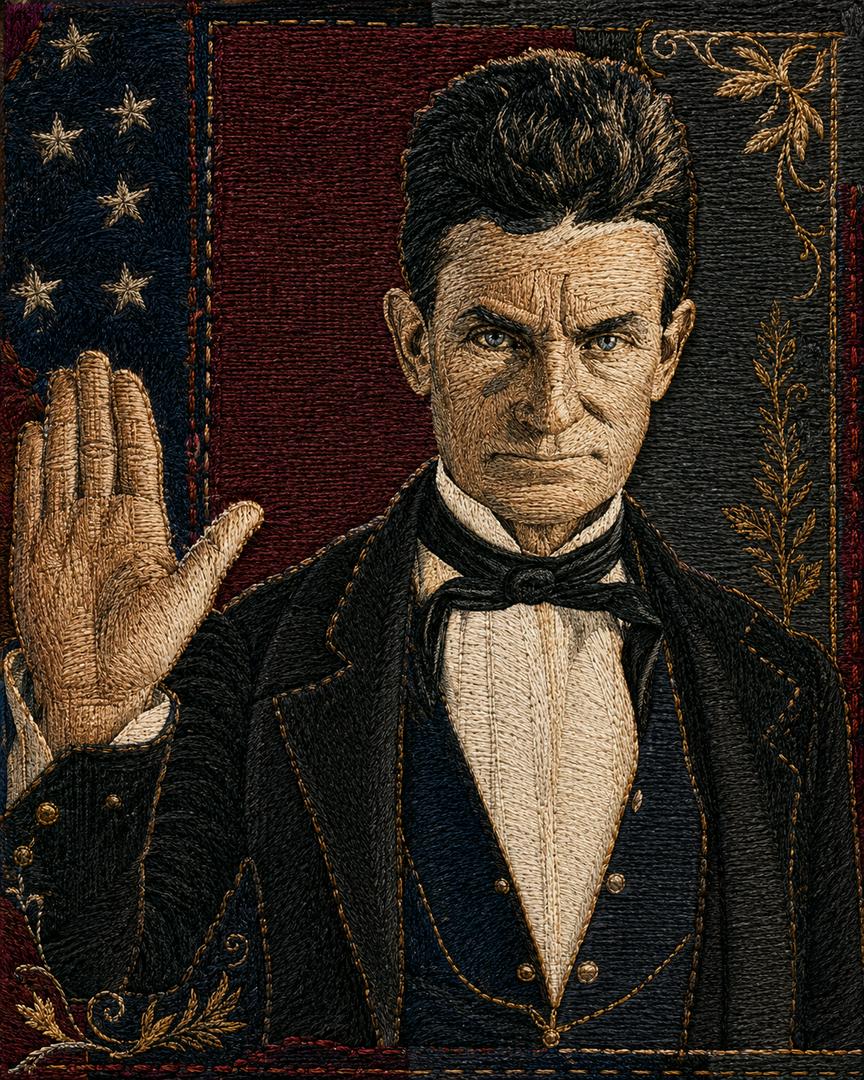
On May 9, 1800, John Brown was born. His name remains one of the most debated names in American abolition history. Brown was a white abolitionist, but his story is deeply connected to Black history because he did not view slavery as a political disagreement. He saw it as a violent system that had to be confronted. At a time when many people opposed slavery with careful speeches, petitions, and gradual arguments, Brown took a much harder position. He believed slavery was an emergency. He supported anti-slavery work, helped people escaping bondage, and became known for his willingness to fight the system directly. His most famous act came in 1859 with the raid on Harpers Ferry. Brown and his followers attempted to seize the federal armory in Virginia, hoping the weapons could help spark a larger uprising against slavery. The plan failed. Brown was captured, tried, and executed. But his death did not end the conversation. To some Americans, John Brown was dangerous and extreme. To others, especially those who understood the brutality of slavery, he was one of the few white men of his era willing to treat human bondage like the moral crisis it was. That is what makes his legacy so uncomfortable. His life forces a hard question: how far is someone willing to go when they claim to believe people should be free? John Brown did not simply oppose slavery in theory. He put his life on the line for that belief. His story is complicated, but it cannot be erased. In a country built on forced labor, profit, and human bondage, Brown became a symbol of resistance that polite society could not easily explain away. More than 160 years after his execution, his name still raises debate because he challenged America to look directly at slavery without softening the truth. #BlackHistory #JohnBrown #AbolitionHistory #OnThisDay #AmericanHistory

LataraSpeaksTruth

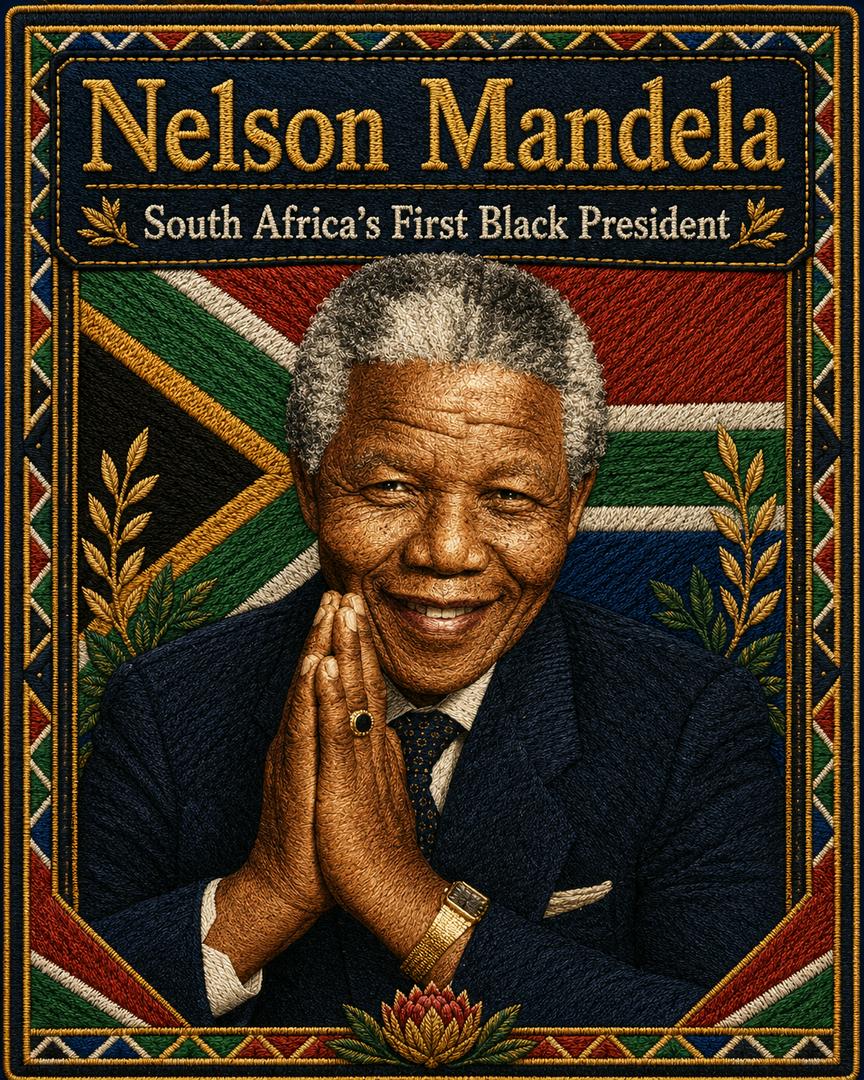
On May 9, 1994, South Africa’s newly elected parliament chose Nelson Mandela as the country’s first Black president. It was more than a political appointment. It was a turning point after decades of apartheid, a system that controlled where Black South Africans could live, work, travel, vote, and exist in their own homeland. Mandela had spent 27 years in prison for his role in the fight against apartheid. By the time he walked into leadership, he carried the weight of sacrifice, resistance, and survival. Just weeks earlier, South Africa held its first multiracial democratic election, allowing millions of people who had been denied full political power to finally cast their ballots. The election took place from April 26 to April 29, 1994, and marked the beginning of a new chapter for the nation. Mandela’s rise did not erase the wounds of apartheid overnight. No election can heal generations of harm by itself. But his selection showed the world that a country once built on legal separation could begin moving toward democracy, dignity, and repair. The next day, on May 10, Mandela was sworn in as president. His leadership became a global symbol of endurance, reconciliation, and the power of refusing to let oppression have the final word. His story still matters because it reminds us that history can shift. Systems that seem permanent can fall. People once silenced can rise. And sometimes, the person a government tried to bury becomes the one chosen to lead. #NelsonMandela #SouthAfricanHistory #BlackHistory #ApartheidHistory #HistoryMatters

LataraSpeaksTruth

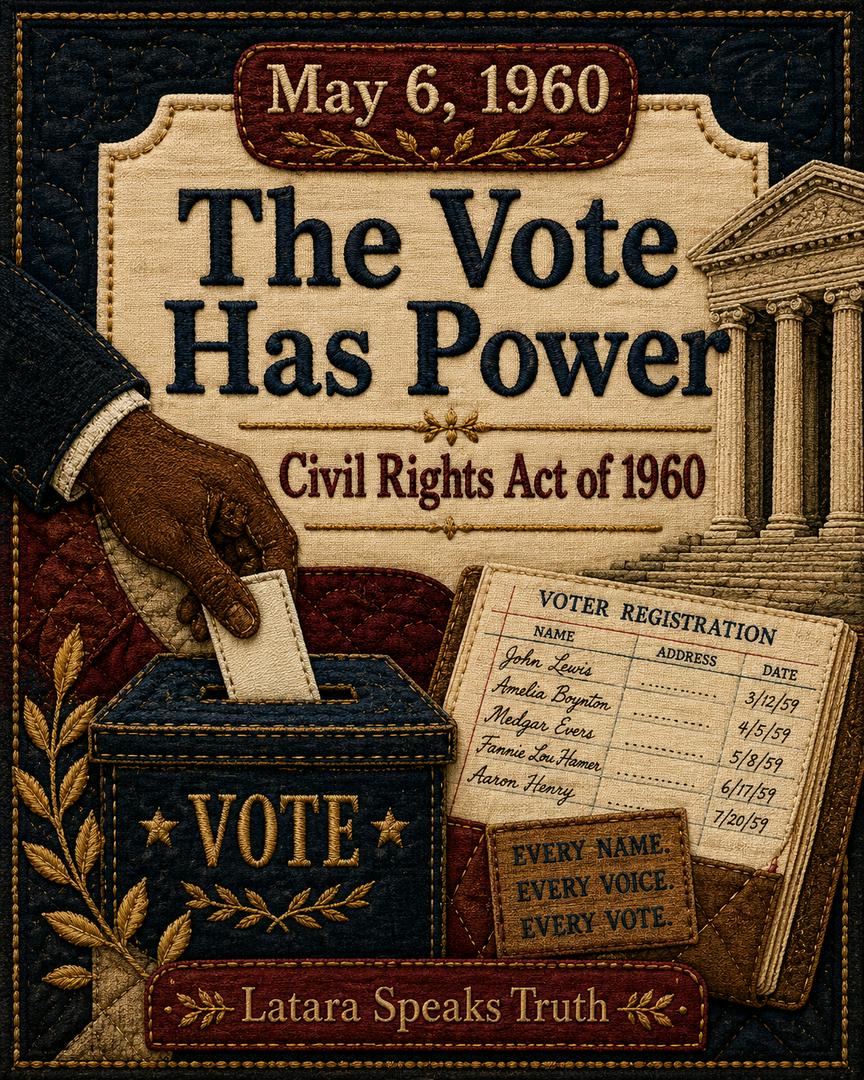
On May 6, 1960, President Dwight D. Eisenhower signed the Civil Rights Act of 1960 into law. The law did not end the fight for voting rights, but it exposed something this country already knew. Voter suppression was not random. Black citizens were being blocked, threatened, delayed, rejected, and intimidated when they tried to register and vote. The act gave the federal government more power to inspect local voter registration records. It required certain voting records to be preserved. It also allowed federal judges to appoint voting referees in places where people were being denied access to the ballot because of race. That detail matters. Voting rights did not become an issue yesterday. The struggle did not begin with today’s headlines. Long before modern debates over voter rolls, polling access, district lines, ID laws, and election rules, Black citizens were already fighting systems designed to keep their power contained. They knew exactly where Black power lived. It lived in the ballot box. It lived in registration lines. It lived in the simple but dangerous act of a person saying, I have a right to be counted here. The Civil Rights Act of 1960 was one step on a much longer road. It came after the Civil Rights Act of 1957 and before the Voting Rights Act of 1965. Each law tells the same truth in a different chapter: rights written on paper still have to be defended in real life. May 6 is not just a date in history. It is a reminder that the fight over voting rights has never really disappeared. It changes language. It changes paperwork. It changes courtrooms. But at the center of the fight, it is still the same. Who gets counted? Who gets heard? And who gets power? When people fight this hard to control who votes, they are admitting something without saying it out loud. The vote has power. And they have always known it. #BlackHistory #VotingRights #CivilRightsHistory #OnThisDay

Brandon_Lee

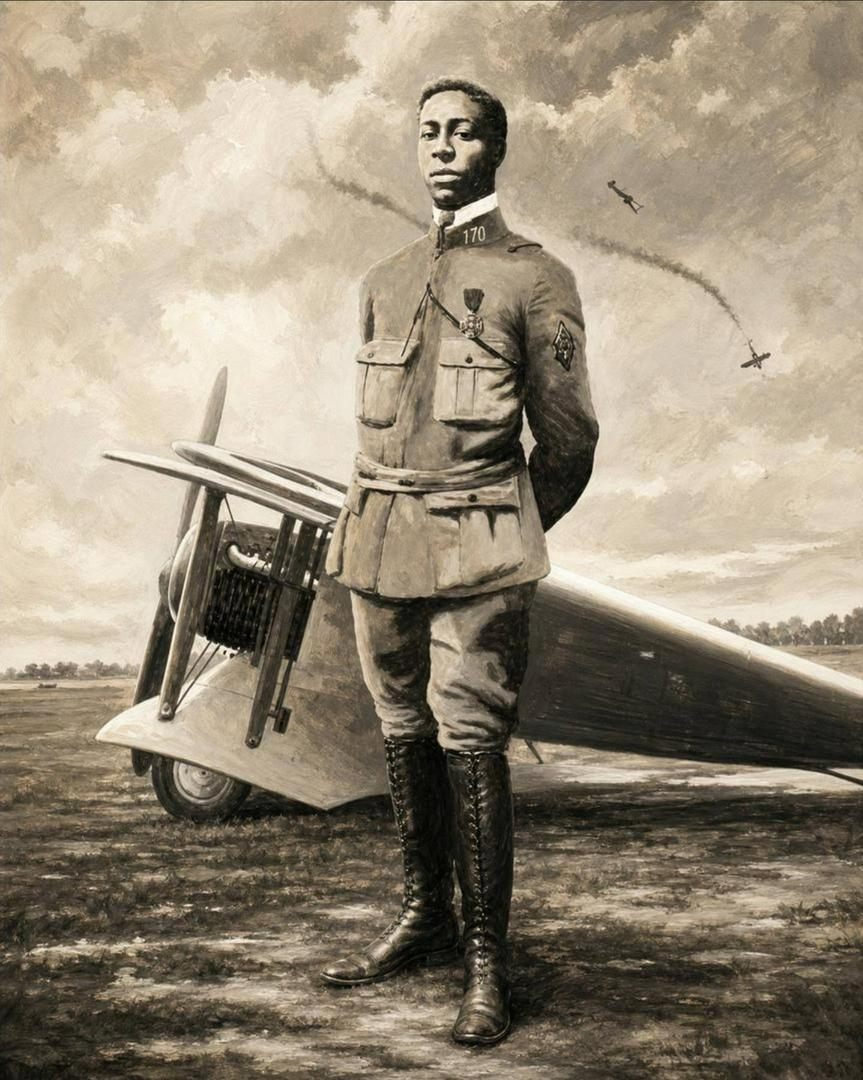
On May 5, 1917, Eugene Jacques Bullard earned his pilot's license from the Aéro-Club de France. Born in Columbus, Georqia Bullard became one of the first Black military pilots in world history and one of the most important combat aviators of World War I. Bullard's story did not begin with privilege He left the United States as a young man and eventually found his way to Europe. In France, he found opportunities America was not willing to give Black men at the time When World War I began, Bullard joined the French Foreign Legion and later served in the French army. After being wounded at Verdun, he trained as a pilot and earned his wings in 1917. Aviation was still dangerous and new, but Bullard stepped into that worlo anyway. He flew for France before the United States was ready to recognize a Black man in that role. When America entered the war. some American pilots serving with France were accepted into U.S. service. Bullard was not His skill, courage, and record were not enough to overcome the color line., France honored him for his service. Bullard received multiple militarv decorations and became remembered as a man who fought flew, and survived in a world that tried to imit him. His story matters because Black achievement was often recognized overseas before it was respected at home Eugene Bullard did not wait for permission from America to become history. He climbed into the cockpit anyway Before the Tuskegee Airmen became egends, Eugene Jacques Bullard had already taken to the sky#EugeneBullard #AviationHistory #WorldWarl #HiddenHistory #BlackHistory

LataraSpeaksTruth

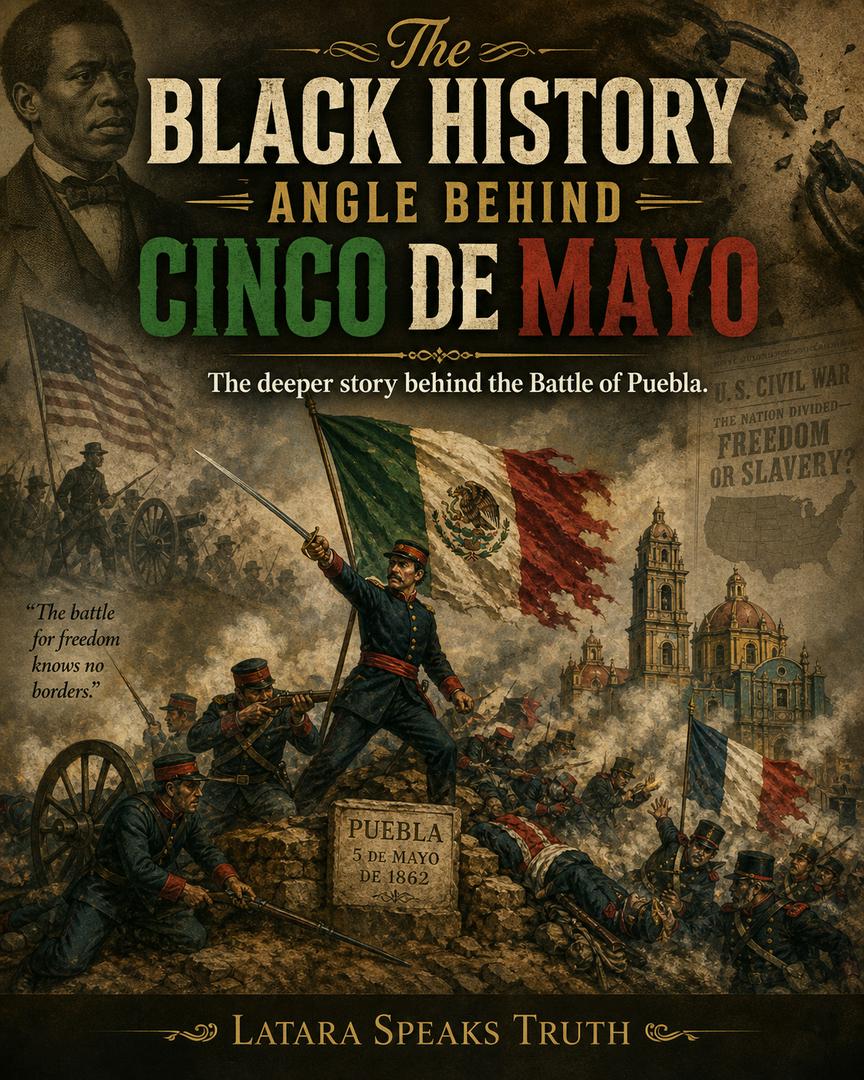
Cinco de Mayo is often treated like a party day, but the real history goes much deeper. The date marks the Battle of Puebla on May 5, 1862, when Mexican forces defeated French troops despite being heavily outnumbered. It is often mistaken for Mexican Independence Day, but that is not what it represents. Cinco de Mayo remembers a specific military victory against French invasion. The Black history angle comes from what was happening around that battle. In 1862, the United States was in the middle of the Civil War. The Confederacy was fighting to preserve slavery, while France under Napoleon III was trying to expand power in Mexico. France wanted to establish a monarchy under Maximilian of Austria and weaken U.S. influence in North America. That made Mexico’s resistance important beyond Mexico. At the same time, the Confederacy had pushed into New Mexico and Arizona and hoped to expand farther west. Some California Latinos supported the Union and saw the fight against French intervention in Mexico and the fight against the Confederacy as connected. That does not mean Cinco de Mayo ended slavery. It did not. But it does mean the Battle of Puebla happened inside a much larger struggle over slavery, empire, democracy, and power in North America. For some communities in California, Mexico’s victory became a symbol that freedom could stand against forces tied to slavery, monarchy, and domination. That is the part many people miss. Cinco de Mayo is not just food, drinks, and decorations. Its history reaches into war, resistance, and the politics of freedom during one of the most dangerous periods in North American history. The story is deeper than the celebration. #BlackHistory #CincoDeMayo #BattleOfPuebla #CivilWarHistory #HiddenHistory

LataraSpeaksTruth

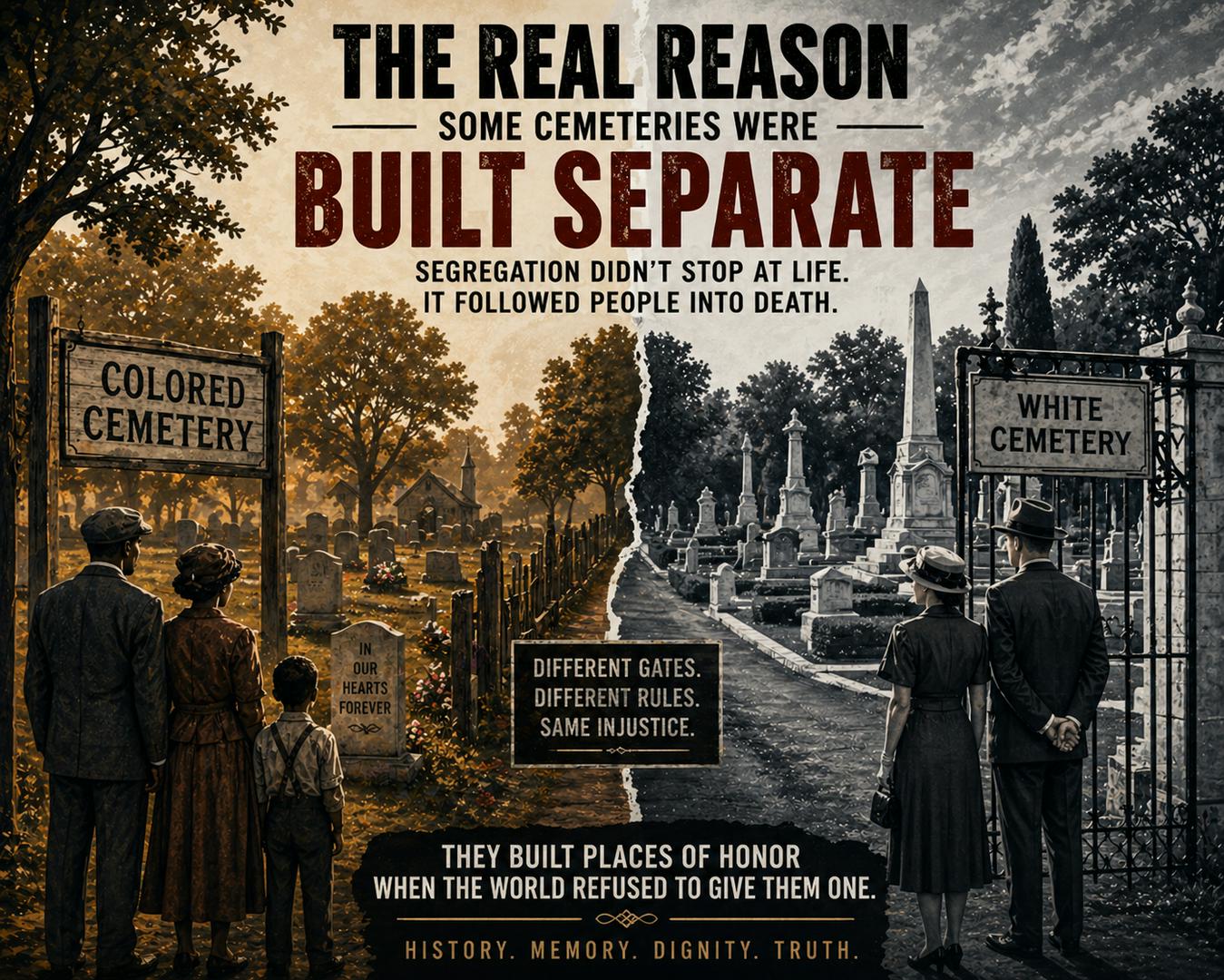
The Real Reason Some Cemeteries Were Built Separate Separate cemeteries were not always about tradition or family choice. In many places, they existed because Black families were denied equal access to burial space. Segregation did not stop at schools, buses, restaurants, hospitals, or neighborhoods. It followed people into death. Across the United States, Black people were often excluded from white-owned cemeteries, forced into separate sections, or given the least desirable burial grounds. In some communities, Black residents created their own cemeteries because there were no fair options available. Those cemeteries became sacred places of memory, dignity, and survival. They hold the remains of formerly enslaved people, veterans, church leaders, teachers, laborers, children, business owners, and families who helped build their communities. Many were created after slavery, when freed people built their own churches, schools, mutual aid societies, and burial grounds. But even after burial, unequal treatment continued. Many historically Black cemeteries were neglected, underfunded, damaged by development, paved over, or left without the same preservation support given to white cemeteries. Some communities are still fighting to protect these grounds, identify lost graves, and restore names that were nearly erased. That is what makes this history so uncomfortable. It shows that racial separation shaped not only where people could live, learn, eat, or work, but also where they could be mourned. Separate cemeteries tell a hard truth about America. Even in death, dignity was not always equally protected. But they also show something powerful. Black communities still built places of honor when the larger society refused to give them one. These cemeteries are not empty land. They are history, memory, family, and evidence. #BlackHistory #AmericanHistory #HiddenHistory #CemeteryHistory #HistoryMatters
LataraSpeaksTruth

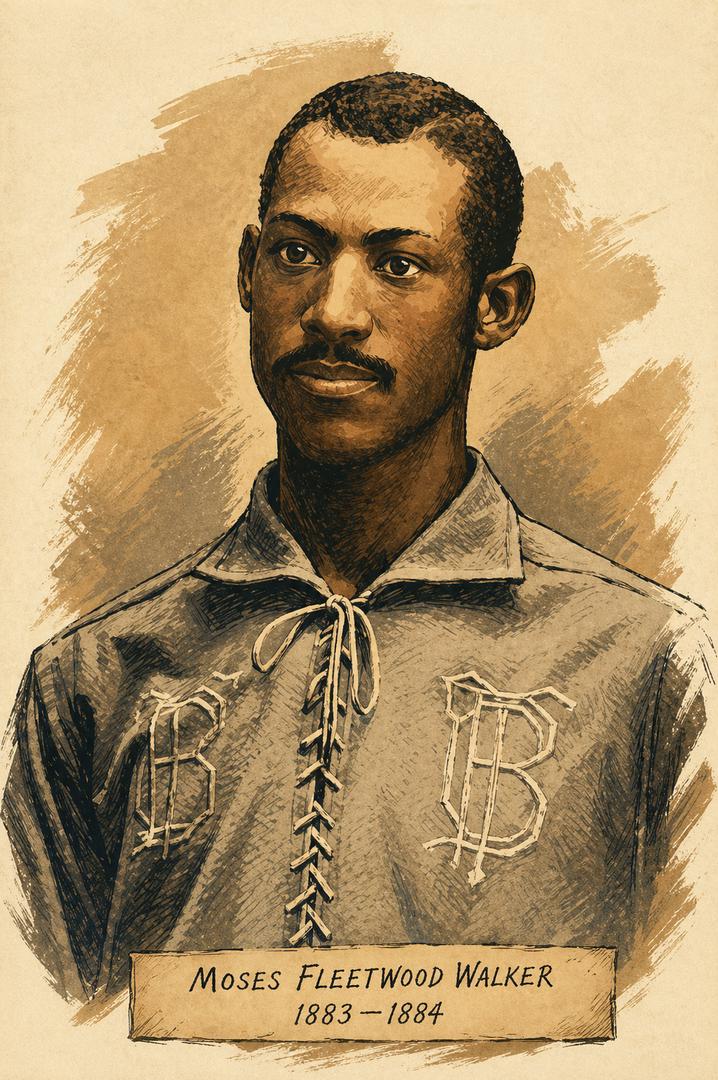
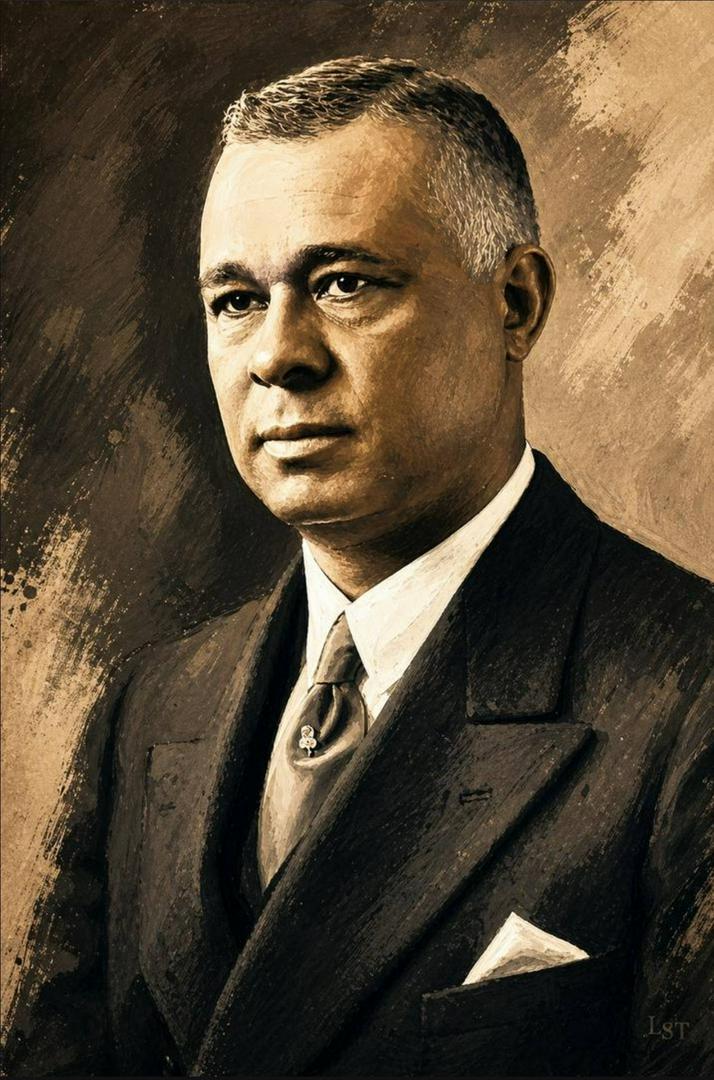
Jackie Robinson’s place in baseball history matters deeply. In 1947, he broke Major League Baseball’s modern color barrier with the Brooklyn Dodgers. But baseball’s color line story did not begin there. Decades earlier, Moses Fleetwood Walker had already stepped onto a major league field. Walker was born in Mount Pleasant, Ohio, in the 1850s and became known as “Fleet.” He attended Oberlin College and later studied law at the University of Michigan, where he also played baseball. At a time when higher education and professional athletics were not built to welcome Black men, Walker was already moving through spaces that tried to keep men like him out. On May 1, 1884, Walker made his major league debut as a catcher for the Toledo Blue Stockings of the American Association, then considered a major league. His first game came against the Louisville Eclipse in Kentucky. He was not simply playing baseball. He was standing in front of people who questioned whether a Black man belonged on that field at all. Walker played 42 games for Toledo that season. As a catcher, he worked one of the toughest positions in the sport during an era when protective gear was limited. He faced injuries, hostility, and racial abuse while competing at the highest level. His presence also exposed how quickly baseball was moving toward exclusion. White players and teams increasingly objected to playing with or against Black players. By the late 1880s, organized baseball had tightened its racial barriers, pushing Black players out of the major leagues for generations. Robinson’s 1947 breakthrough was historic because it ended decades of exclusion in the modern era. But Walker’s story reminds us that Black players were there before the door was slammed shut. He did not just come before Jackie. He showed that the color line was not natural, accidental, or unavoidable. It was built. History should remember the men who stood there before the wall went up. #MosesFleetwoodWalker #BaseballHistory

Rachel Marie

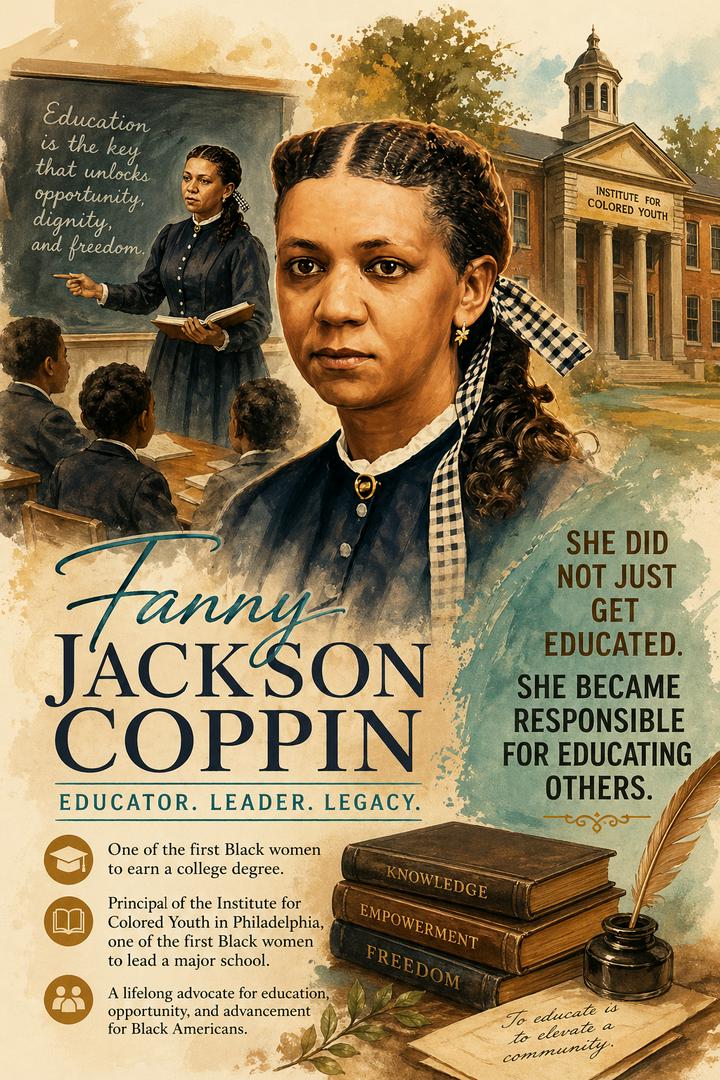
Fanny Jackson Coppin's story is not just about qetting an education. It is about what she did after education opened the door Born enslaved in Washington, D.C., in 1837 Coppin's freedom was purchased by an aunt when she was still a child. She did not waste that freedom. She used it to build a ife rooted in learning, leadership, and service. Coppin attended Oberlin College in Ohio one of the few schools at the time that admitted Black students and women. While there, she became the first Black student chosen for a student-teaching position. In 1865, she graduated with a bachelor's degree, joining a small number of Black women in the 19th century who had earned a college education. That same year, Coppin accepted a position at the Institute for Colored Youth inPhiladelphia, a respected school created to educate Black students. She became principal of the Ladies' Department and taught Greek, Latin, and mathematics Within a few vears, she became principal of the entire school That made her one of the frst Black women in the nation to lead a maior educationa institution. But Coppin's work was biager than a title She believed education had to prepare students for real life. Under her leadership the school focused on teacher training, strong academics, and industrial education, giving students both knowledge and practical skills. She also fouaht for iobs, voting riahts, and advancement for Black Americans at a time when talent did not guarantee opportunity Coppin understood that education was not just about books. It was about survival, independence, and the ability to move through a world built with barriers. Later, Coppin and her husband, Rev. Levi Jenkins Coppin, served as missionaries in South Africa, continuing her lifelong work in education and service Fanny Jackson Coppin deserves to be remembered because she did not simply rise through education. She turned around and used it to lift others That is legacy #FannyJacksonCoppin #BlackHistory

LataraSpeaksTruth

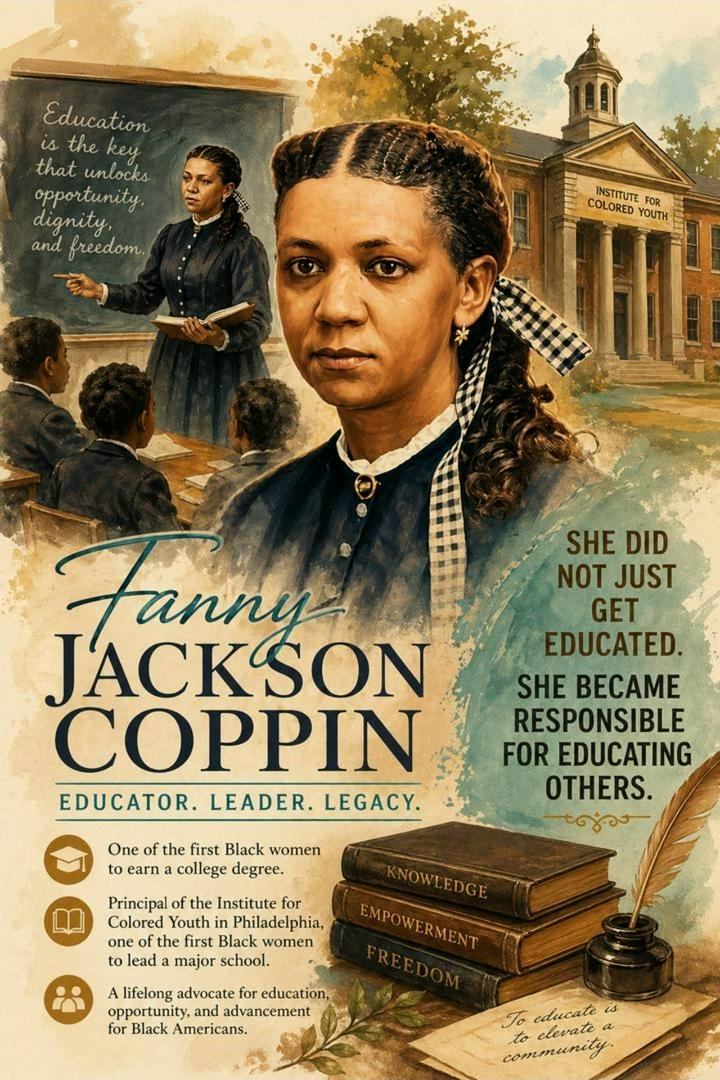
Fanny Jackson Coppin’s story is not just about getting an education. It is about what she did after education opened the door. Born enslaved in Washington, D.C., in 1837, Coppin’s freedom was purchased by an aunt when she was still a child. She did not waste that freedom. She used it to build a life rooted in learning, leadership, and service. Coppin attended Oberlin College in Ohio, one of the few schools at the time that admitted Black students and women. While there, she became the first Black student chosen for a student-teaching position. In 1865, she graduated with a bachelor’s degree, joining a small number of Black women in the 19th century who had earned a college education. That same year, Coppin accepted a position at the Institute for Colored Youth in Philadelphia, a respected school created to educate Black students. She became principal of the Ladies’ Department and taught Greek, Latin, and mathematics. Within a few years, she became principal of the entire school. That made her one of the first Black women in the nation to lead a major educational institution. But Coppin’s work was bigger than a title. She believed education had to prepare students for real life. Under her leadership, the school focused on teacher training, strong academics, and industrial education, giving students both knowledge and practical skills. She also fought for jobs, voting rights, and advancement for Black Americans at a time when talent did not guarantee opportunity. Coppin understood that education was not just about books. It was about survival, independence, and the ability to move through a world built with barriers. Later, Coppin and her husband, Rev. Levi Jenkins Coppin, served as missionaries in South Africa, continuing her lifelong work in education and service. Fanny Jackson Coppin deserves to be remembered because she did not simply rise through education. She turned around and used it to lift others. That is legacy. #FannyJacksonCoppin #BlackHistory

Rachel Marie

On April 28, 1941, the U.S. Supreme Court handed down a decision that pushed back against racial discrimination in interstate travel. The case centered on Arthur W. Mitchell. a U.S. representative from Illinois and the only Black member of Congress at the time. In April 1937, Mitchell purchased a first-class railroad ticket from Chicago to Hot Springs Arkansas. But after the train crossed into Arkansas, he was ordered out of the Pullman car because he was Black Mitchell had paid for first-class travel and offered to pay for the available Pullman seat. Instead. he was forced into a segregated car under threat of arrest Rather than let the insult disappear into historv, Mitchell challenged the treatment through the Interstate Commerce Commission and then the courtsIn Mitchell v. United States, the Supreme Court ruled that the discrimination was unlawful under the Interstate Commerce Act. The Court said Black passengers who purchased first-class tickets were entitled to accommodations equal in comfort and convenience to those provided to white passengers. The ruling did not end segregation in America, but it mattered. It came years before Brown v. Board of Education, the Montgomery Bus Boycott, and the Civi Rights Act. Mitchell's stand helped expose the cruelty and contradiction of Jim Crow in nterstate travel. One man bought a ticket. The railroad tried to deny his dignity. The Supreme Court said the law could not excuse that unequa treatment. #BlackHistory #CivilRightsHistory #OnThicDov #Cu nramaLourt