Tag Page BlackHistory

#BlackHistory
LataraSpeaksTruth

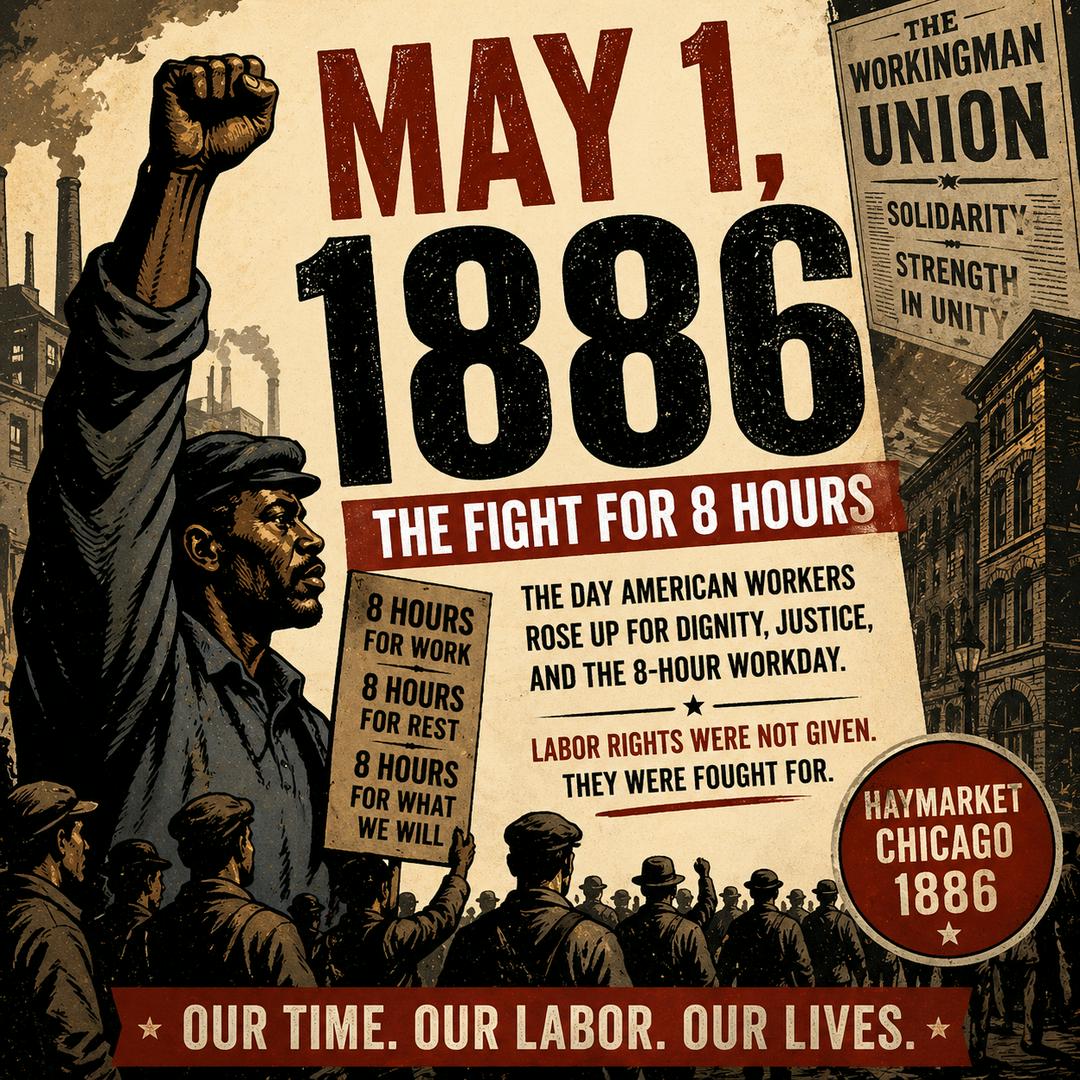
On May 1, 1886, hundreds of thousands of American workers joined a national strike demanding something many people take for granted today: an eight-hour workday. At the time, many workers labored 10, 12, or even more hours a day, often in dangerous conditions and for low pay. Labor organizations had chosen May 1, 1886, as the day to push for a new standard: eight hours for work, eight hours for rest, and eight hours for what they chose. The movement spread across the country, with estimates often ranging from 300,000 to 500,000 workers taking part. Chicago became one of the major centers of the strike. Just days later, the Haymarket Affair would turn the fight for labor rights into one of the most remembered moments in American labor history. This is not only a labor history story. It matters to Black history, too. Many Black workers were excluded from early unions, underpaid, overworked, and pushed into some of the hardest jobs with the fewest protections. Over time, Black labor organizers connected workplace justice to the broader fight for civil rights. Fair hours, fair pay, dignity, and safe working conditions became part of the larger struggle for freedom and equality. From the eight-hour workday movement to later organizing by Black workers, sleeping car porters, sanitation workers, domestic workers, and civil rights activists, the message stayed clear: economic justice and racial justice are connected. May Day 1886 reminds us that workplace rights were not handed out. They were demanded, organized for, and fought for by working people who believed their time, labor, and lives had value. #FactsOnly #LaborHistory #BlackHistory #MayDay #WorkersRights
LataraSpeaksTruth

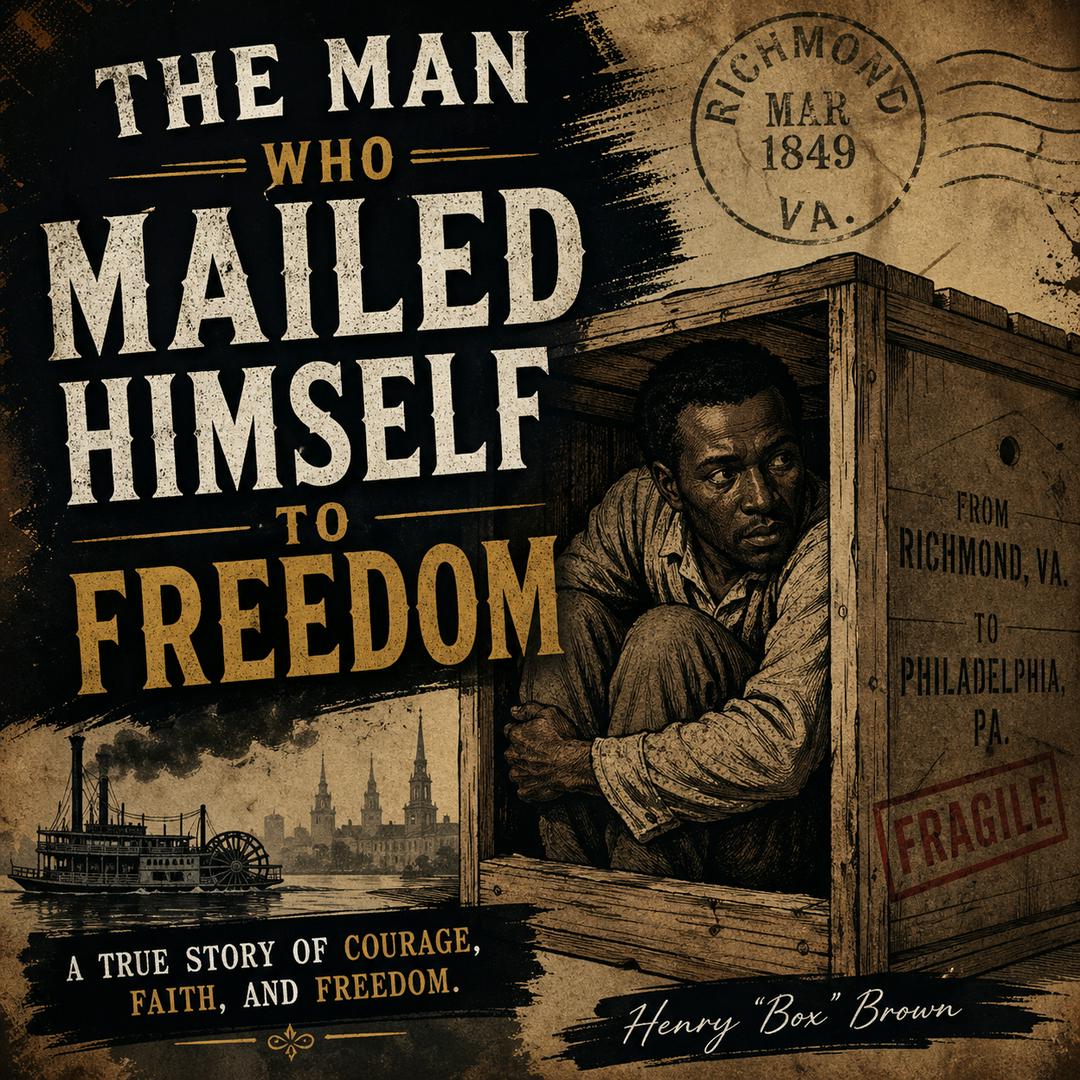
Henry “Box” Brown did not just escape slavery. He mailed himself to freedom. In March 1849, Brown was enslaved in Richmond, Virginia, where he worked in a tobacco factory. His life had already been shattered when his wife, Nancy, and their children were sold away from him. That loss pushed Brown toward one of the boldest escape plans in American history. With help from James C. A. Smith, a free Black man, and Samuel A. Smith, a white shoemaker, Brown arranged to be sealed inside a wooden crate and shipped as freight from Richmond to Philadelphia. The box measured about 3 feet long, 2 and a half feet deep, and 2 feet wide. Brown carried a little water and a few biscuits. There was a small air hole, but almost no room to move. For about 27 hours, he traveled by wagon, railroad, steamboat, and delivery wagon, folded inside a crate marked as goods. At one point, the box was reportedly placed upside down, leaving him in terrible pain. Still, he stayed silent. One sound could have ended everything. When the crate finally reached Philadelphia, abolitionists opened it. Brown stepped out alive. From that day forward, he became known as Henry “Box” Brown. His story sounds almost impossible, but that is why it matters. It shows the brutal reality of slavery, where a man had to risk suffocation, injury, and death just to claim the freedom that should have already been his. Henry Brown did not escape by chance. He escaped through planning, courage, faith, and a determination no wooden crate could hold. #HiddenHistory #AmericanHistory #HenryBoxBrown #BlackHistory #FreedomStories

LataraSpeaksTruth

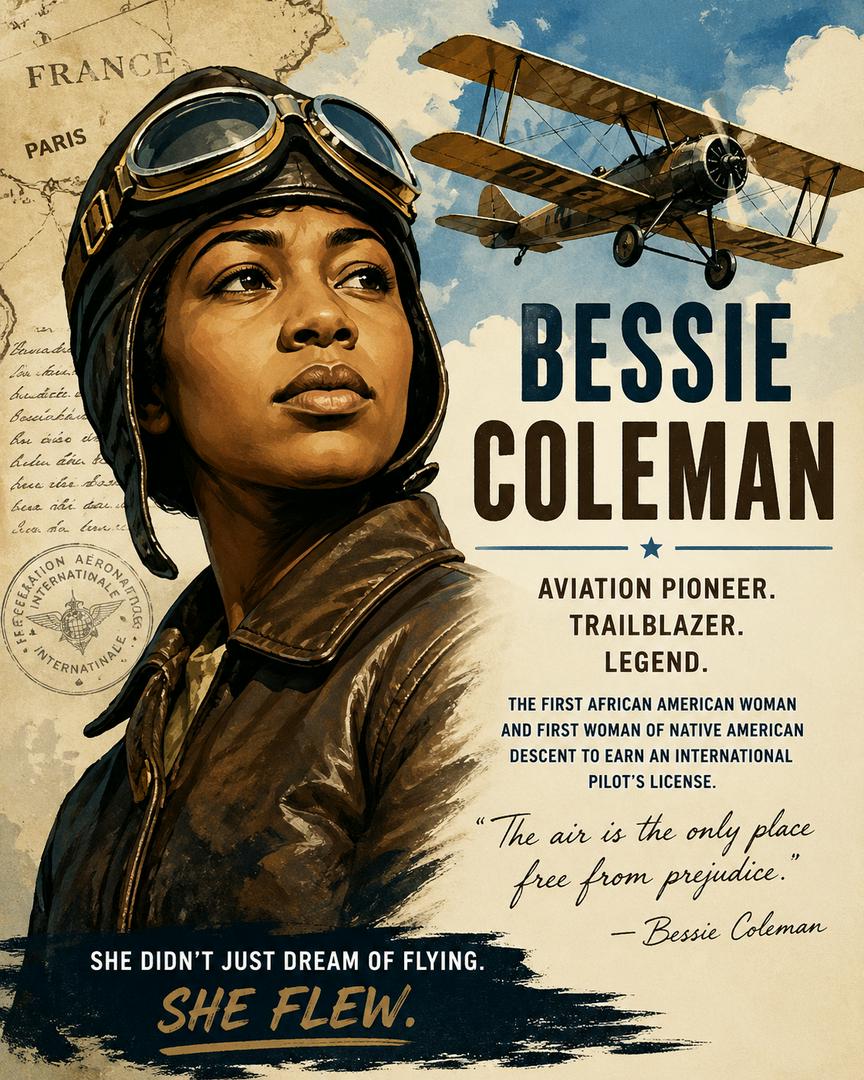
April 30, 1926, marked the tragic death of aviation pioneer Bessie Coleman, a woman who rose above poverty, racism, and sexism to make history in the sky. Coleman was born in Texas in 1892 and grew up during a time when Black Americans faced brutal segregation and limited opportunity. When she became interested in flying, American flight schools refused to train her because she was Black and a woman. Coleman did not quit. She learned French, saved money, gained support from Black leaders in Chicago, and traveled to France to chase the dream America tried to deny her. In June 1921, Coleman earned an international pilot’s license from the Fédération Aéronautique Internationale. She became the first African American woman and the first woman of Native American descent to hold a pilot’s license. Her achievement made her a symbol of courage and possibility. Known as “Queen Bess,” Coleman returned to the United States and became a barnstorming pilot, performing daring air shows before large crowds. She also used her fame to encourage other Black Americans to enter aviation. She refused to perform at venues that would not admit Black spectators, making her stand for dignity both in the air and on the ground. On April 30, 1926, Coleman was in Jacksonville, Florida, preparing for an air show scheduled for the next day. She was flying with mechanic William Wills when the plane suddenly went out of control. Coleman, who was not wearing a seat belt because she was looking over the side to scout the area, fell from the aircraft and died. Wills also died when the plane crashed. Bessie Coleman was only 34 years old. Her life ended in tragedy, but her legacy did not. She opened a path in aviation when the doors were locked, bolted, and guarded. Generations of pilots would later look to her as proof that the sky belonged to them, too. #BessieColeman #BlackHistory #AviationHistory #WomensHistory #OnThisDay

LataraSpeaksTruth

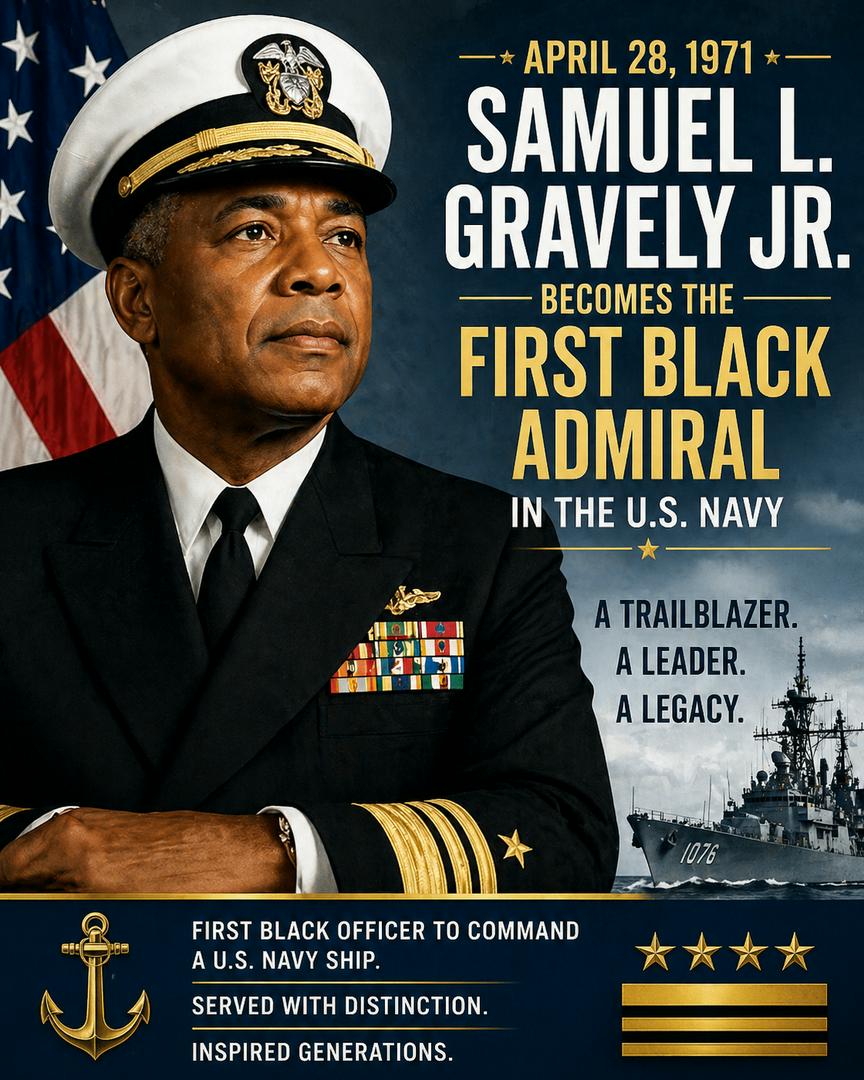
When I posted about Vice Admiral Samuel L. Gravely Jr., the story was about excellence, service, discipline, and legacy. Gravely was not just “good enough.” He became a historic figure in the United States Navy through proven ability, leadership, and endurance. His record did not need a political disclaimer attached to it. So when someone comes under a post about a Black trailblazer and says he did it “without DEI,” the question is simple: why did that need to be mentioned at all? That was not part of the story. Too often, when Black excellence is discussed, someone finds a way to drag DEI or affirmative action into the conversation, as if Black achievement has to be separated from assistance before it can be respected. The implication is always sitting there, that Black people must have been handed something, favored unfairly, or pushed ahead because of color instead of qualifications. That narrative is tired. It is also selective. Historically, white women have often been identified as major beneficiaries of affirmative action, especially in employment and workplace advancement. But somehow, DEI only becomes the favorite insult when Black achievement is being discussed. That is the part people avoid. Black people have been proving themselves in rooms they were not invited into, in systems that doubted them, blocked them, and still expected them to outperform just to be seen as qualified. Gravely’s story does not need to be used as a weapon against modern diversity efforts. His story already stands on its own. If the man was disciplined, say that. If he served with honor, say that. If he broke barriers, say that. But dragging DEI into a story where it was never the subject says more about the person mentioning it than the man being honored. Black excellence does not need a disclaimer. It never did. #BlackHistory #SamuelGravely #MilitaryHistory #BlackExcellence #LataraSpeaksTruth

LataraSpeaksTruth

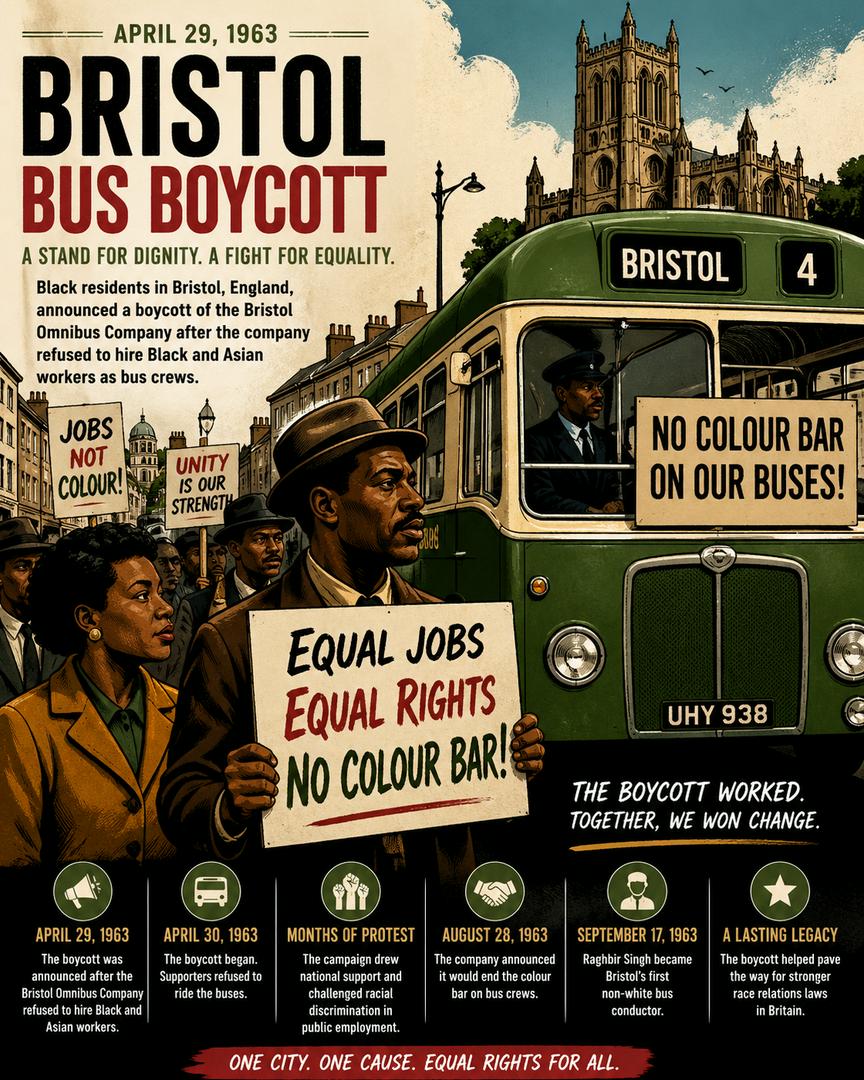
On April 29, 1963, civil rights organizers in Bristol, England announced a boycott of the Bristol Omnibus Company after the company refused to hire Black and Asian workers as bus crews. At the center of the campaign were members of the West Indian Development Council, including Roy Hackett, Owen Henry, Audley Evans, and Prince Brown. Paul Stephenson, a youth worker and activist, became one of the public voices of the protest. The issue came into sharper focus after Guy Bailey, a young West Indian man, was denied an interview for a bus crew job once the company learned he was Black. The rejection exposed what many in the community already knew: Bristol’s bus company and union had allowed a “colour bar” that kept non-white workers from becoming drivers or conductors. The boycott officially began on April 30, 1963. Supporters refused to ride the buses, and the campaign gained attention across Britain. It was not only about one job or one company. It was about whether Black and Asian residents could be blocked from public employment while still being expected to live, work, pay fares, and contribute to the city. The protest lasted for several months. On August 28, 1963, the same day Dr. Martin Luther King Jr. delivered his “I Have a Dream” speech in Washington, D.C., the Bristol Omnibus Company announced that racial discrimination in hiring bus crews would end. On September 17, 1963, Raghbir Singh became Bristol’s first non-white bus conductor. Other workers followed. The Bristol Bus Boycott became a landmark moment in Black British history. It showed how organized community pressure could challenge discrimination directly. The campaign is also remembered as one of the events that helped push Britain toward stronger race relations laws in the 1960s. What happened in Bristol was not just a local transportation dispute. It was a public stand against exclusion, and it helped change the direction of civil rights history in Britain. #BlackHistory #BristolBusBoycott

LataraSpeaksTruth

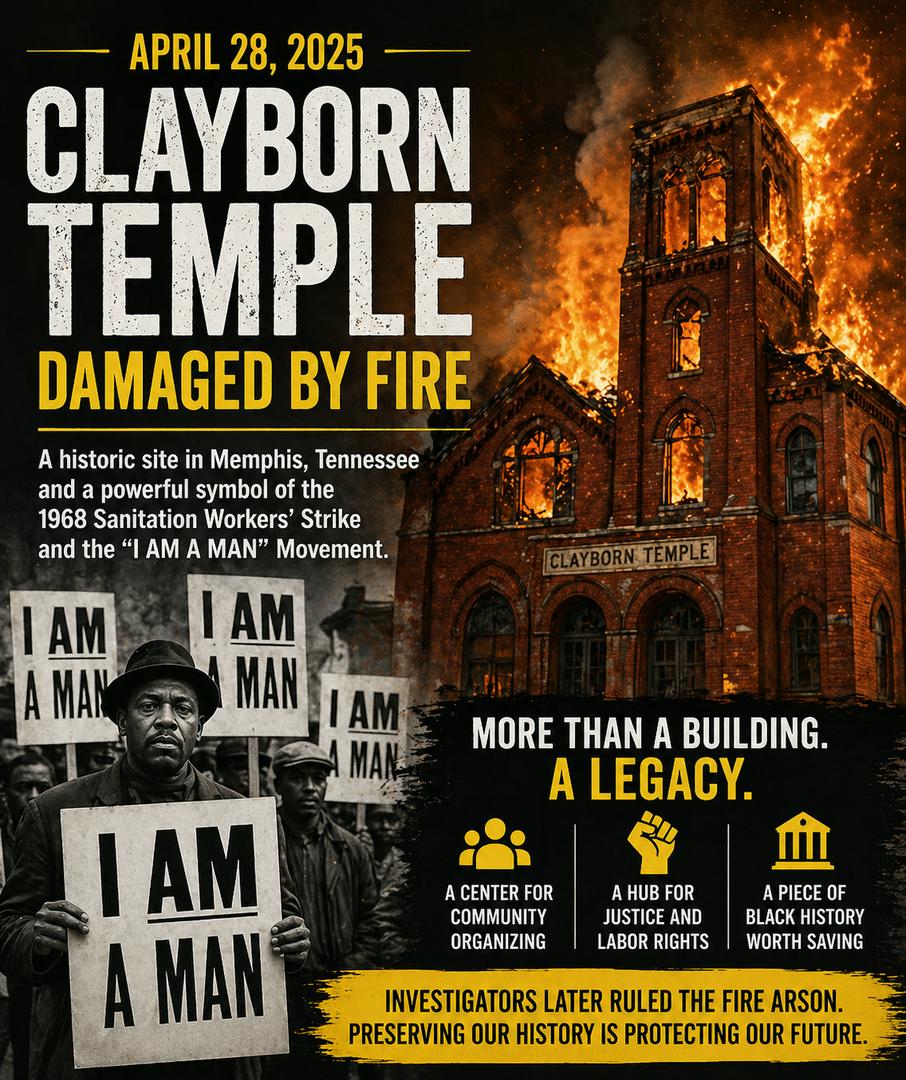
A historic Memphis landmark tied to one of America’s most powerful labor and civil rights movements was badly damaged by fire on April 28, 2025 — and investigators later determined it was arson. Clayborn Temple, located at 294 Hernando Street in downtown Memphis, was a key organizing site during the 1968 Memphis sanitation workers’ strike. That strike began after two Black sanitation workers, Echol Cole and Robert Walker, were crushed to death in a malfunctioning garbage truck. More than 1,000 workers walked off the job, demanding safer working conditions, fair pay, union recognition and basic human dignity. Clayborn Temple became a headquarters for the movement. Workers and supporters gathered there before marching to City Hall with the now-iconic “I AM A MAN” signs. The church also hosted nightly meetings that brought together labor leaders, ministers, civil rights organizers and families fighting for justice. Dr. Martin Luther King Jr. came to Memphis in support of the workers and was assassinated at the Lorraine Motel on April 4, 1968. The fire was reported early in the morning and left severe damage to the historic structure, which was already undergoing restoration. Officials later said the blaze was intentionally set. The Bureau of Alcohol, Tobacco, Firearms and Explosives and local investigators released images of a person of interest as the investigation continued. Clayborn Temple was built in the 1890s as Second Presbyterian Church and later became an African Methodist Episcopal church. It was listed on the National Register of Historic Places in 1979 and remains a symbol of Black labor power, faith-based organizing and the fight to preserve historic Black spaces. This story is bigger than bricks and stained glass. It is about memory, justice and whether communities can protect the places where ordinary people once stood up and changed the nation. #ClaybornTemple #MemphisHistory #CivilRightsHistory #IAMAMAN #BlackHistory

LataraSpeaksTruth

On April 28, 1971, Samuel L. Gravely Jr. became part of U.S. Navy history when he appeared on the rear admiral promotion list, making him the Navy’s first African American flag officer. Gravely was born on June 4, 1922, in Richmond, Virginia. He entered the U.S. Naval Reserve during World War II and was commissioned as an ensign in 1944, shortly after the commissioning of the Golden Thirteen, the Navy’s first African American officers. His career included a series of major firsts. In 1961, Gravely became the first African American officer to command a U.S. Navy ship, USS Theodore E. Chandler. In 1962, he became the first African American officer to command a combat ship, USS Falgout. During the Vietnam War, he commanded USS Taussig, which provided plane guard and gunfire support off the coast of Vietnam in 1966. That command made him the first African American officer to lead a U.S. Navy vessel into combat. In 1967, Gravely became the Navy’s first African American captain. Four years later, his selection for rear admiral marked another historic step in naval leadership. He later commanded Cruiser-Destroyer Group Two and became commander of the U.S. Third Fleet, based in Hawaii. Gravely eventually rose to the rank of vice admiral before retiring in 1980 after decades of service. His career is remembered for its documented milestones in command, combat leadership, and senior naval rank. Samuel L. Gravely Jr. died on October 22, 2004, at age 82. His name remains connected to one of the most important advancement stories in U.S. Navy history. #BlackHistory #MilitaryHistory #NavyHistory #SamuelLGravely #AmericanHistory

LataraSpeaksTruth

On April 28, 1941, the U.S. Supreme Court handed down a decision that pushed back against racial discrimination in interstate travel. The case centered on Arthur W. Mitchell, a U.S. representative from Illinois and the only Black member of Congress at the time. In April 1937, Mitchell purchased a first-class railroad ticket from Chicago to Hot Springs, Arkansas. But after the train crossed into Arkansas, he was ordered out of the Pullman car because he was Black. Mitchell had paid for first-class travel and offered to pay for the available Pullman seat. Instead, he was forced into a segregated car under threat of arrest. Rather than let the insult disappear into history, Mitchell challenged the treatment through the Interstate Commerce Commission and then the courts. In Mitchell v. United States, the Supreme Court ruled that the discrimination was unlawful under the Interstate Commerce Act. The Court said Black passengers who purchased first-class tickets were entitled to accommodations equal in comfort and convenience to those provided to white passengers. The ruling did not end segregation in America, but it mattered. It came years before Brown v. Board of Education, the Montgomery Bus Boycott, and the Civil Rights Act. Mitchell’s stand helped expose the cruelty and contradiction of Jim Crow in interstate travel. One man bought a ticket. The railroad tried to deny his dignity. The Supreme Court said the law could not excuse that unequal treatment. #BlackHistory #CivilRightsHistory #OnThisDay #SupremeCourt #ArthurMitchell

LataraSpeaksTruth

On April 27, 2015, Freddie Gray was laid to rest at New Shiloh Baptist Church in Baltimore, Maryland. Gray was 25 years old. He had been arrested by Baltimore police on April 12, 2015, and died on April 19 after suffering a severe spinal cord injury while in police custody. His death drew national attention and became part of a wider public discussion about policing, accountability, and the treatment of people in custody. His funeral brought mourners, clergy, community leaders, and residents together in Baltimore. The service took place as the city was already under intense public attention because of the circumstances surrounding his arrest, transport, injury, and death. Later investigations reviewed videos, witness statements, medical records, police reports, dispatch recordings, autopsy materials, and trial records connected to the case. Federal prosecutors later declined to bring federal charges, stating they did not find enough evidence to prove a federal civil rights violation beyond a reasonable doubt. Freddie Gray’s death remained closely tied to Baltimore’s history and to national conversations about law enforcement, public trust, and the demand for accountability after deaths in custody. #FreddieGray #April27 #BaltimoreHistory #BlackHistory #LataraSpeaksTruth

Freddy Gibbs

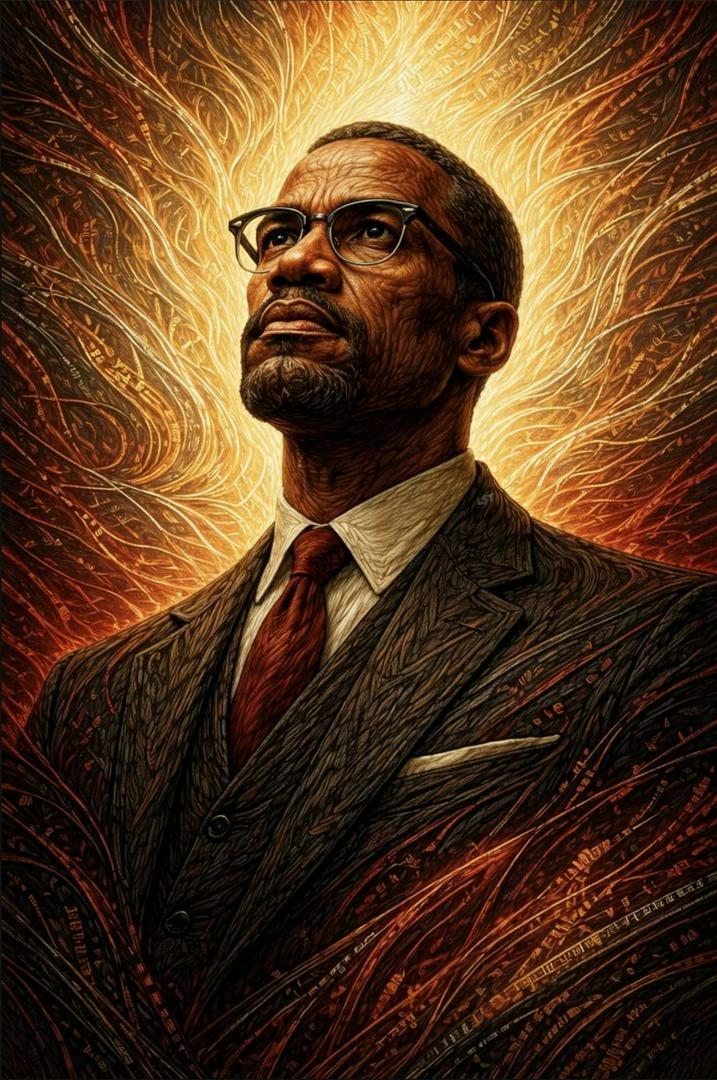
On March 8, 1964, Malcolm X publicly announced his break from the Nation of slam, a decision that marked one of the most important turning points of his life and one of the sharpest pivots in modern Black political historv. This was not a quiet separation. It was a public break with the organization that had helped shape his national image and amplify his voice, but it was also the beginning of a deeper transformation that would define his fina year. By then, Malcolm had alreadv become one of the most powerful and unforgettable voices in America. He spoke with discipline force, and clarity. He challenged the country in a way few others dared to do, naming the violence, hypocrisy, and racial cruelty that many wanted softened or ignored. Through his work in the Nation of Islam, he helped inspire pride, structure, and self-definition for many Black people searching forlanguage strong enough to confront what thev had lived through But Malcolm was evolving. He was questioning what he once defended. He was wrestling with betrayal, truth, and the imits of the path he had been on. His break from the Nation of Islam was not only political. It was personal, spiritual, and intellectual. It marked the opening of the last chapter of his life, a chapter shaped by deeper reflection and a broader vision, Later that same year, Malcolm traveled through Africa and the Middle East and made his pilgrimage to Mecca. Those experiences expanded his worldview and sharpened his understanding of the struggle before him. He began speaking not only about racism in the United States, but about human riqhts on a qlobal scale. His language grew wider. His vision grew deeper. His commitment to truth neverweakened. March 8 matters because it marks the moment Malcolm stepped awav from what made him famous and moved toward what made him fuller. Some men remain where they are praised. Malcolm followed the truth, even when it cost him everything #MalcolmX #BlackHistory #OnThisDay #March8

Tag: BlackHistory - Page 9 | LocalAll